
Yes, of course we went to Machu Picchu!
I decided what makes a trip great is having low or NO EXPECTATIONS. Before booking this trip I couldn’t have located Peru on a blank map of South America. This was a tour Kris choose with the INTREPID tour company. I signed us up in March. I paid little attention to the itinerary. However, I insisted that we include the add-on option of spending two nights in the rainforest.
Originally we thought that we ought to do a hiking tour before we all become decrepit. The trip offered 2 hiking options and a third option: don’t hike. I had second thoughts when I realized that the Andes are really TALL! I recalled the severe headache I had and how slowly Dennis & walked when we stayed 2 nights in a cabin near Leadville, Colorado (10,158 ft. alt.) several years ago. I also remembered the couple of times I carried Dennis’s day pack after his shoulder went out of whack hiking.

Dennis & I decided no hike. After we met the other members of our Intrepid group, I learned that I was the oldest member of our tour. I thought that Dennis & I had made the right decision. We got plenty of exercise walking around Cusco and the nearby Inca sites. And a bonus – I learned so much about Peru and Peruvians from our days with Cusco guide Paulo. Meanwhile, the others were sweating while hiking up and down the mountains.
A List of Interesting Facts and Too Broad Generalizations that I Think I Learned about Peruvians
- Not everyone speaks Spanish. Near Cusco most people seemed to use Quechua when speaking with other Peruvians. When we were in the jungle, our guides used another language. They said it was a dialect of Spanish. However, it didn’t sound like Spanish to us.
- We didn’t see any tall, blond, or blue-eyed Peruvians even in Lima. I never felt so tall as I did in the Cusco area
- Everything I read said Peruvians were hard workers. How would you measure that?
- I noticed only a couple of panhandlers.
- Poor people were selling things, disabled people and kids were dancing or singing and they were all pretty good.
- If there is a task we would automate in the U.S. that task might be people powered in Peru.
- One man drives the bus, another takes your money.
- Guides hover around the entrance of the museums. I never saw an audio-tour or a printed guide
- I couldn’t get over the guard who pulled out a large binder. He checked the ID of every person seeking to enter the college parking lot against his notebook. This included even bicyclists.
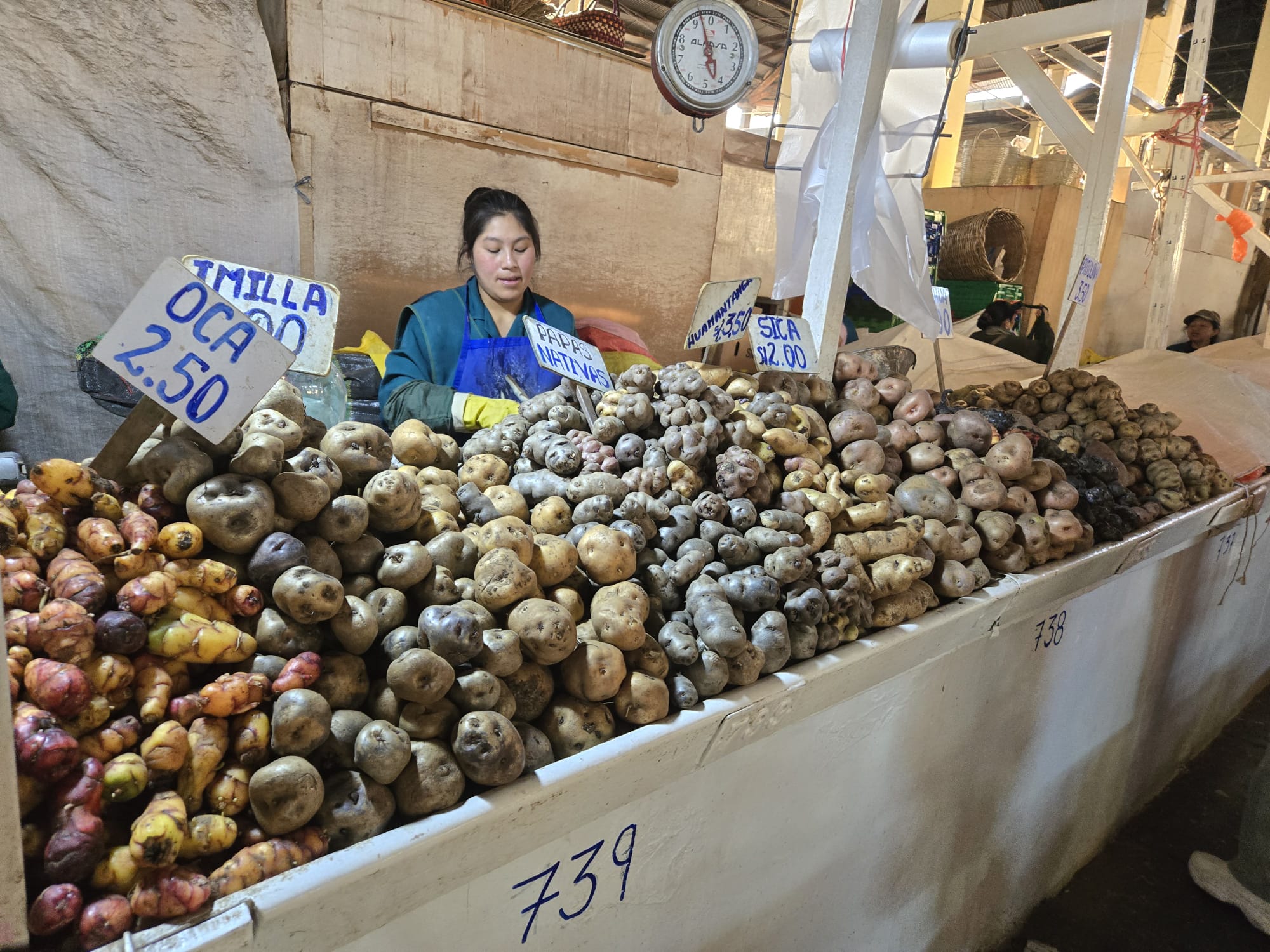
- Peruvians eat what they grow: lots of fruits and potatoes.
- In the rainforest most if not all the food served was locally sourced.
- There are still Incas in the sense that people in the Andes proudly identify themselves as Inca.
- Unlike the Egyptians, Romans or Greeks who used slave labor, Incas infrastructure was a built by community labor. A tax system called Mit’a required all able bodied citizens to work part of the year for the state. Incas didn’t have a lot of choice regarding fulfilling their labor obligations.
- Aggressive driving is the norm in Peru and probably the only way to get anywhere in Lima.
- Pedestrians beware!!
- In Cusco, we were some of the 10 pedestrians walking in a narrow cobblestone street. (This is because the sidewalk is barely wide enough for one person.) Suddenly a car would come barreling down the street honking. The driver assumed everyone would quickly jump out of the way. We did!
Lima – Population 9,751,717, Altitude 528 ft. avg.

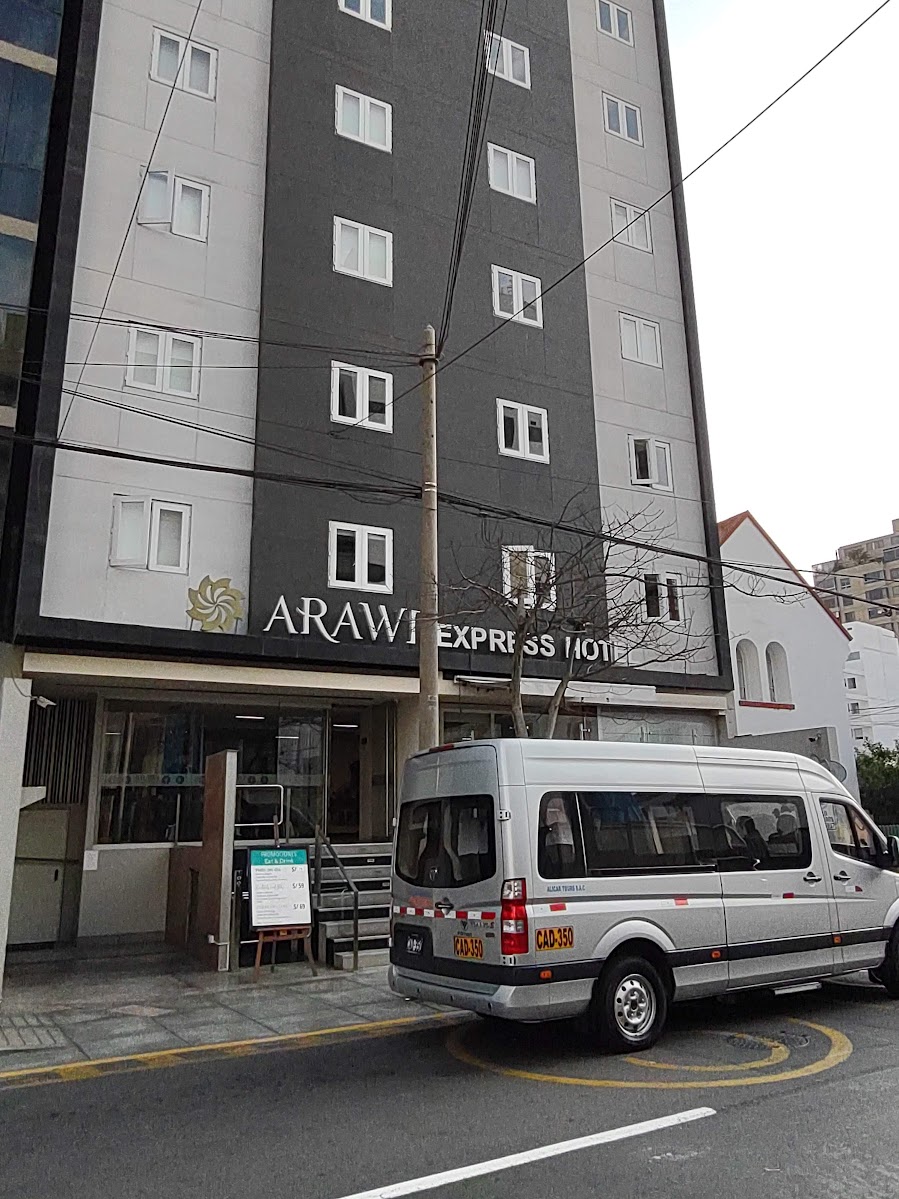

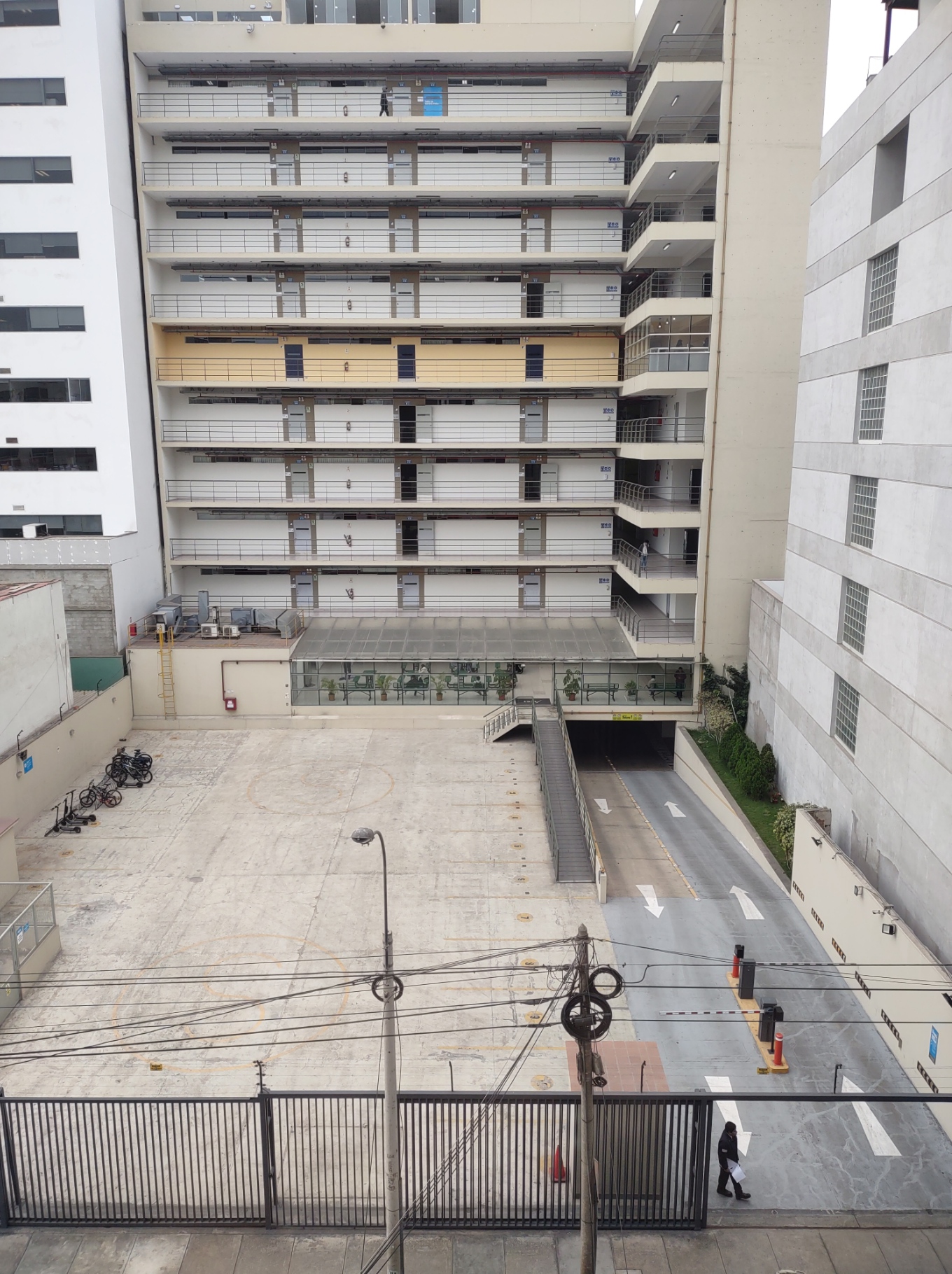
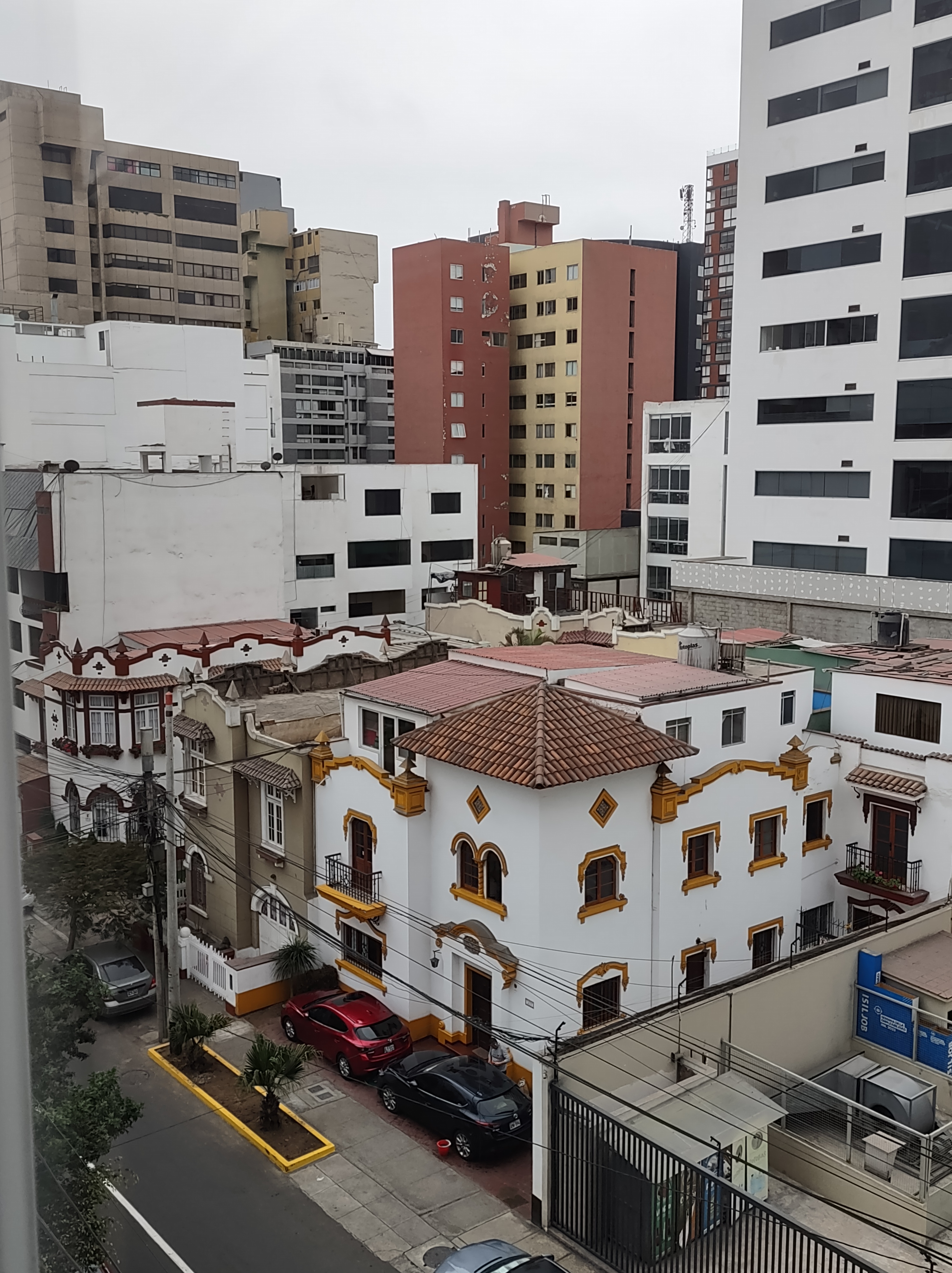

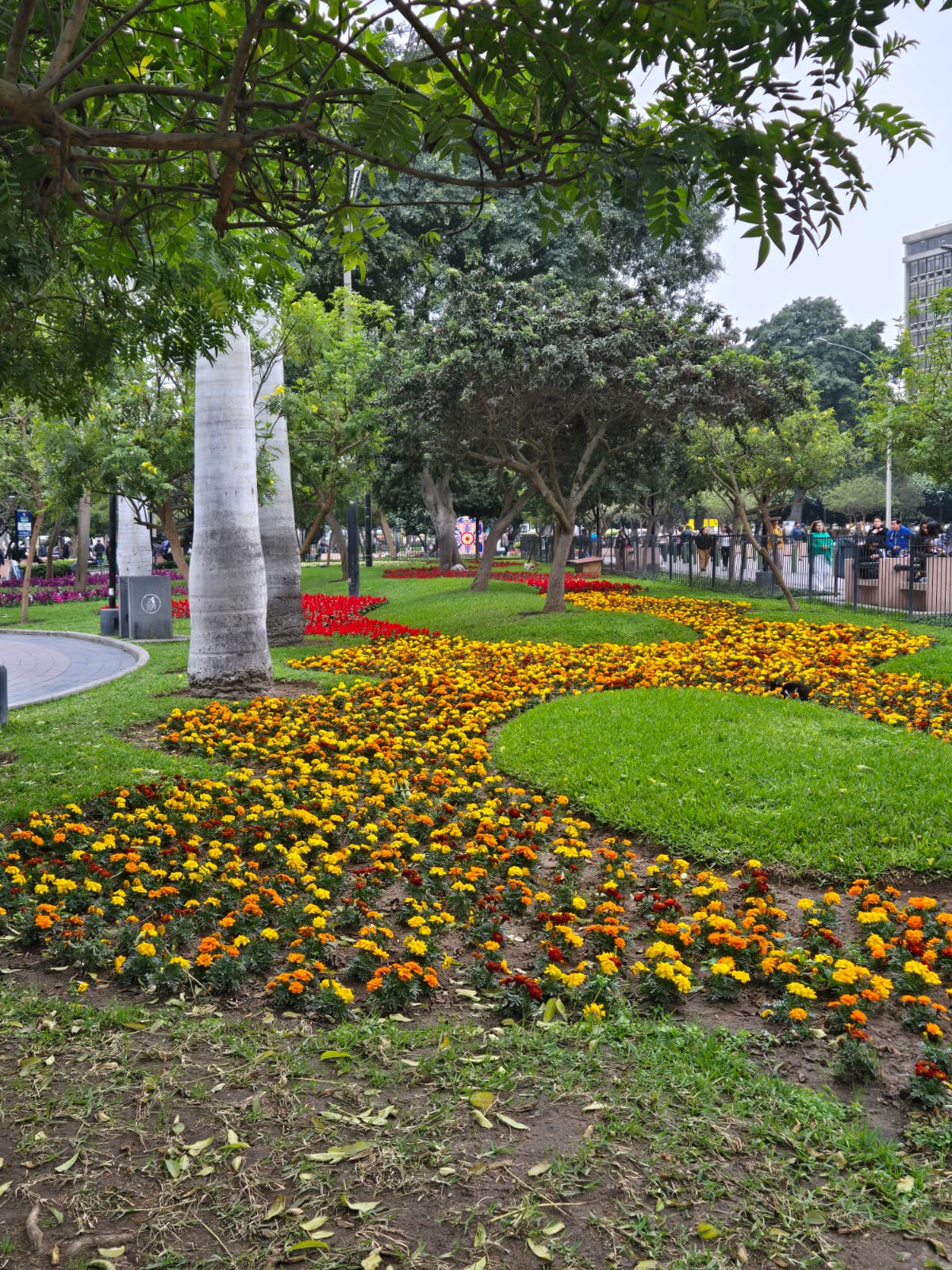
Kris arrived in Lima the day before we did, theoretically anyway, her flight was delayed so she only had a few hours sleep before we arrived the in the morning. Our first activity after admiring the very dorm like qualities of Kris’s hotel room, was to take turns napping. Dennis napped while Kris and I went out for coffee although Kris doesn’t drink coffee. She’s a good sport. When our room was ready, it was identical to Kris’s. However, we had an excellent view of the well-guarded entrance to a college parking lot. The guard consulted a book checking the registration of every bicycle, motorcycle, and the very occasional car before allowing the vehicle to enter. With a stretch from our room I could see a skyline of old and new buildings.
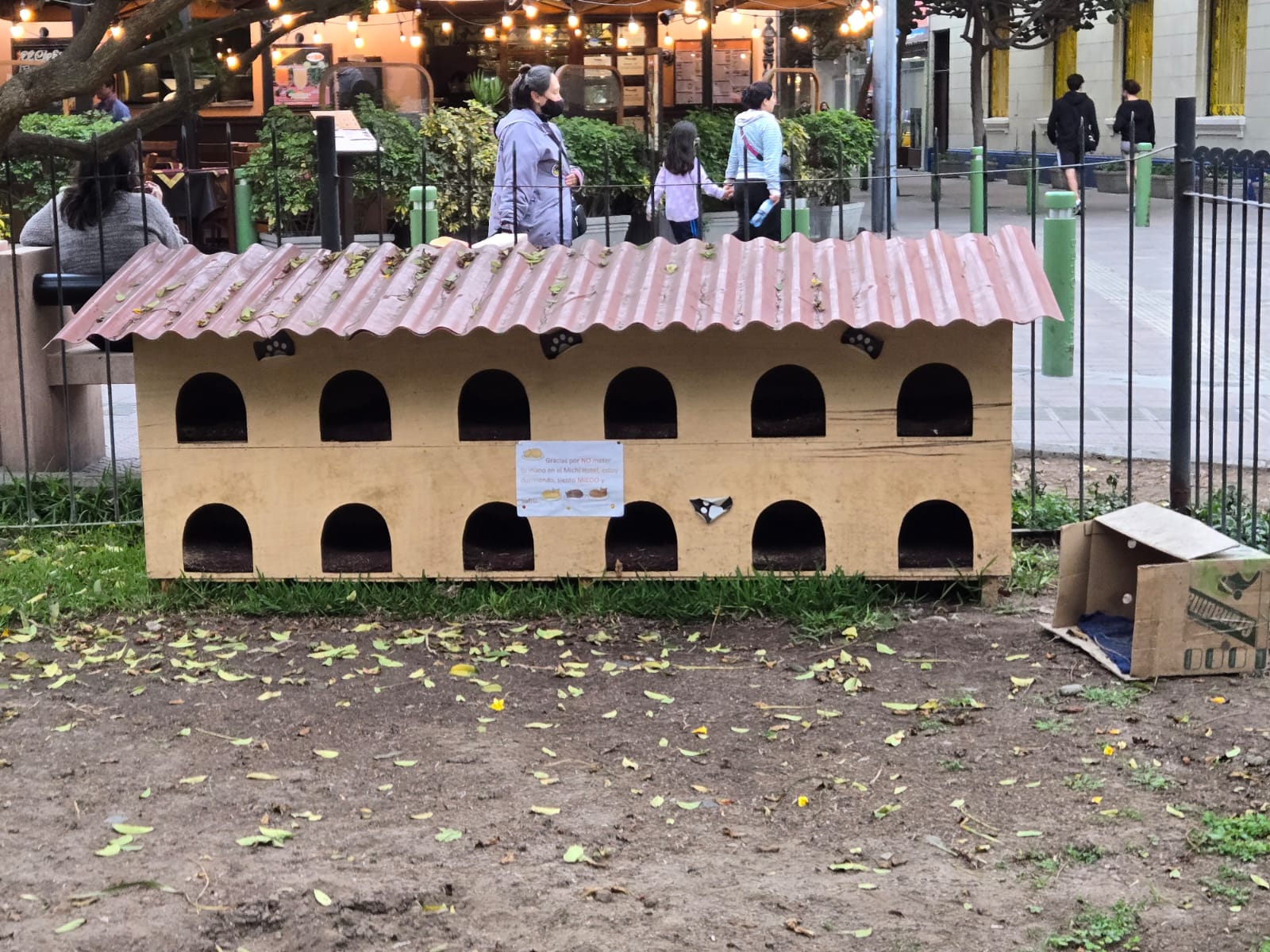
Refreshed from our naps we walked to John F. Kennedy Park. Miraflores, our hotel’s neighborhood in Lima, has two parks that are home to an incredible number of cats. There were cat houses and even cat apartment houses, along with food and water available for the felines. Also of course many flowers.
Museum Days
The following morning somewhat recovered from our overnight flights, we decided to use our free day to visit museums. Most of my knowledge of the Inca Civilization came from some reading I did in 4th grade about Pizarro. Our first stop was Museo Larco. We began with an English language guided tour lead by Daniela an impressive young Peruvian woman. In 1 hour we learned an amazing amount about pre-Columbian cultures. Incas were only the most recent dominant indigenous culture. There were Wari, and Chimu empires also Moche & several other cultures along the Pacific coast. None used iron or a written language. However, they developed amazing pottery and textiles. The Inca also worked with silver and gold, often mixed with copper. Due to warfare using rock projectiles and clubs, Incas pioneered elementary brain surgery. Maybe that’s an exaggeration but they did repair skulls.

SLIDESHOW–> Larco Museum – Former home of the archeologist collector 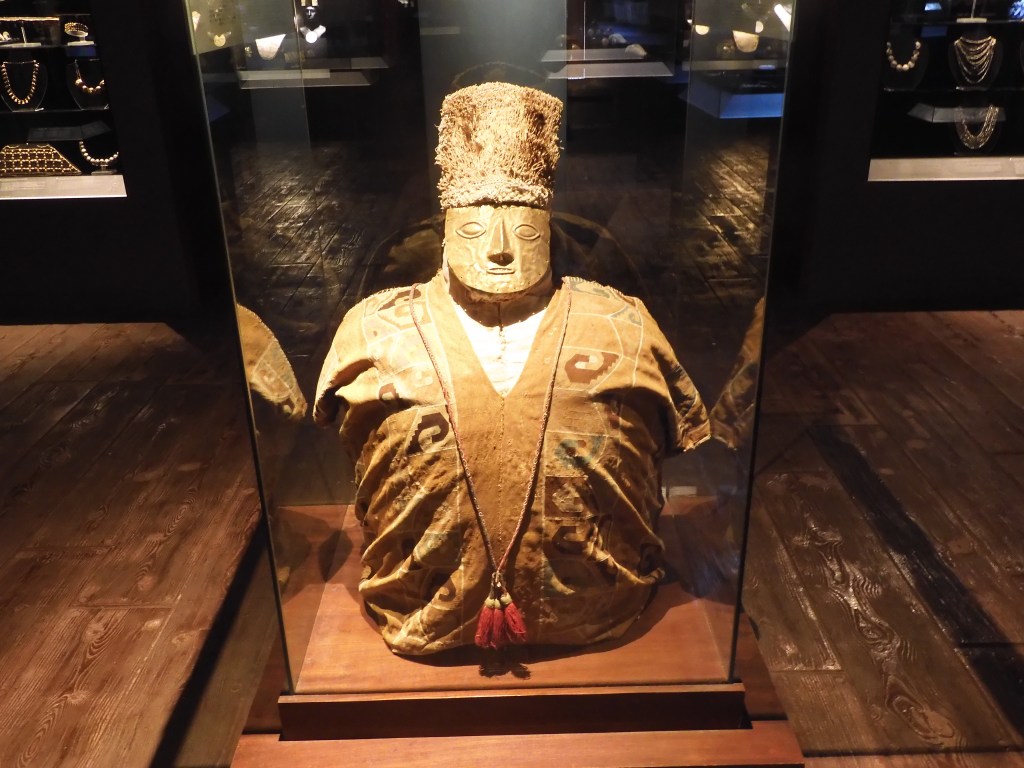
Inca Mummy – X-Ray revealed a child inside 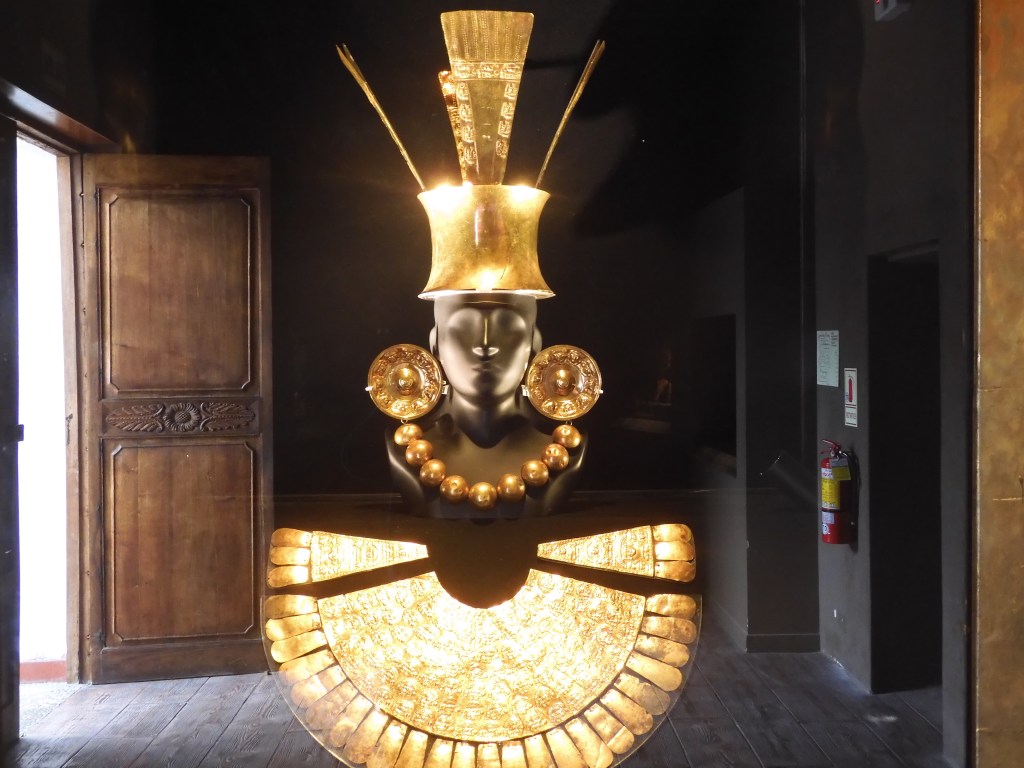
Kings Jewelry 
Open Shelving Larco Museum 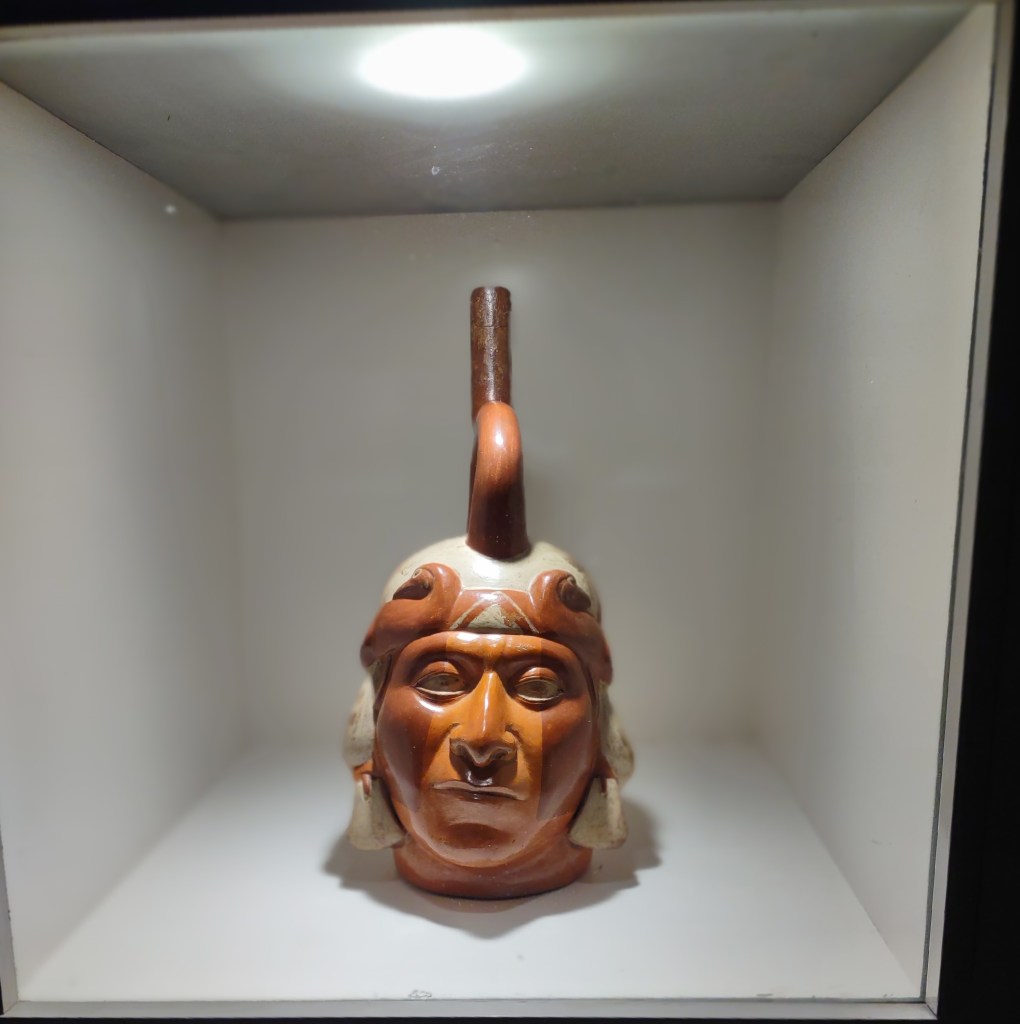
Larco Museum Slideshow ——– Death Mask 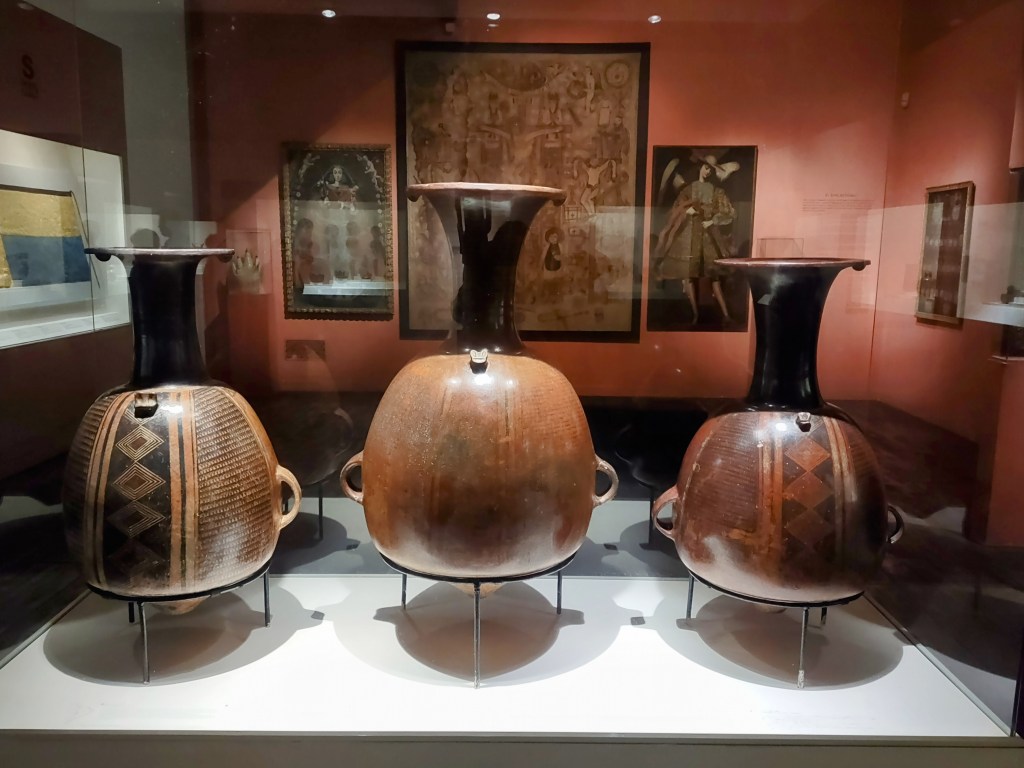
Beer Coolers 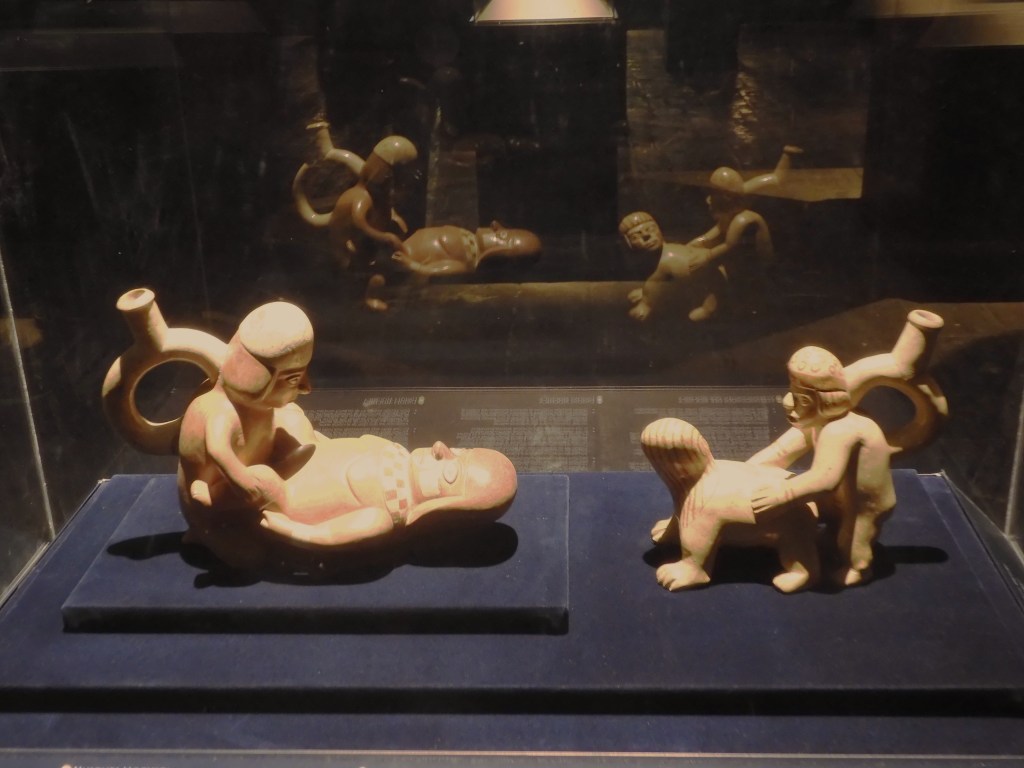
Inca Instructional Erotic Ceramics 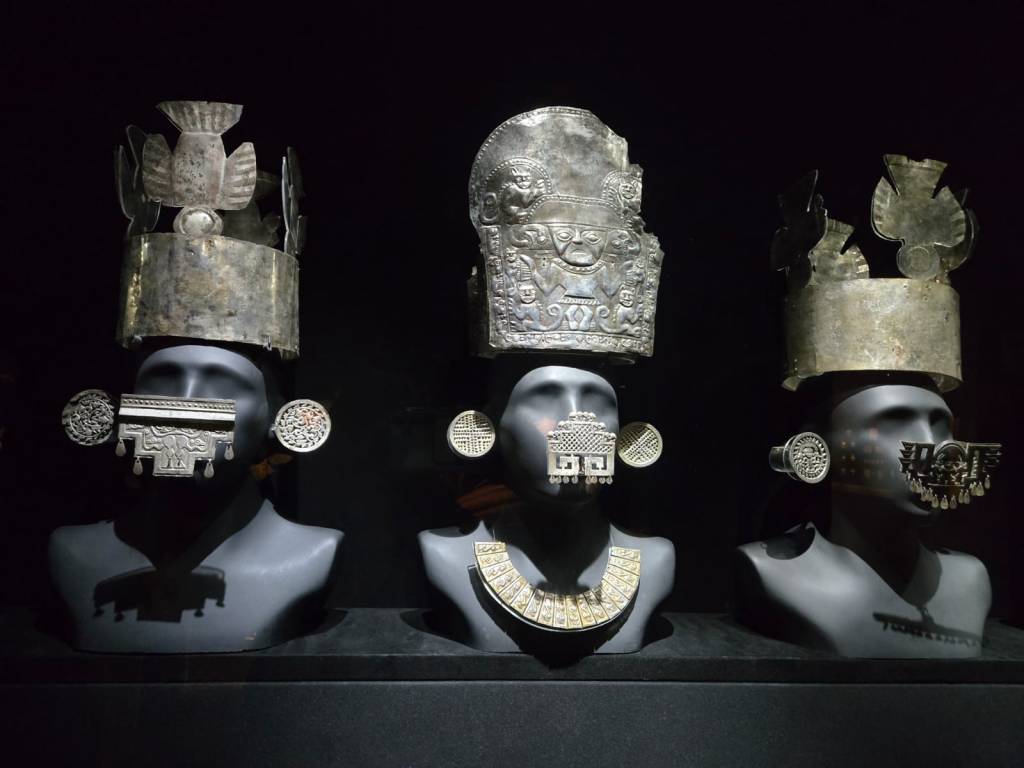
Ornamentation of Inca Aristocrats 

Larco Museum -Kris & Dennis tired after we saw the whole thing.
We ate lunch in the Larco’s upscale cafe and then proceeded to try and find our way to the Museo National de Anthropologia e Historia de Peru. Our Lonely Planet guidebook said we could go to the end of the block and follow the blue line that would lead us to the museum. No blue line found. Never fear, Dennis had a static map on his phone, Kris had a paper map, and I read the museum description that said it was located on a plaza next to a park so I looked for trees. After about a 30 minute walk we found the museum. Once we were within site of the museum it was so large I wondered how I missed it.


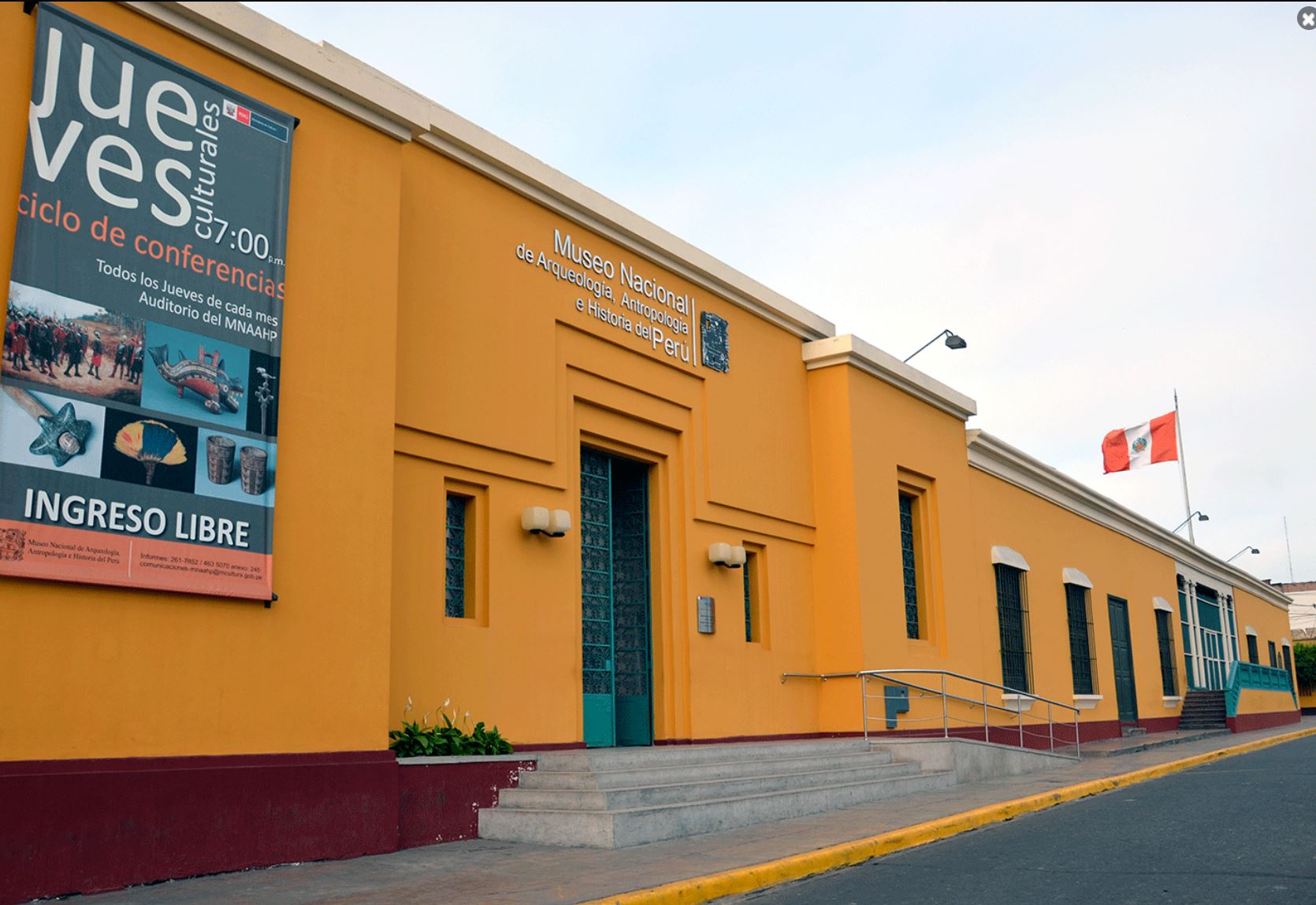
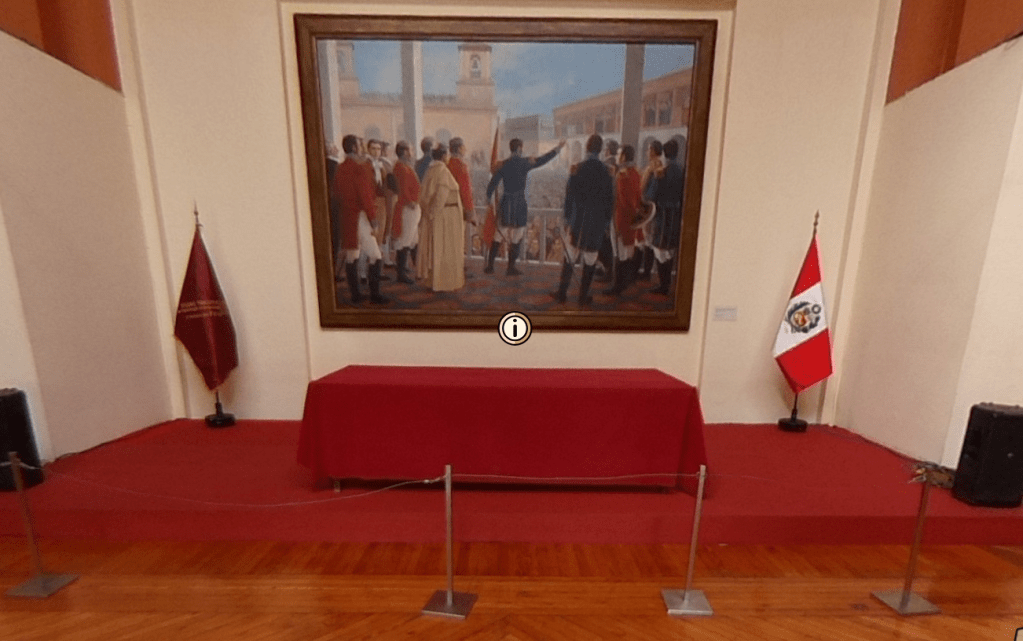
We’d already seen an impressive collection of indigenous artifacts so we concentrated on the collection of paintings illustrating Peru’s colonial past and the revolutions for independence from Spain. There were paintings and artifacts from all the revolutions and a room devoted to Simon Bolivar.
We were not in a tourist neighborhood and had no wifi to call an Uber. I worried after we were turned down by a couple of taxis. Finally we flagged down a cab that would take us to Miraflores. Dennis exiting from the front seat of our cab confirmed my gut feeling. He said it was the scariest the car ride he’d ever had. It’s like driving in Europe except even more vehicles and the cars are larger or seem big when they are heading toward you.
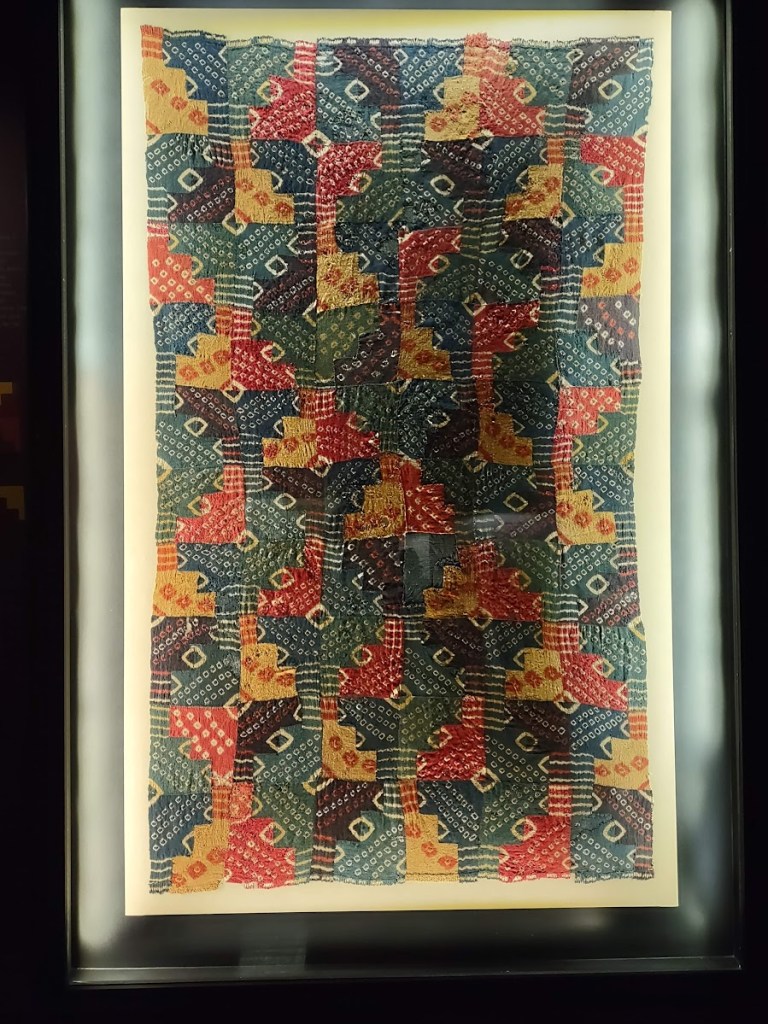
Amano: Pre-Columbian Textile Museum
The next day our Intrepid Tour was to begin in the afternoon. Kris and Dennis agreed we had time to see one more museum. “NO! Not another museum.” I was not any happier when they settled on going to a textile museum which while located in our neighborhood Miraflores, was far enough away that we needed to take a cab or Uber. “Textiles sound really boring.” The rides to and from were uneventful and the textiles were amazing.
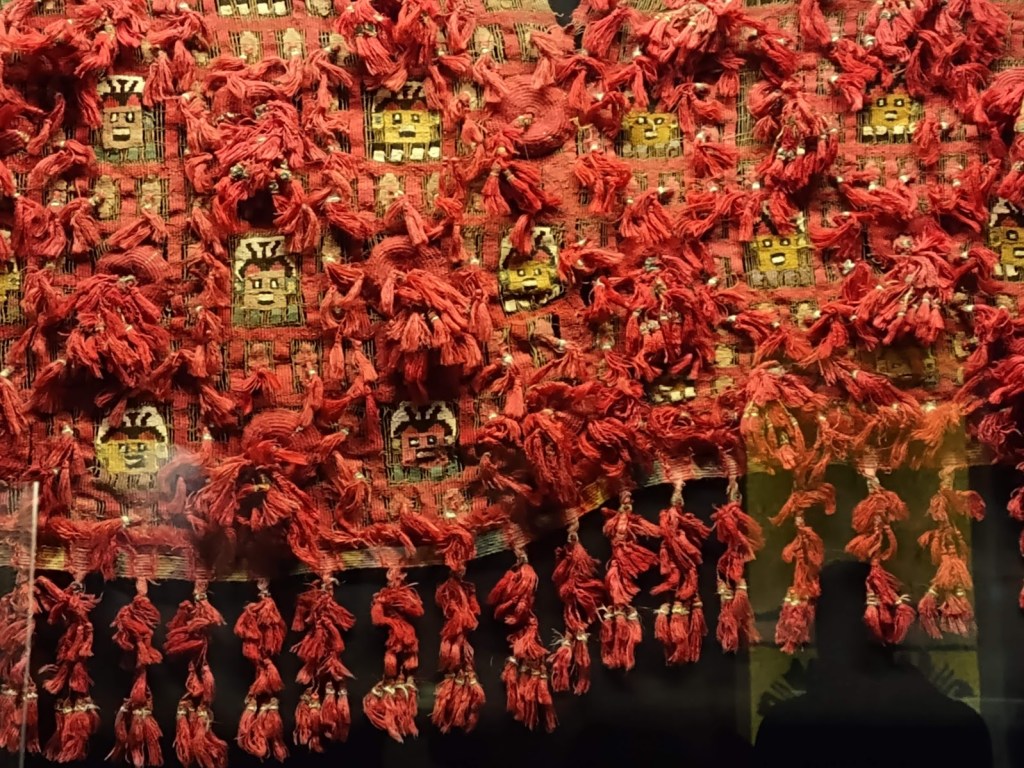
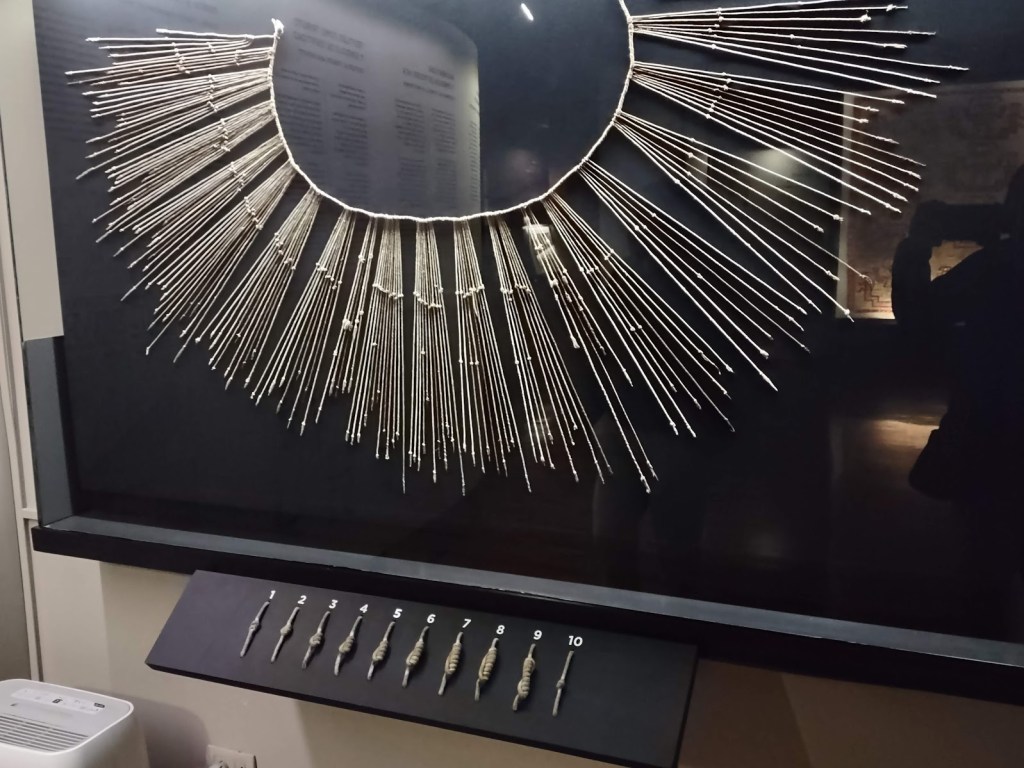

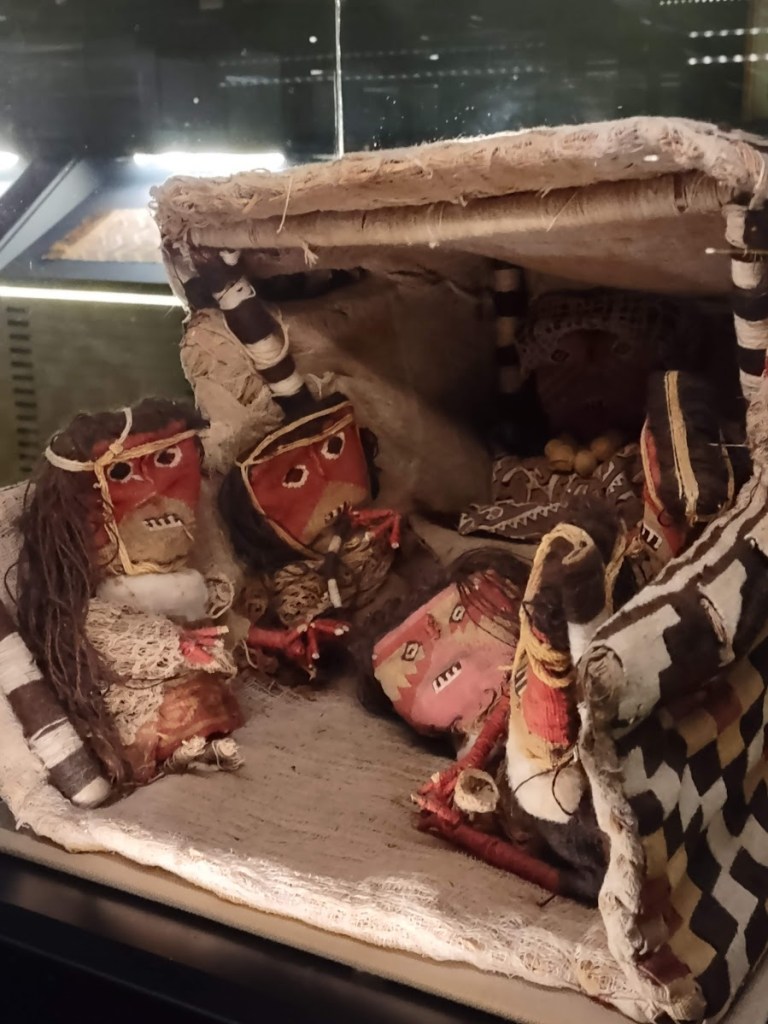
Our tour begins with Centro Lima
We met our guide Ari and 6 members of our tour in our hotel in that afternoon. We were the only Americans. Ari informed us that 5 other tour members were in Cusco acclimatizing to the altitude for their hike on the Inca Trail. We would meet them in Cusco the following afternoon. Ari led our group of nine, 4 Australians and a young couple from Yorkshire, England along with the 3 of us, to a gated bus stop to catch an express bus to Centro Lima. Ari said we were lucky because it was Saturday, a good afternoon to catch the express bus which is incredibly crowded on weekdays. Not too crowded is certainly defined differently in Lima. We waited while Ari selected the bus and a bus car that we could all squeeze into. The buses move very fast like a tram, and use a dedicated elevated road. Our section of the bus like all the others, was jammed full of people. With each stop it seemed that more bodies entered than left.

It was a wonder to me that Ari was able to get all 9 of us on and off the bus and also did not lose anyone in the crowds in Centro Lima. The red shirt helps.
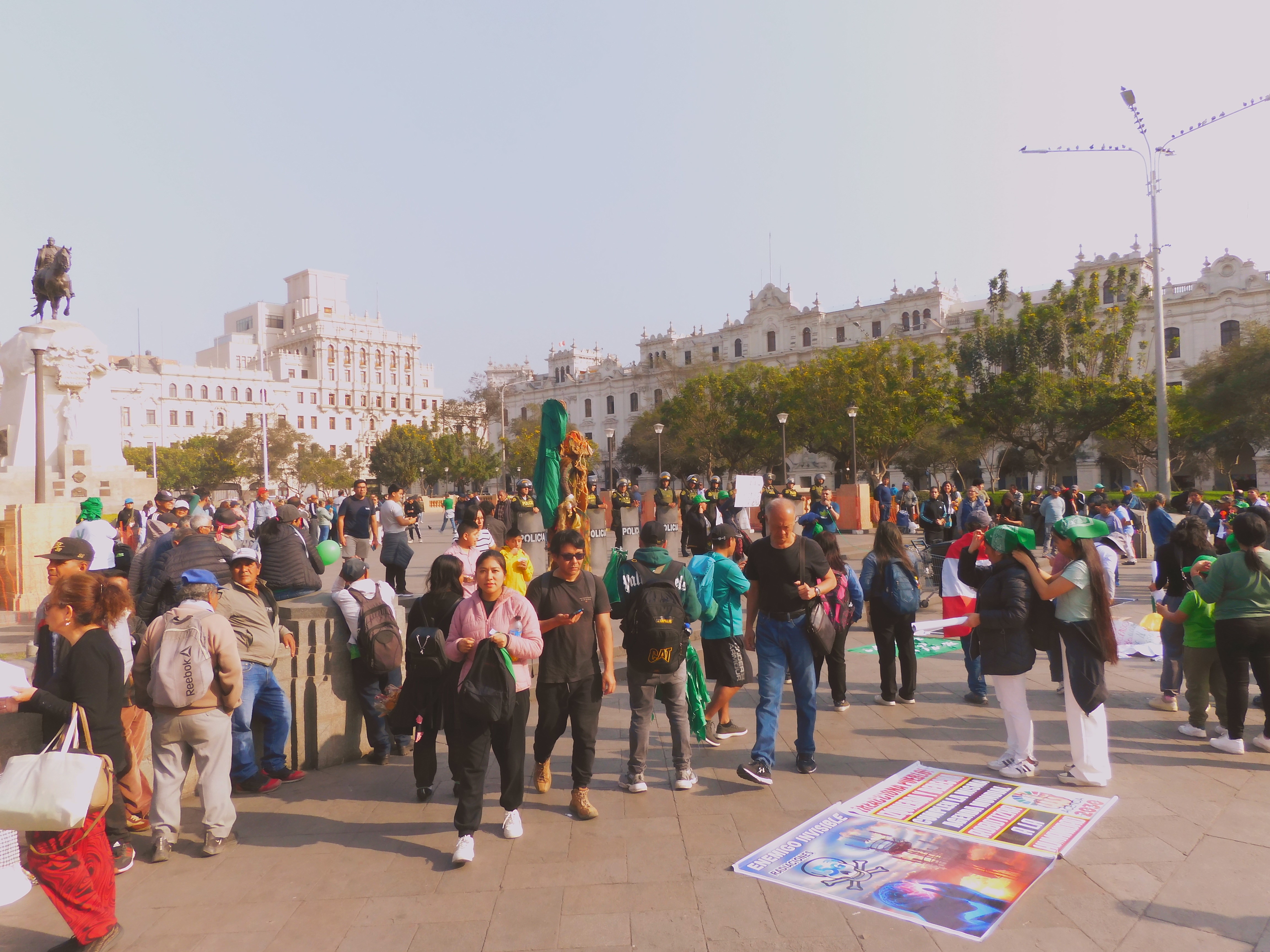
Our group’s first challenge was crossing the busy street to get to Plaza de Armas. The Plaza was full of both police and demonstrators which Ari assured us is the norm, especially on weekends. There was a large demonstration against international oil companies, a demonstration against vaccines, and some other protesters and causes we couldn’t identify.


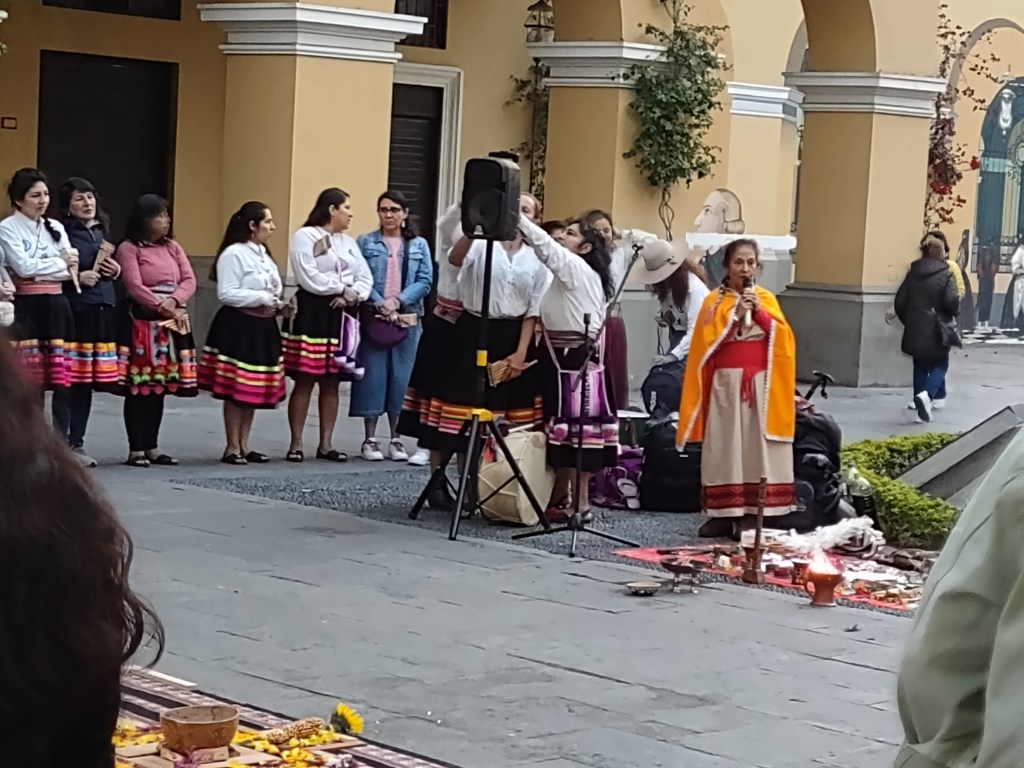
There is a long pedestrian street through this downtown area. We saw Colonial churches and elegant old homes. All having been rebuilt after earthquakes. Also street vendors and shops of every kind. Disabled street singers and dancers. Ari said: “If you feel like you want to give them something it’s okay. We don’t have generous social welfare benefits in Peru.”
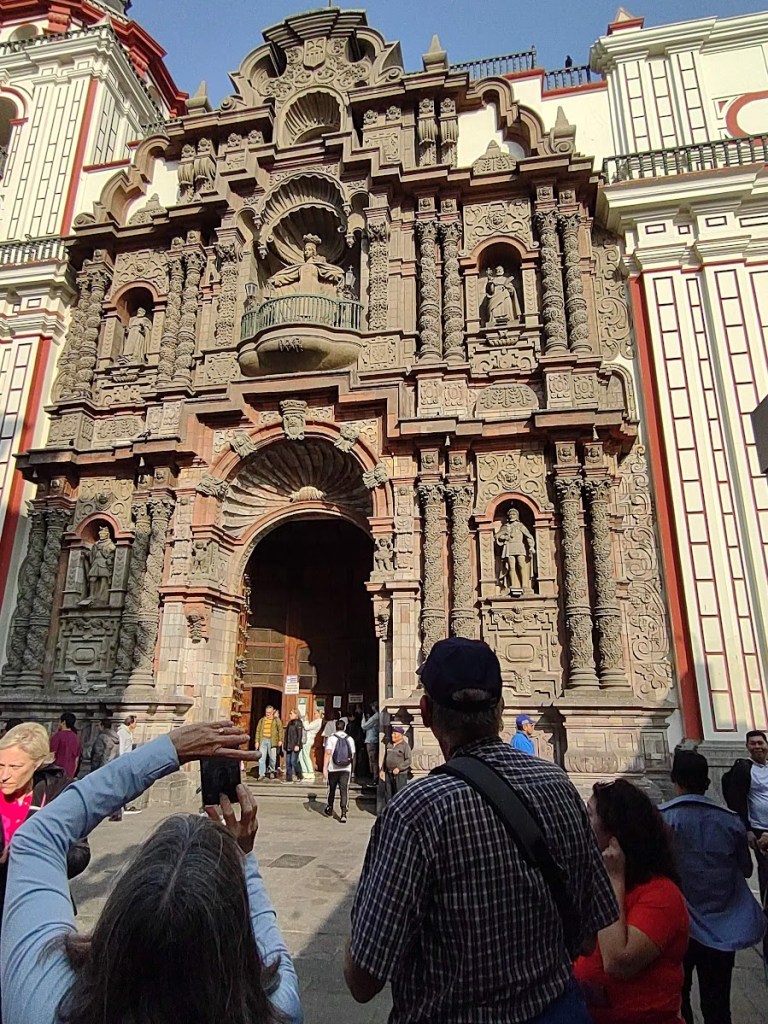
Below are pictures of La Casa Dubois, ( A World Heritage Site), Elders teaching young women how to conduct an ceremony for the earth, Basilica of Our Lady of Mercy c1535, a tiled pedestrian street and the Cathedral of Lima Archbishop’s Palace.

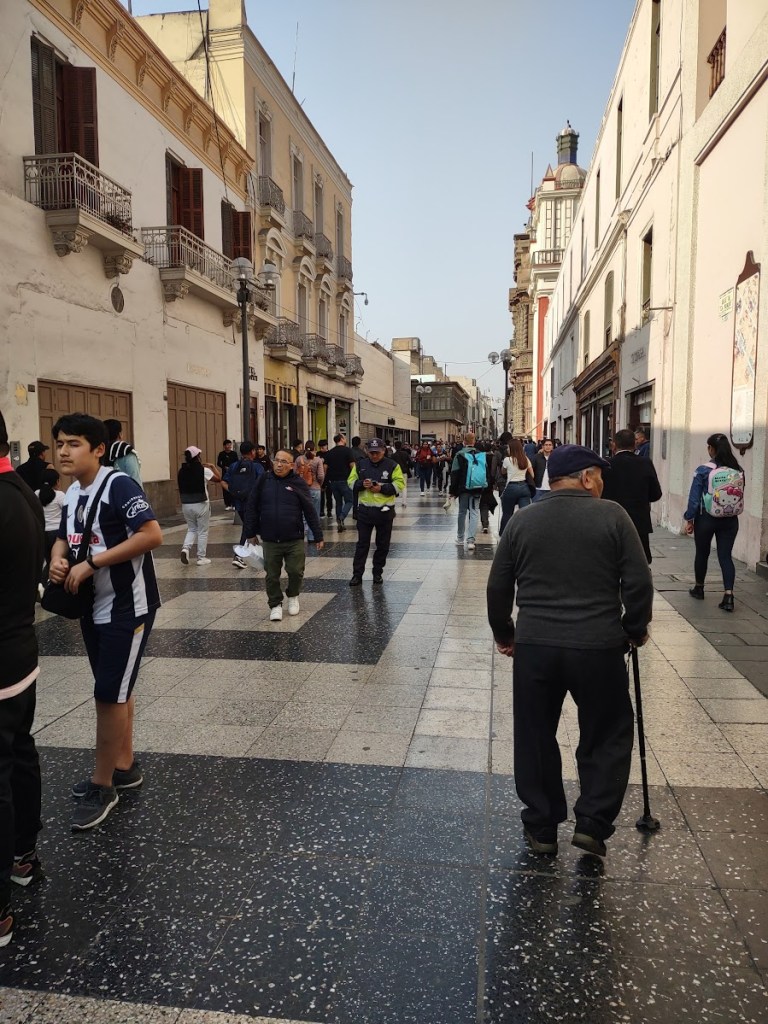
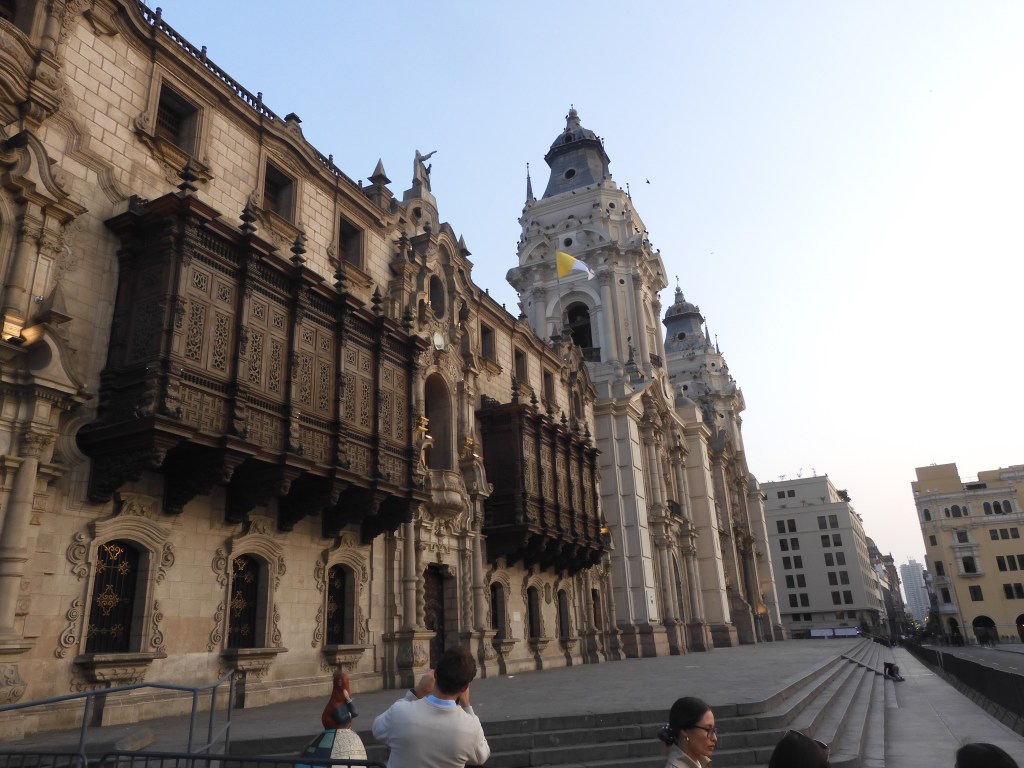
We walked through the huge Centro Market. Our guide Ari felt it necessary to give a trigger warning to the vegans in our group. We stopped at a vendor and had a fruit tasting. Peru grows a lot of fruits and berries we’d never heard of. Several unfamiliar fruits seemed to us to be an acquired taste, especially the fruit that was slimy and had lots of seeds.


We headed to the House of the Government also known as the Casa de Pizzaro. This is where the Peruvian President lives and where the executive branch conducts business. There had been some kind of a threat so the plaza was closed and guarded.


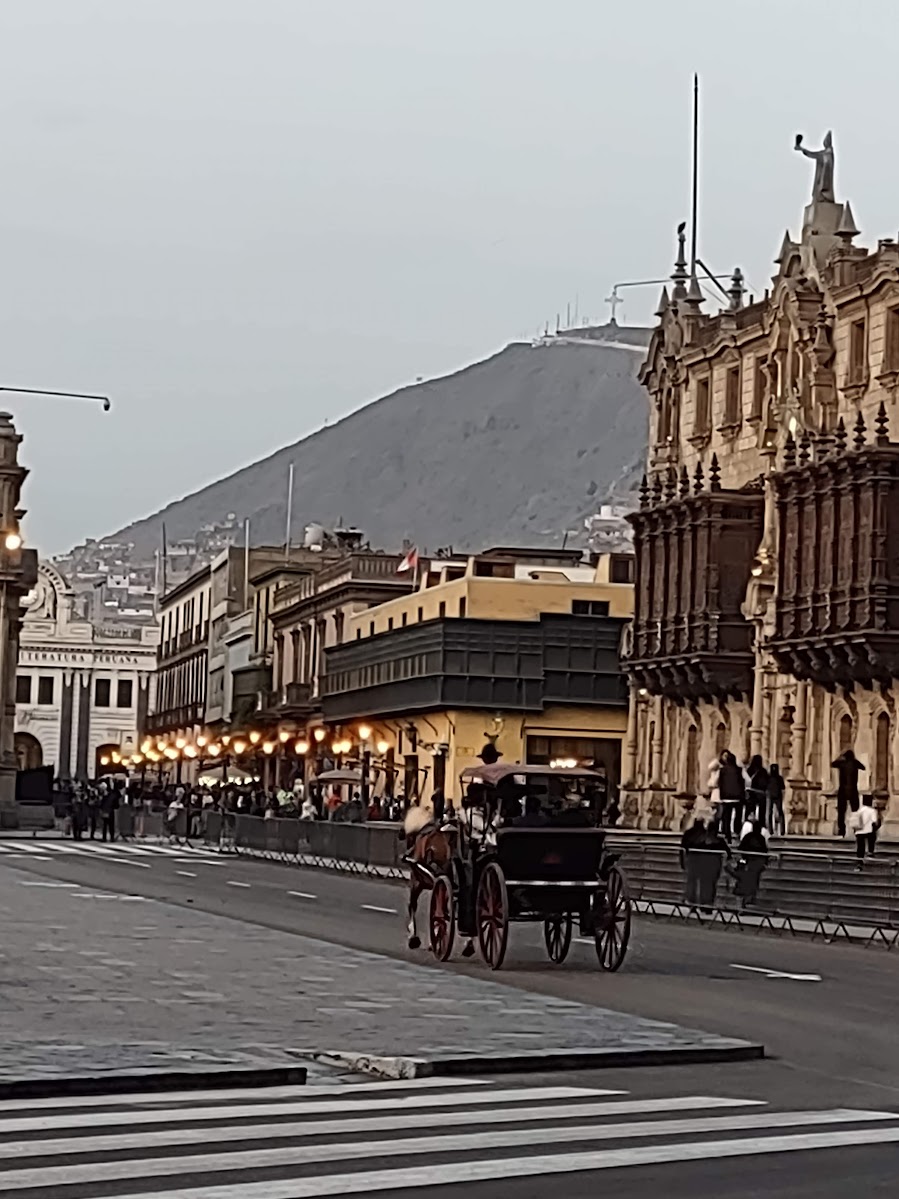
Due to the closure of the plaza our bus back to the hotel was unable to pick us up as planned. Our group joined the crowds walking around the perimeter of the Plaza Major we were not allowed to enter. At some point Lurch tried to pick-up Dennis.
To fill the time Ari took us to a shop for a Peruvian wine tasting. It was after 8:00pm by the time some of us assembled in the lobby for Ari to lead us to her favorite restaurant for dinner. We had to pack and be ready for our flight to Cusco early the next morning.
Cusco – Pop. 505,000, Altitude 11,152 ft.
Adjusting to the Altitude
We flew from Lima not much above sea level to Cusco where we were met by our Cusco guide, Paulo. Upon arrival Paulo gave us 9 newbies detailed instructions regarding adjusting to the altitude.
- Drink coca tea but never after 5pm.
- Eat lightly. Soup is good.
- No beer or alcohol! Drink plenty of water but of course NOT tap water.
Paulo described himself as half Inca, half Catholic. He spoke Quechua the native language that seemed to be commonly spoken in the Cusco area. We learned that besides speaking Spanish and English Paulo also speaks French. He told us that all Peruvian guides are required to have 5 years of higher education and two foreign languages.
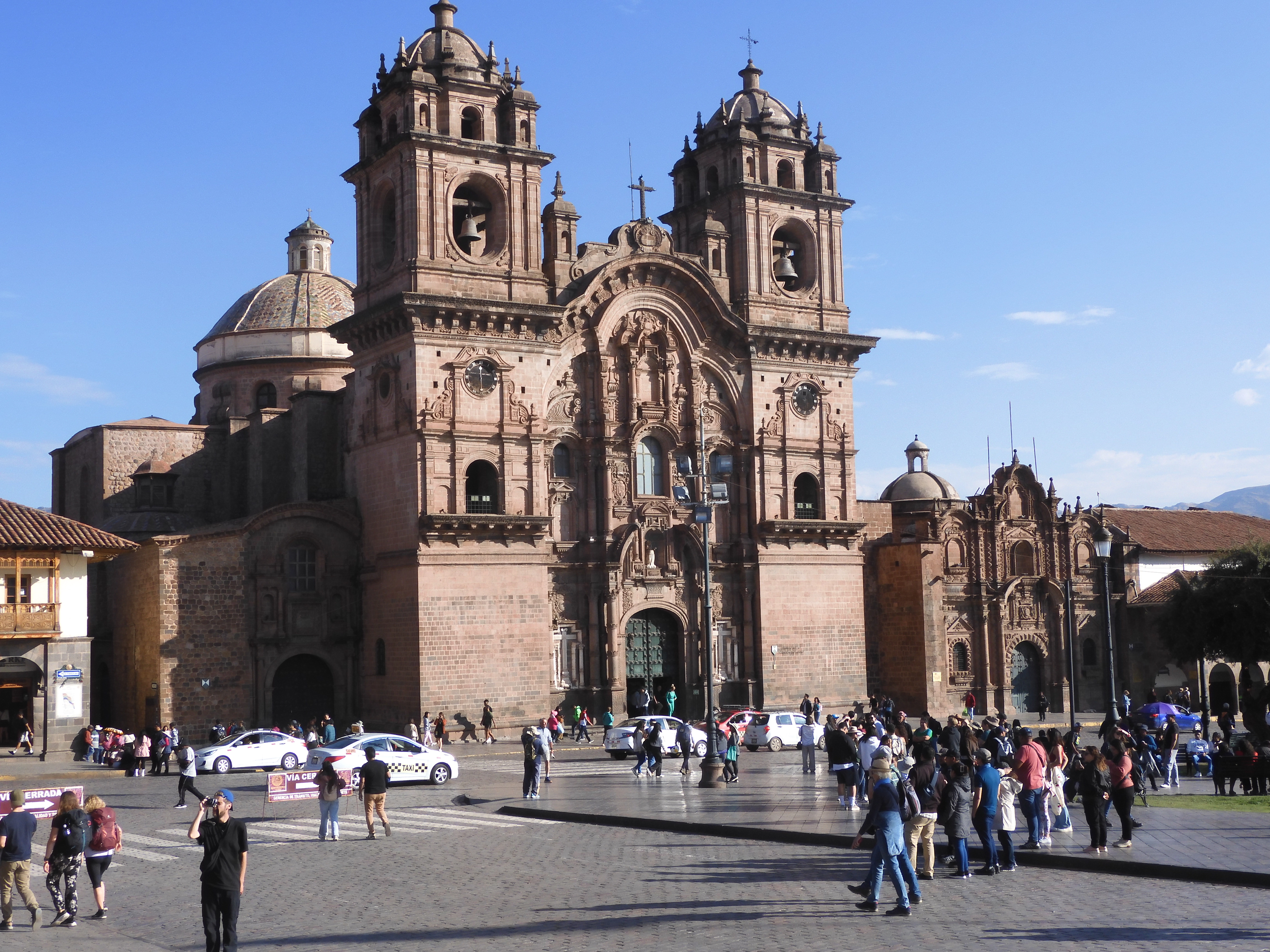
After meeting the 5 members of our group who were already in Cusco, we ate lunch and took our orientation walk. We started at the Inca wall pictured. Paulo explained to us that the interlocking stone blocks cut by the Incas have no mortar between them. The Inca walls have withstood many earthquakes while the Colonial Spanish walls fail. We continued to Cusco’s main plaza (Plaza de Armas) where we saw 3 different wedding coming and going from the cathedral. Paulo said “Of course it’s Sunday.” Due to earthquakes the Spanish Colonial Cusco Cathedral has been rebuilt many times.
We also visited the Cusco Market. Paulo explained how the locals use coca leaves, how and why you would cook dried Alpaca, and the specific ways a few of the thousands of species of potatoes developed by Peruvians are used.


The Community Umasbamba Visit
The community of Umasbamba has opened itself to visits by tourists. The purpose is no doubt to help support themselves. The money paid to the community for their time is used for their children’s education. The women also sell high quality woven items they make to visitors. The village ladies and two men answered our questions. Paulo translated their Quechua and also asked things we hadn’t thought to ask. The women really seem to enjoy explaining what is really a communal way of living.
We learned that Umasbamba has 35 families and a population of about 100. The community seems to be a true commune. They have a set schedule for waking, working, cooking, weaving, napping, even showering. The women weave for about 2 hours everyday, cook the meals, and help with the farm work when necessary. The men do most of the farm work. There are other small villages in the area. When a couple is married, they live in the community that the women is from. That community will come together to build the couple a house. The women we met all had from 1 to 3 children. There is an elementary school nearby but youth must go away to a larger town for high school. They seemed to expect that all children to graduate from secondary school.
Also interesting while they have no television they listen to the radio and believe that they are aware of what is going on in the world. They have access to the Internet and use email but online communication is only available in the morning.
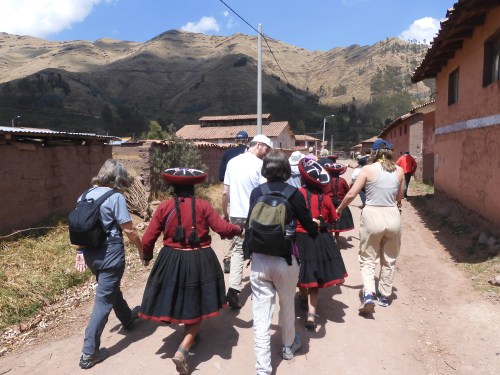
SLIDESHOW–>Women lead us to the village center to the flute and drum music 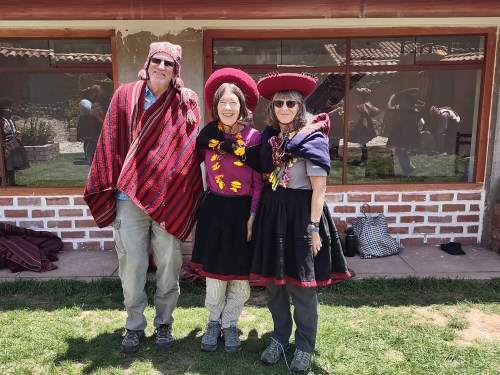
Community members dress us in local clothing 
Women leading llamas 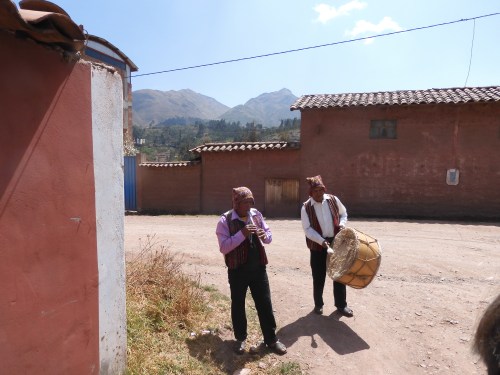
Musicians accompanied us on our walks 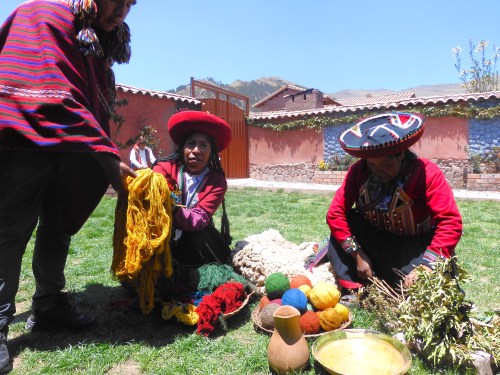
Women demonstrate using plants to make dyes 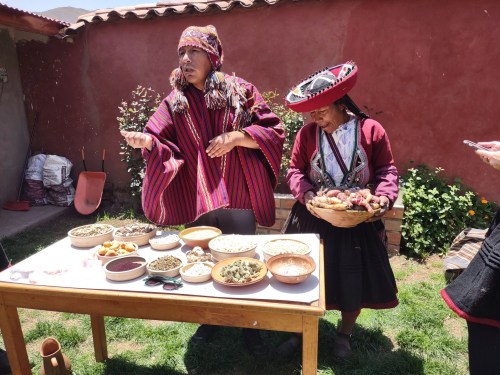
Table of things grown and eaten by the community 
Weaving and spinning demonstration 
Lesson on potato growing and harvesting
Ollantambo (Ollanta)- Population 3000, Altitude 9343 ft.
After lunch at the community we drove more of the twisty road along the Urbamba River through the Sacred Valley . It was hard to take pictures from the bus. You can see that the Andes mountains go almost straight up. They don’t look like the Rockies. We spent the night in the town of Ollantambo, aka Ollanta, where we could view Inca structures and a terraces in the mountains above us. We didn’t do any hiking to those ruins as our trekkers were to take a bus at 5AM! the next morning to their trailheads. Kris and an Australian couple Chelsea and Jon were hiking the Quarry Trail for 2 nights. The 9 other members of our group began their hike on Inca Trail hike at a different trailhead. They would be gone for 3 nights and meet us at Machu Picchu.
As for Dennis and I, Paulo said he had plans for us. Our departure time from Ollanta was at the reasonable hour of 9:00am.
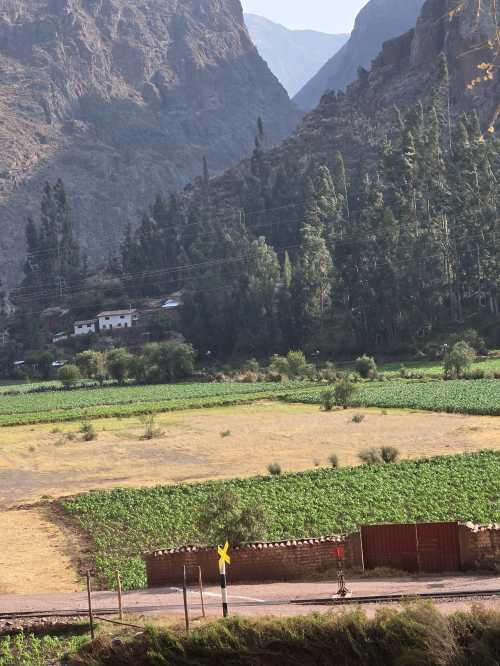
SLIDESHOW–> Steep mountain walls in the Sacred Valley 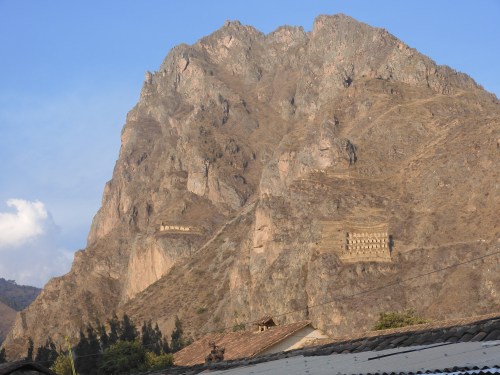
Inca Pinkuylluna ruins, storage buildings & granaries viewed from Ollanta 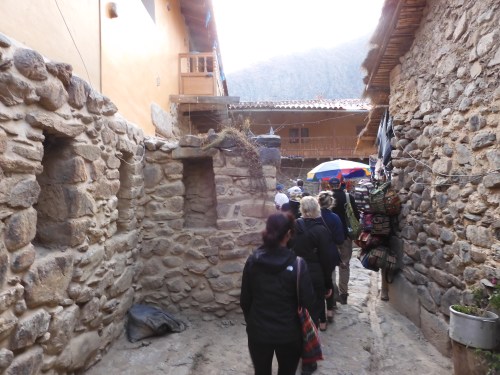
Ollanta street. Continuously inhabited since the 13th century. 
Inca built terraces above Ollanta lead to an Inca Temple 
Mountains surround Ollanta viewed from our hotel 
Mountain view from our hotel 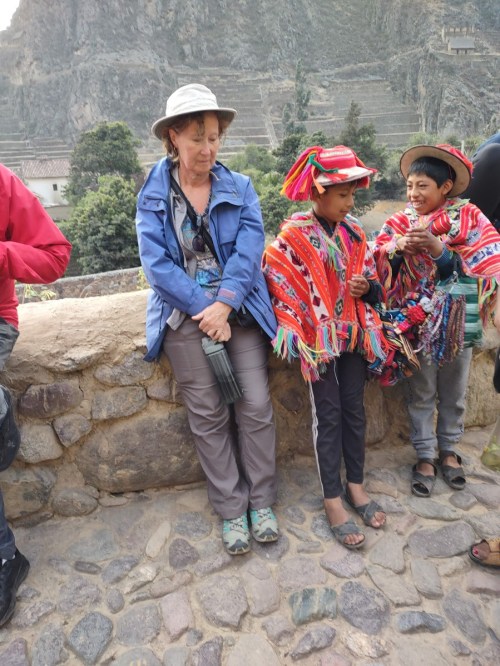
Two boys followed our group until we let them dance for us 
We found these guinea pigs being raised in a store 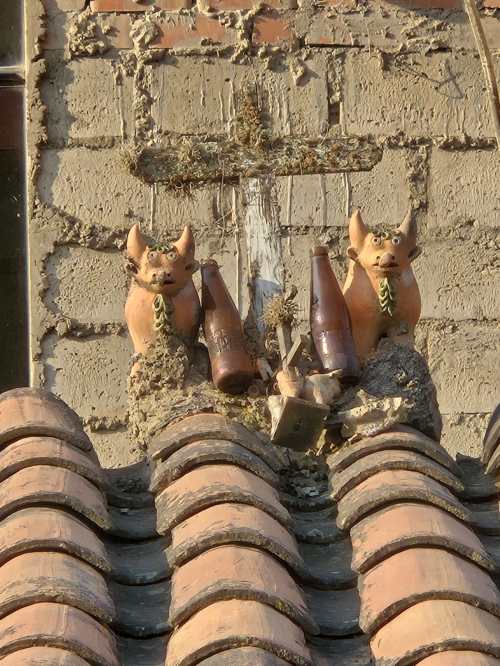
Roof ornament in Ollanta. Cow & bull are good luck. Not sure about this one
To send off our hikers we had a celebratory dinner that night in Ollanta at a very nice Peruvian restaurant. Kris isn’t fond of the fish featured on the menu. None of the other Peruvian specialties appealed to her so she ordered Pineapple Chicken. All the meals were beautifully plated but Kris’s was the most photogenic.

The Sacred Valley
While Kris hiked Dennis & I spent 2 days with Paulo. Paulo arrived at our Ollante hotel with our driver and the small tour bus. It was a bit sad to see all those empty seats, but we had few regrets as we began the winding road back to Cusco through the Sacred Valley.
Urubamba – Population 17,800, Altitude: 9416 ft.
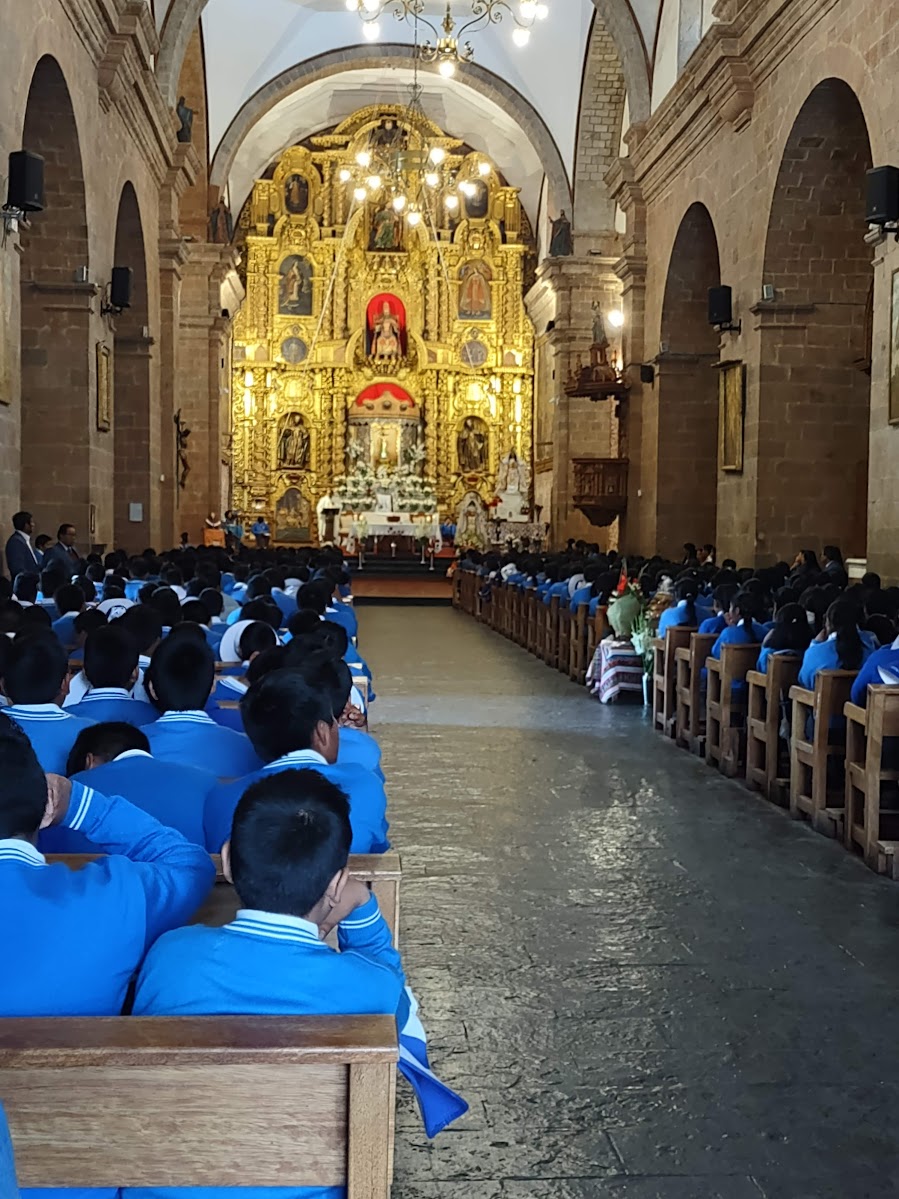
Our first stop was Urubamba. It was Wednesday and Paulo wanted us to see a “REAL” market. One with no tourists (except of course us.) What surprised us was music and a parade of uniformed students heading down Urubamba’s main street. This was an unexpected difficulty for our bus driver but Paulo was undeterred: “Oh there is always some sort of festival.”


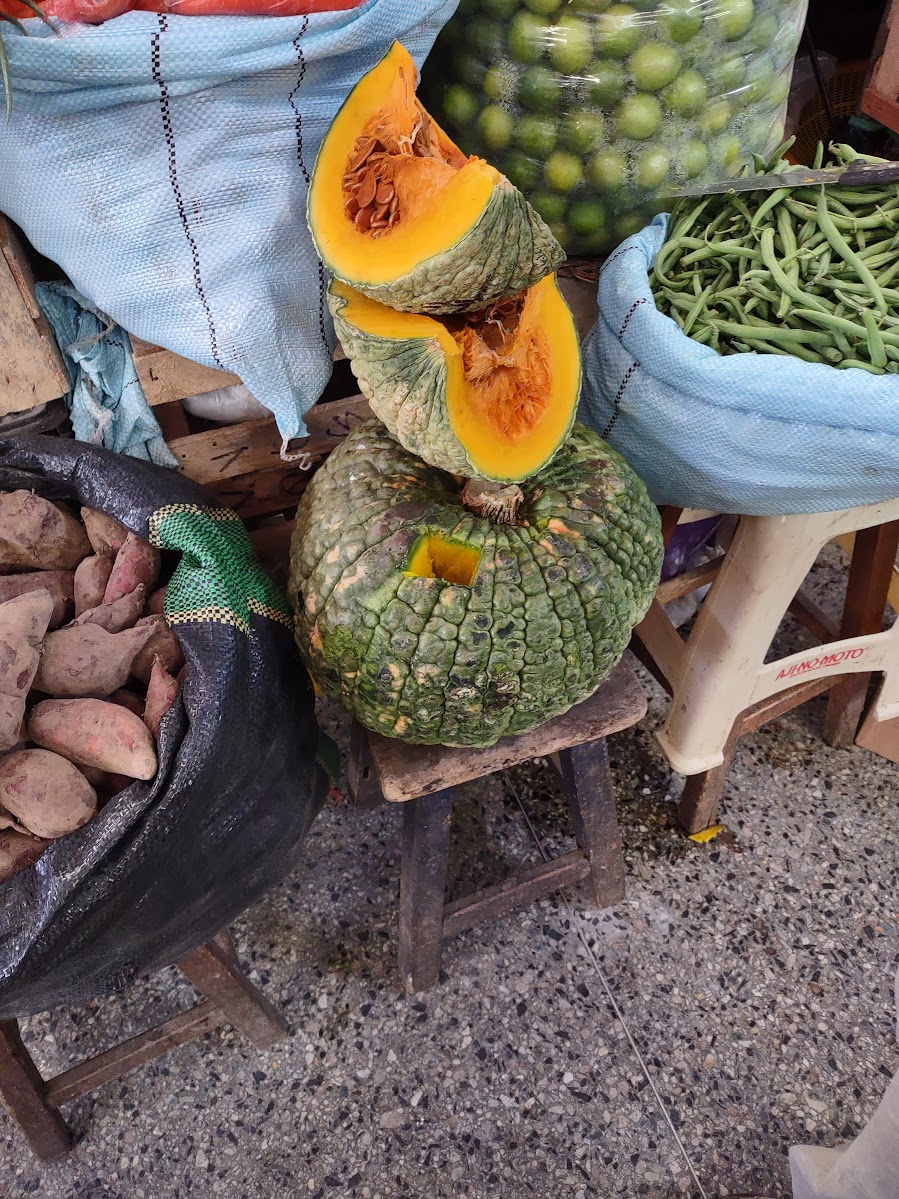
From the market we headed to the church Temple de San Pedro the Apostle. Dennis & I were hesitant to cross as the street to the Plaza de Armas as mototaxis were coming at us. They were numerous and fast.

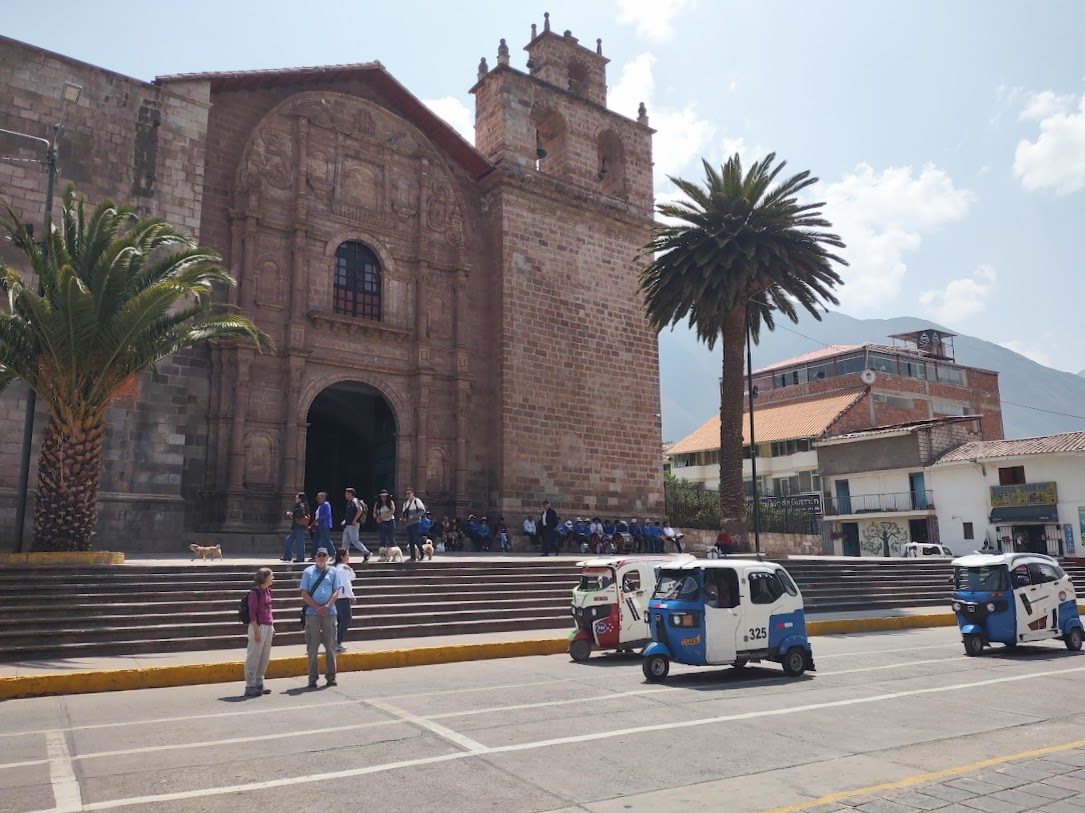
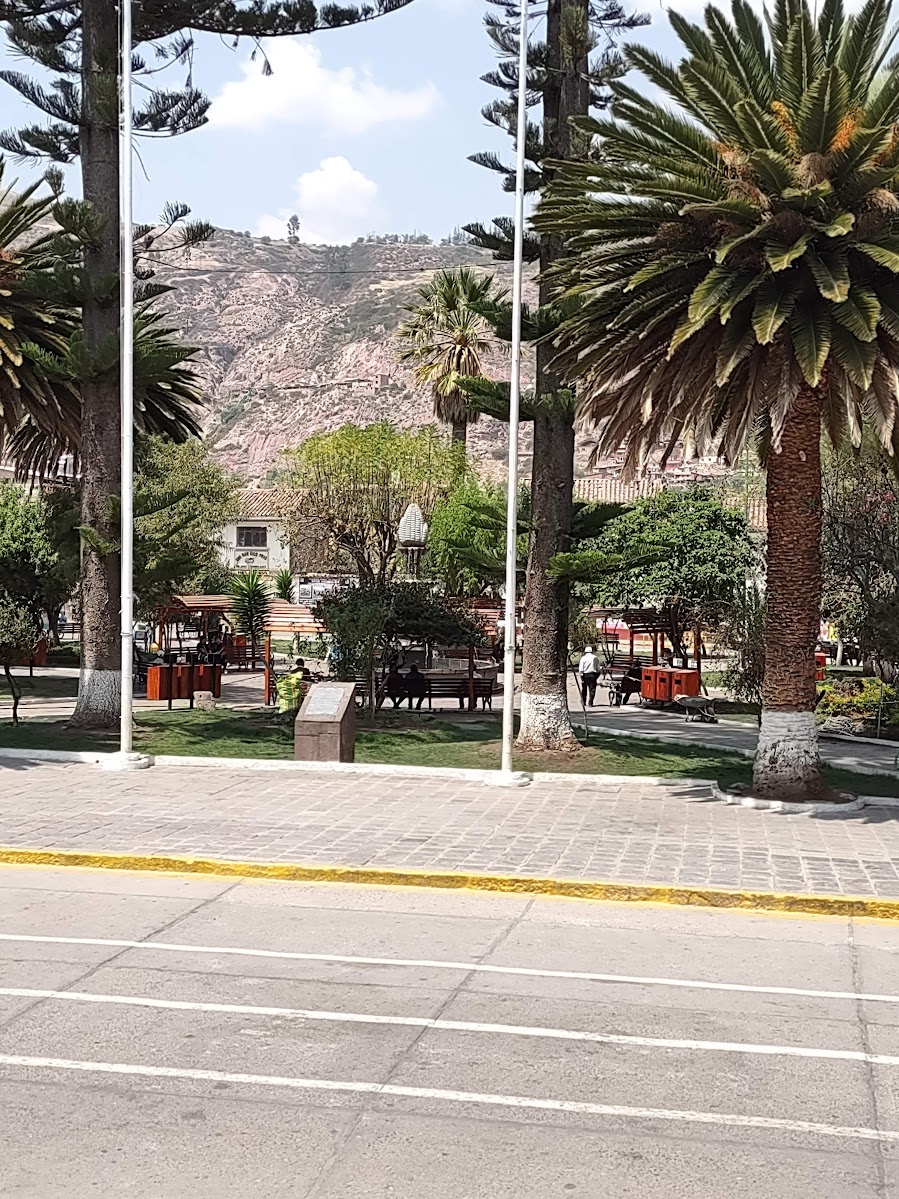
I was fascinated by the mototaxis. We saw old and new 3-wheeled vehicles used as taxis, family cars, and workmen’s trucks. Quite a practical vehicle for the small towns with narrow streets. I read that they are all manufactured in China. Dennis does not believe manufacturing these could be an American business opportunity. “You can’t have one unless it plugs-in.”

Paulo had our driver pull-over in the small town of Lamay because he wanted us to see how guinea pigs are cooked.
“Would you like to try one?”… Well why not? We insisted that Paulo pick out our pig for us.
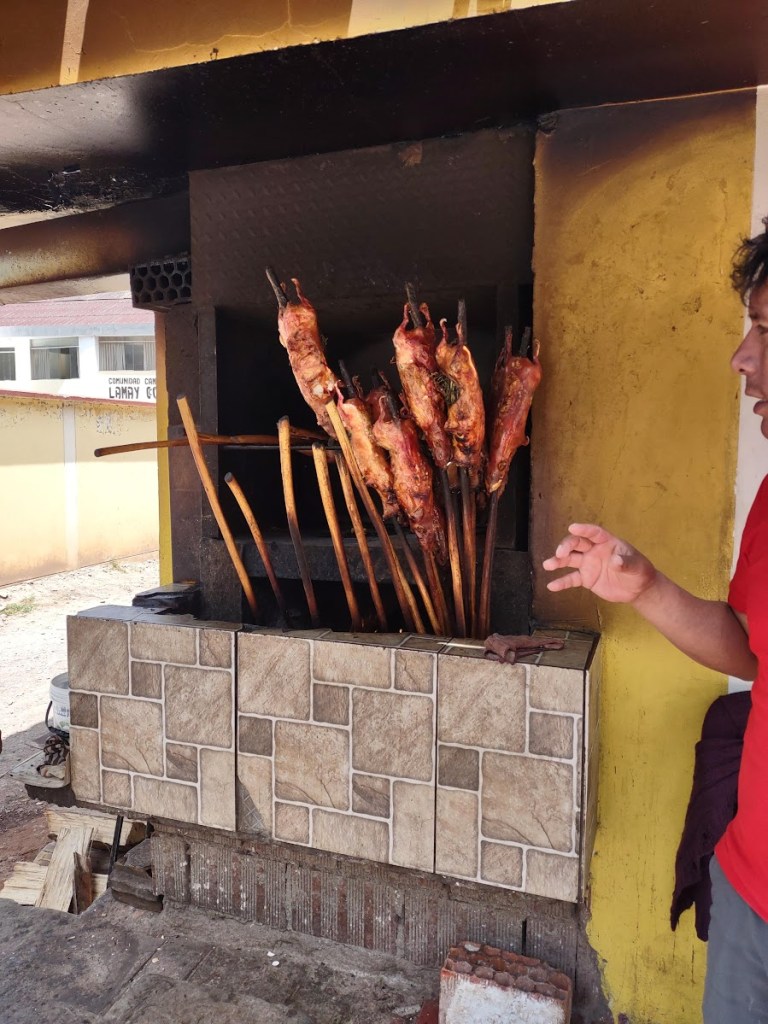
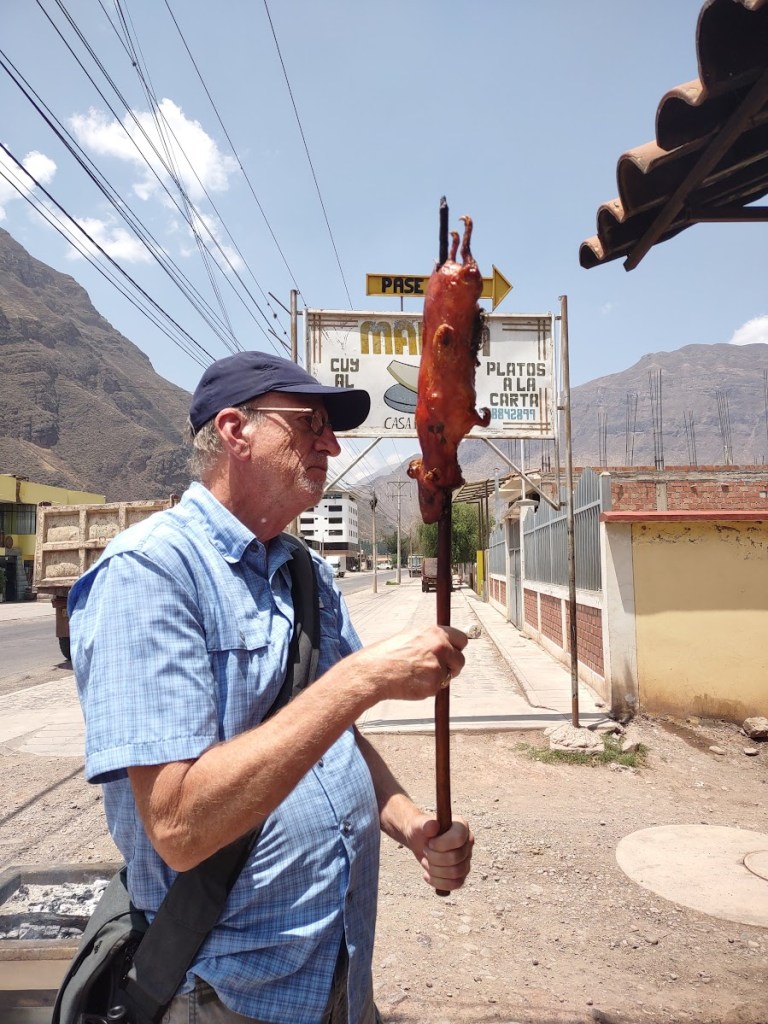
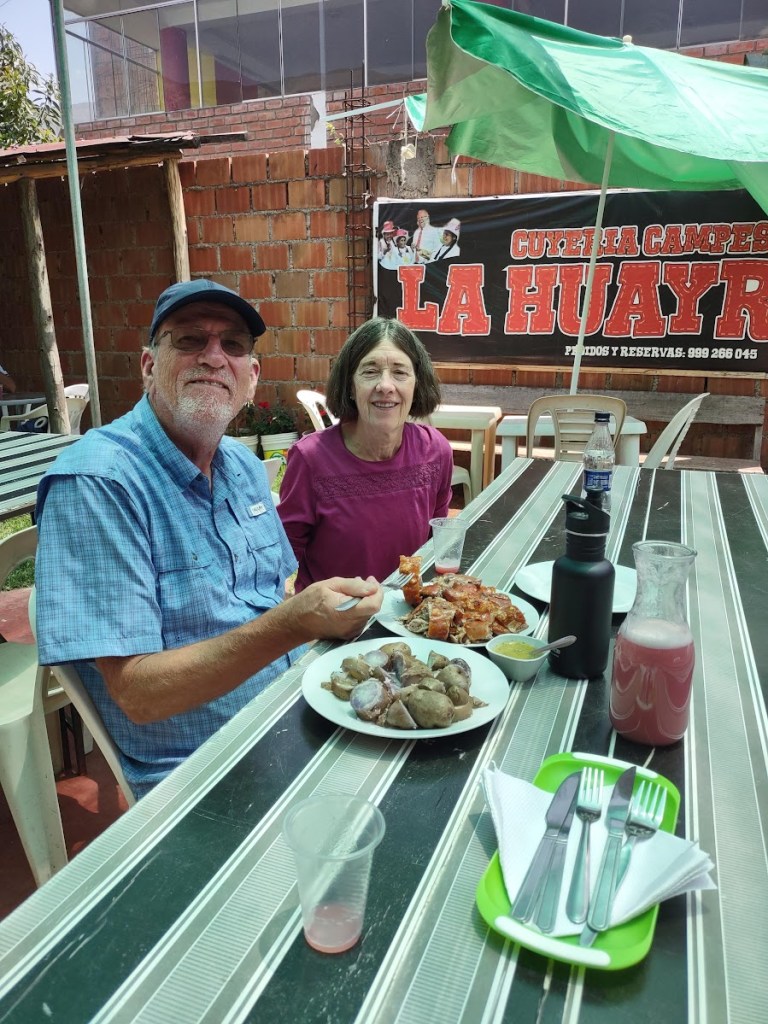
In the restaurant’s outdoor courtyard we were brought a plate with our guinea pig cut into tiny bony pieces, a plate of baked potatoes and a carafe of drink called chicha. We insisted that Paulo share our meal.
Paulo warned us to only have tiny taste of the chicha. Chicha is a fermented drink made from the fermented water that corn has been boiled in all day. Our guidebook says it tastes like not very good beer. Ours chicha had strawberries in it. I thought it was delicious. Paulo drank a little he said it wasn’t too strong and gave us the okay to drink a little more.

Next stop Pisac Pop. 9440, Altitude 8907 ft.
We stopped in Pisac to see the large craft market. Paulo said it was a great place to buy souvenirs and gifts. Dennis took pictures as he is not much of a shopper. Paulo also took us to a silver shop where they demonstrate how they make beautiful jewelry and inlay thin pieces of colorful rocks and minerals in the silver.

Me looking thru a pile of placemats 
Paulo leads us to the the jewelry store also known for having the best restrooms in town.
Cusco San Blas
We arrived back in Cusco in time for a siesta. After our rest we explored the San Blas area known for artists and wonderful views.
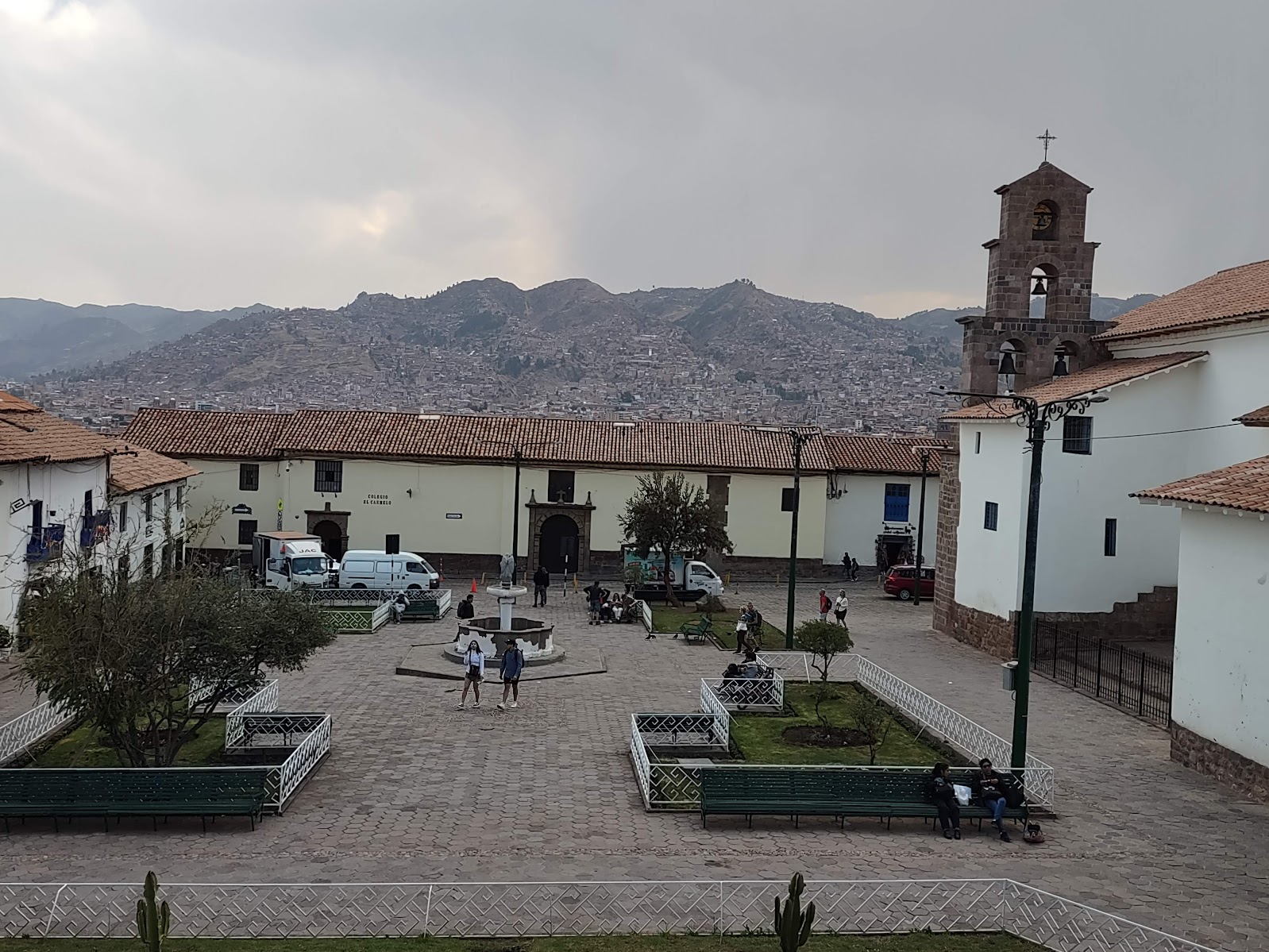
The weather turned cool. Dennis insisted I sit down on a bench in San Blas plaza instead of walking while attempting to pull my jacket out of my backpack and put it on, while walking on cobblestones. As soon as we sat down an artist approached us to show us his portfolio of paintings. It didn’t matter that we clearly said we weren’t interested in seeing or buying any art. He showed us anyway.
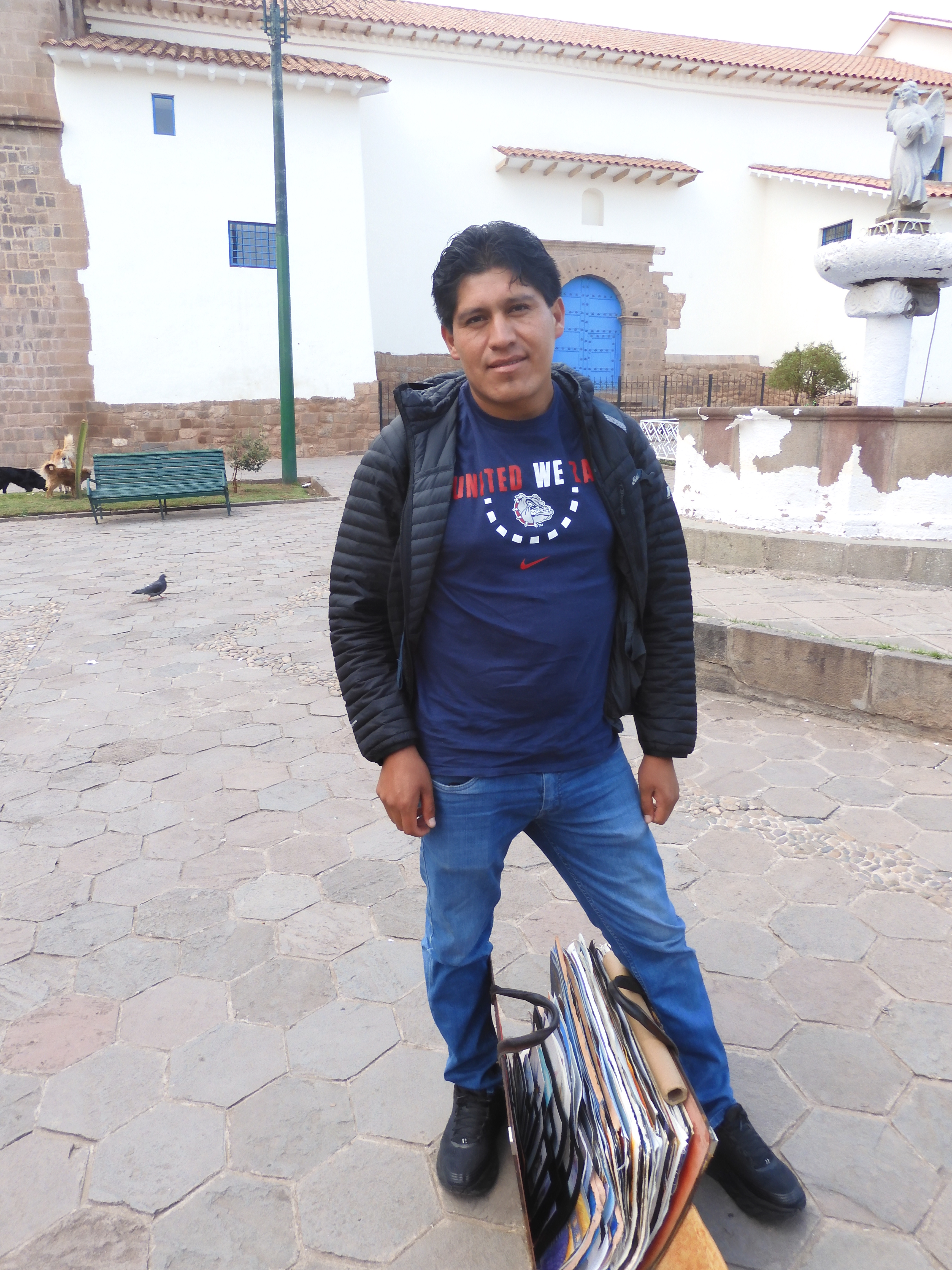
As he showed us his artwork we were staring at his t-shirt with the bulldog on it. After I succumbed and paid too much for a small picture, we asked to examine his shirt more closely. Sure enough it was Spokane’s very own GONZAGA BULLDOG! “Where did you get that shirt?” He said he had no idea, but he thought it had something to do with basketball.
We continued our walk up the hill headed for the San Blas viewing platform. I enjoy climbing the narrow stone streets and stairways and led Dennis up the hill until we came to a place where it looked like we might start on a path through the front yards of a row of adobe brick hovels. The view was great there but Dennis thought we should find the official viewing platform.
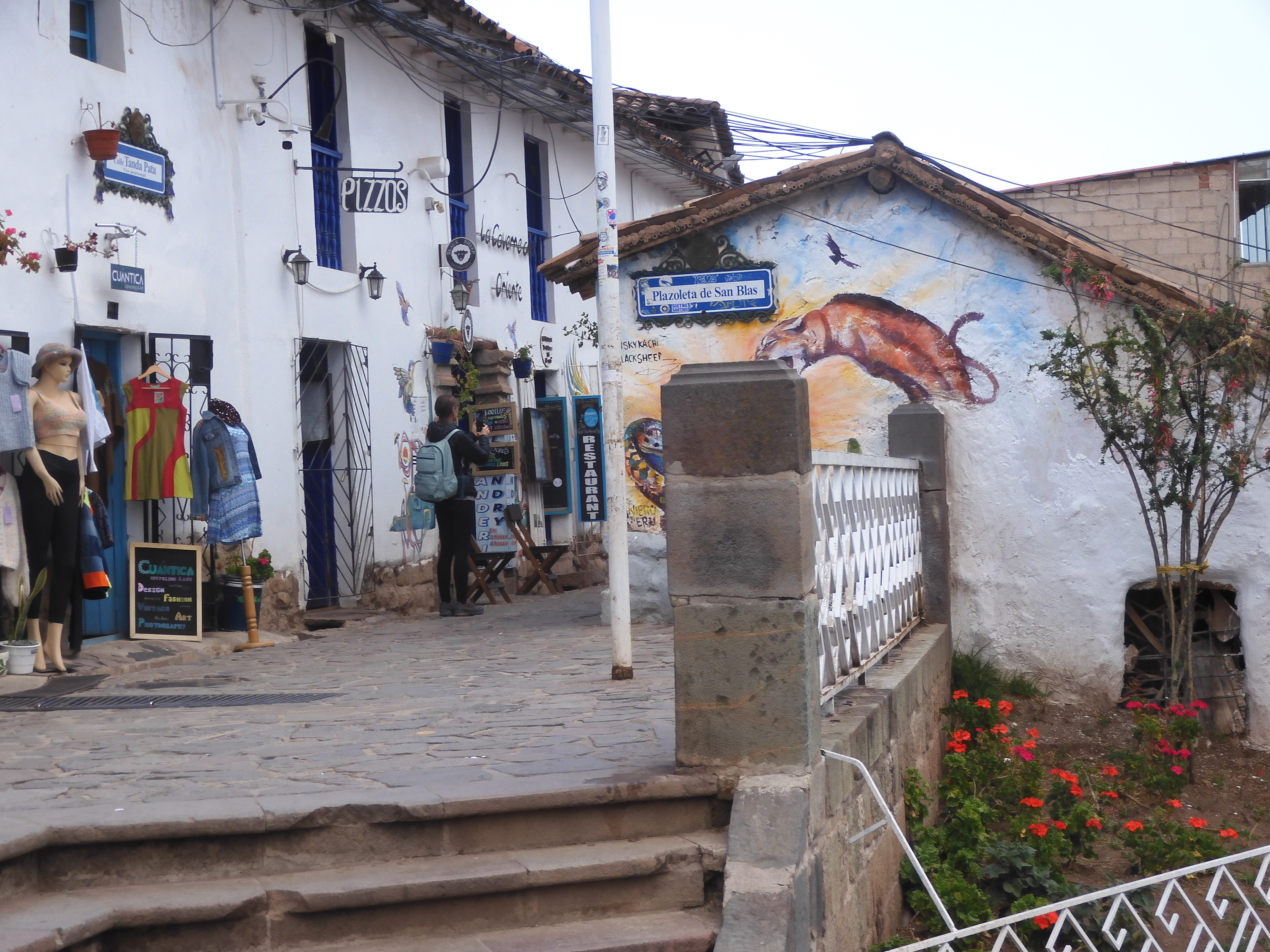
SLIDESHOW —Walk up and down to San Blas Viewpoint 
San Blas -Artsy Neighborhood 
Following the stone path too high. Above the viewing platform 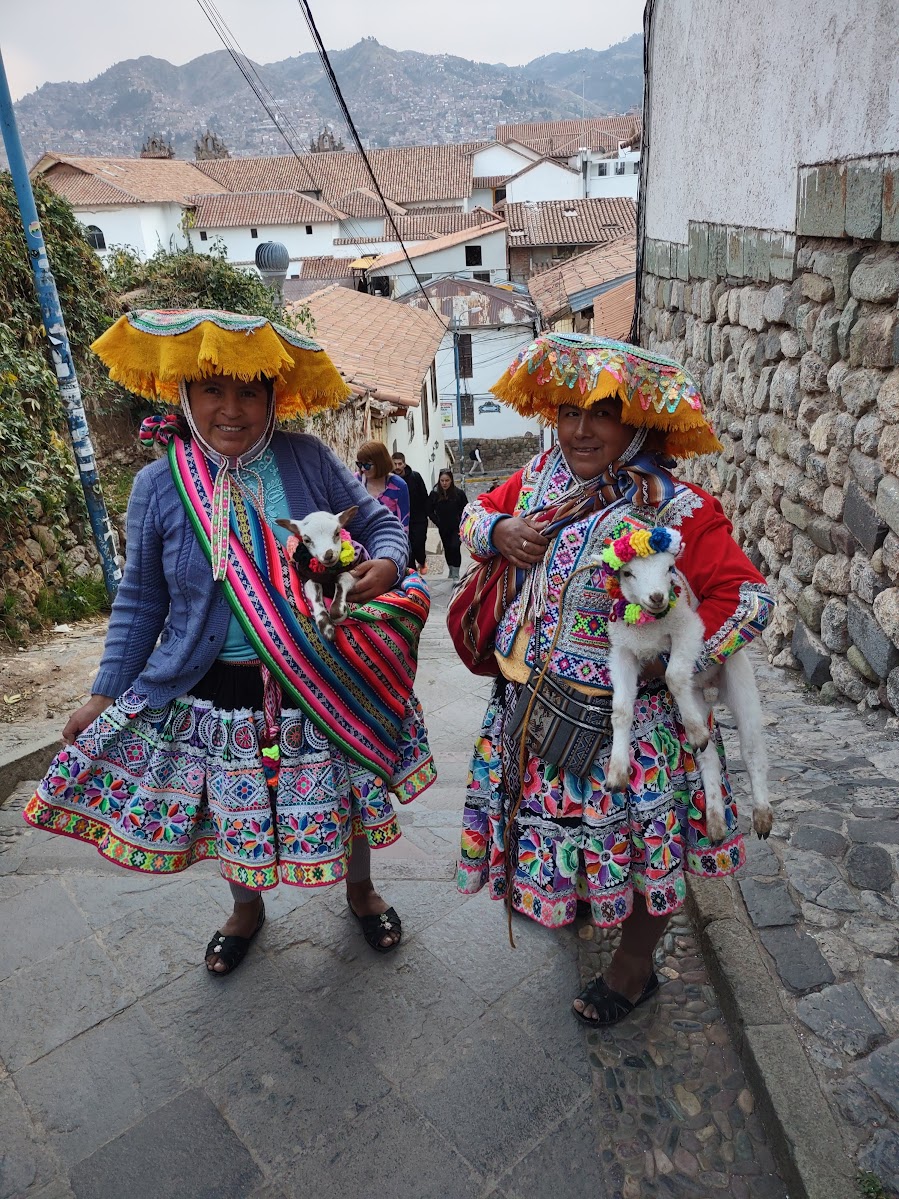
These ladies wanted 1 Sol to take a picture of them with their lambs. Dennis said No. I said: “Yes!” 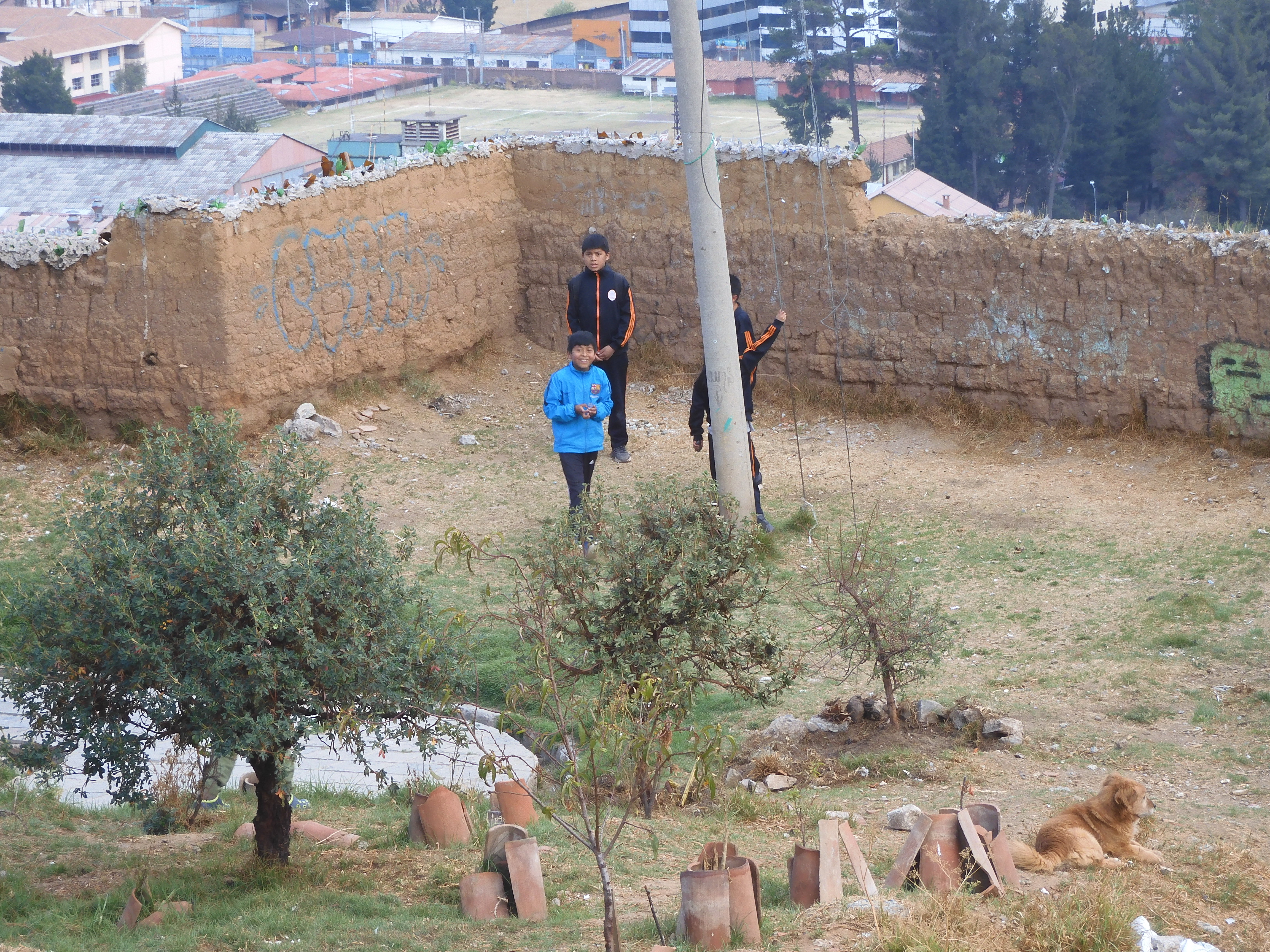
Kids found a play space on the steep hill 
Kids playing in the street in San Blas. I don’t think they have front or backyards. 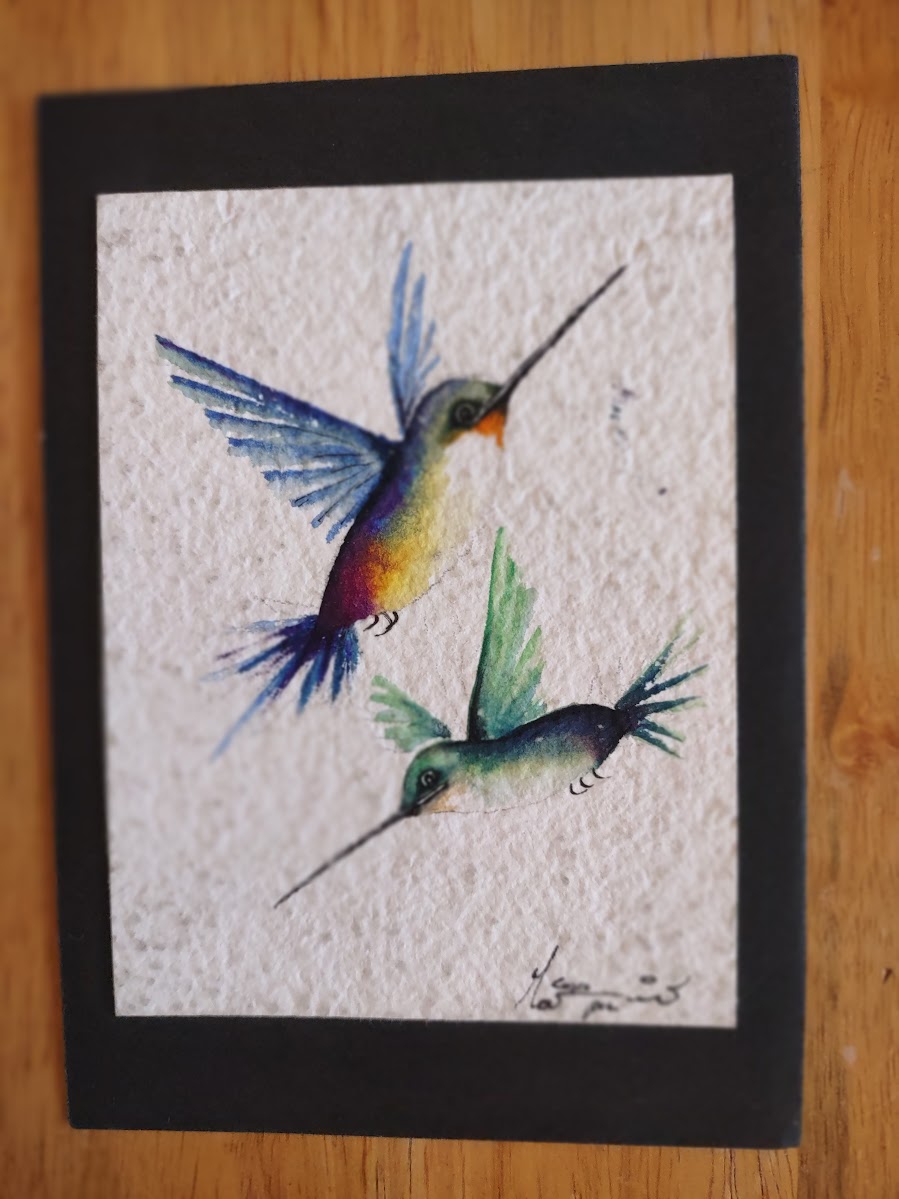
Very small picture I bought the Gonzaga t-shirt artist 

Left unpaved to show an Incan stone quarry was here 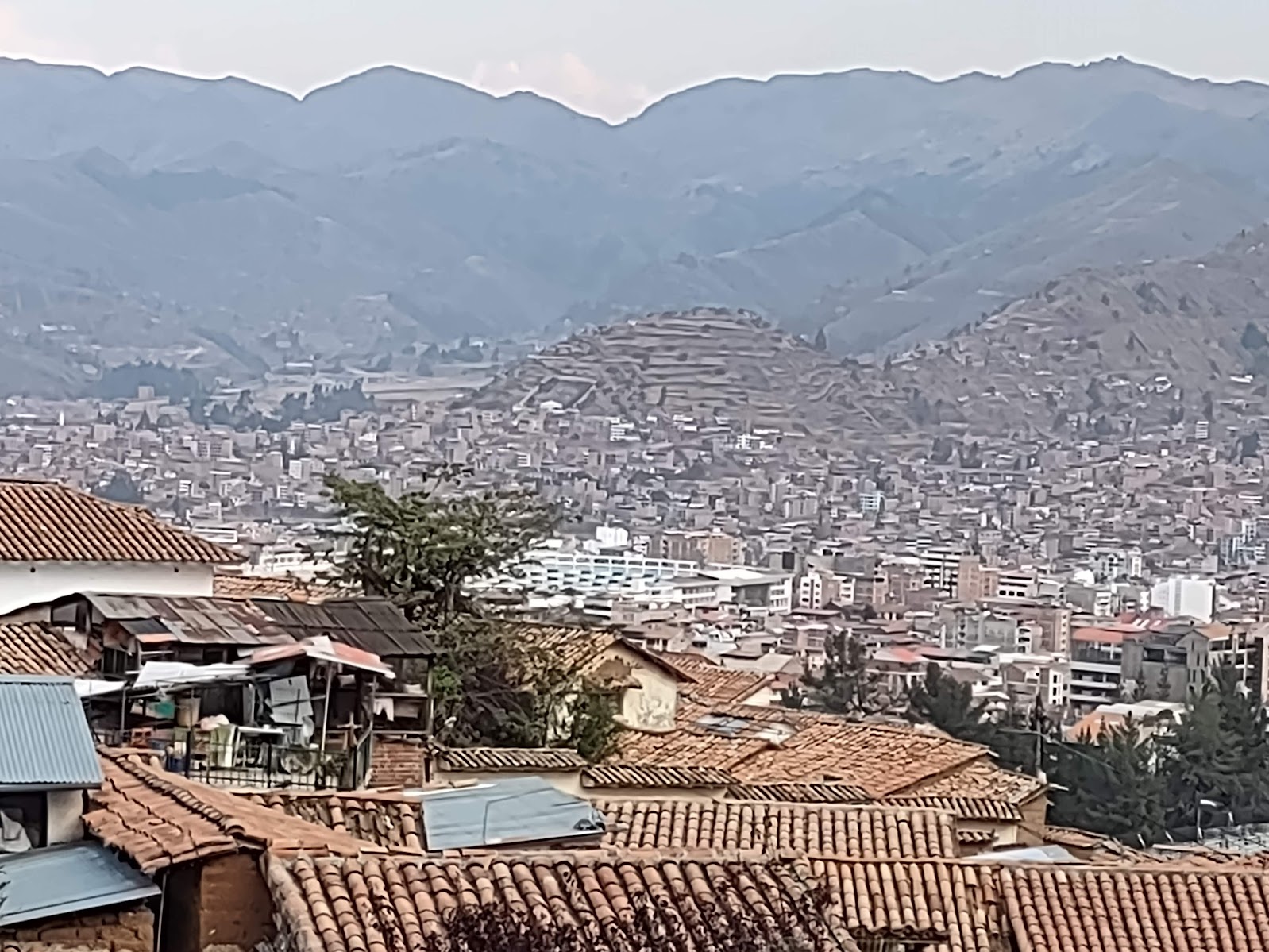
View from official viewpoint 
Mural at the official viewing plaza
Cusco with Paulo Day 2
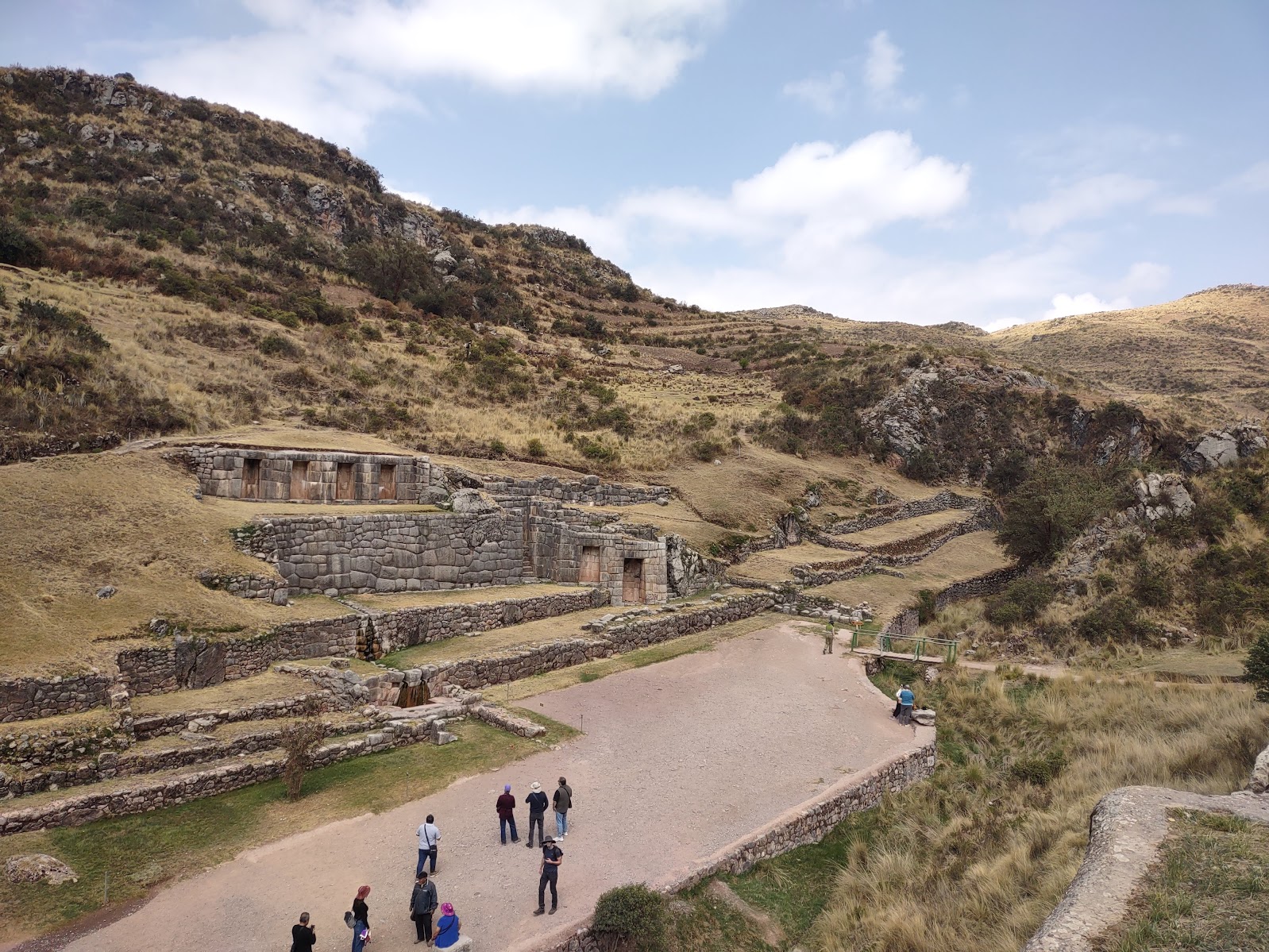
Paulo picked us up at our hotel. No tour bus today. We hitch-hiked with a mini-bus full of tourists. They dropped us off at Tambomachy also known as El bano del Inca (Bath of the Inca). I find it surprising that the Incas were channeling warm river water to this high place centuries ago but today there is NO SEPTIC SYSTEM IN PERU where you can flush toilet paper.
The altitude is above 12,000 ft as we were huffing & puffing walking up to the site, Paulo was pointing out trees and plants that only grow in this high place.
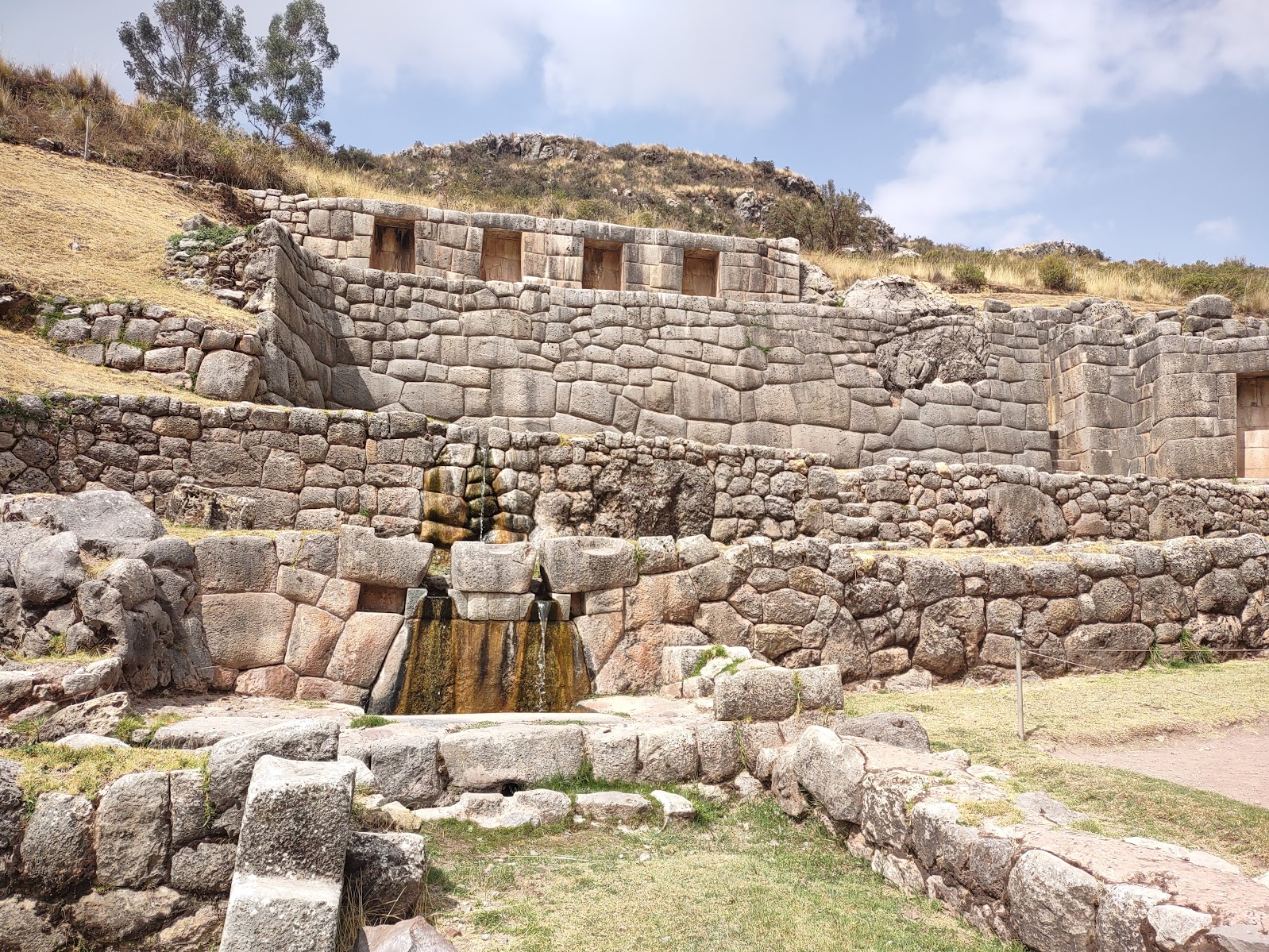
It was a lot of building for a place that the Inca royalty came to about once a year for a water ceremony. The well is still running. We hike up a hill just across the road to a site that is believed to have once been a guard house/customs post regulating who and what came into Cusco. The Incas are thought to have used polished quartz as signal mirrors to other guards on mountains across the valley. Incas were all about control of goods and people. The guard house had only a few remaining stones. You climb for the view.
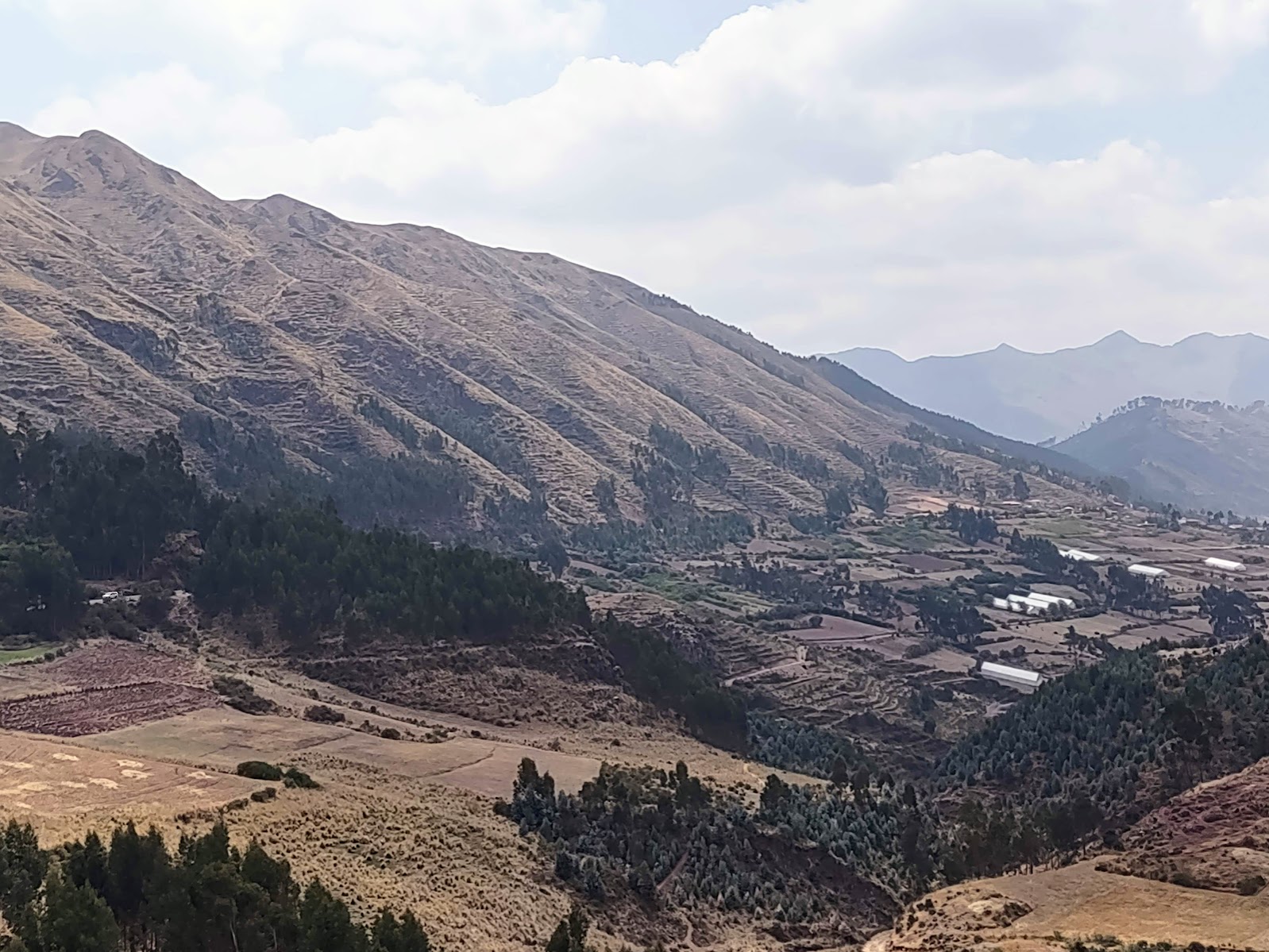
We hopped on a public bus to headed down to our next archeological site. We were the only bus passengers. Quite a change from the crowded bus in Lima.
Paulo suddenly said. I think you should feel llamas, so we exited the bus to learn more about Camelids.

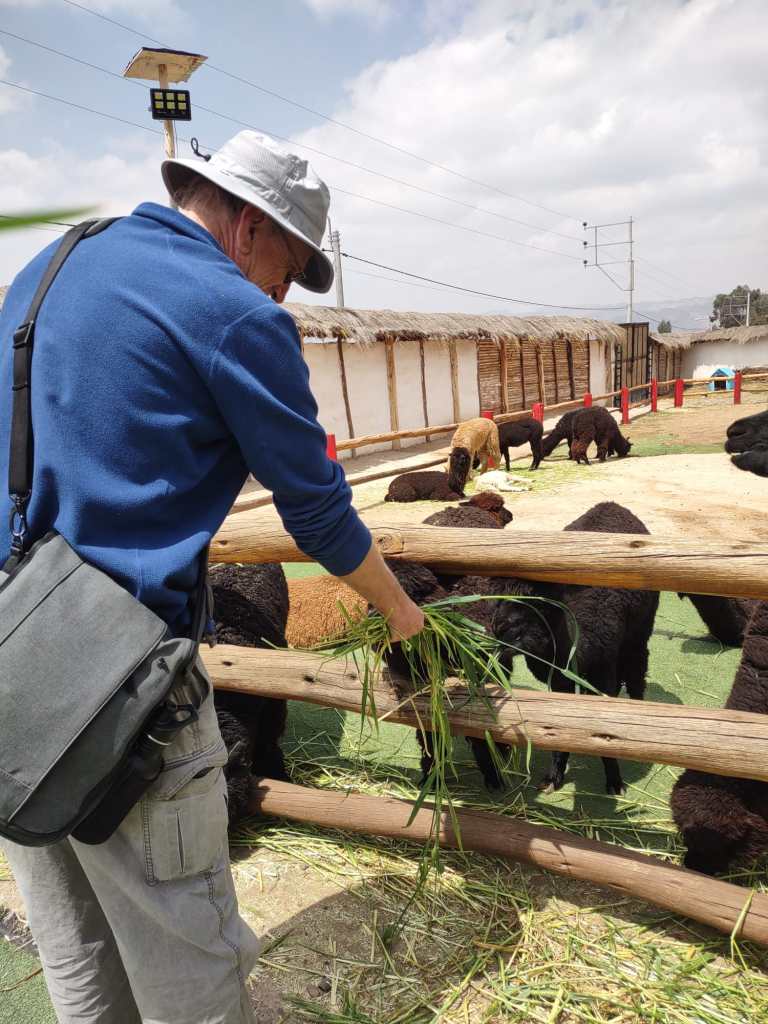
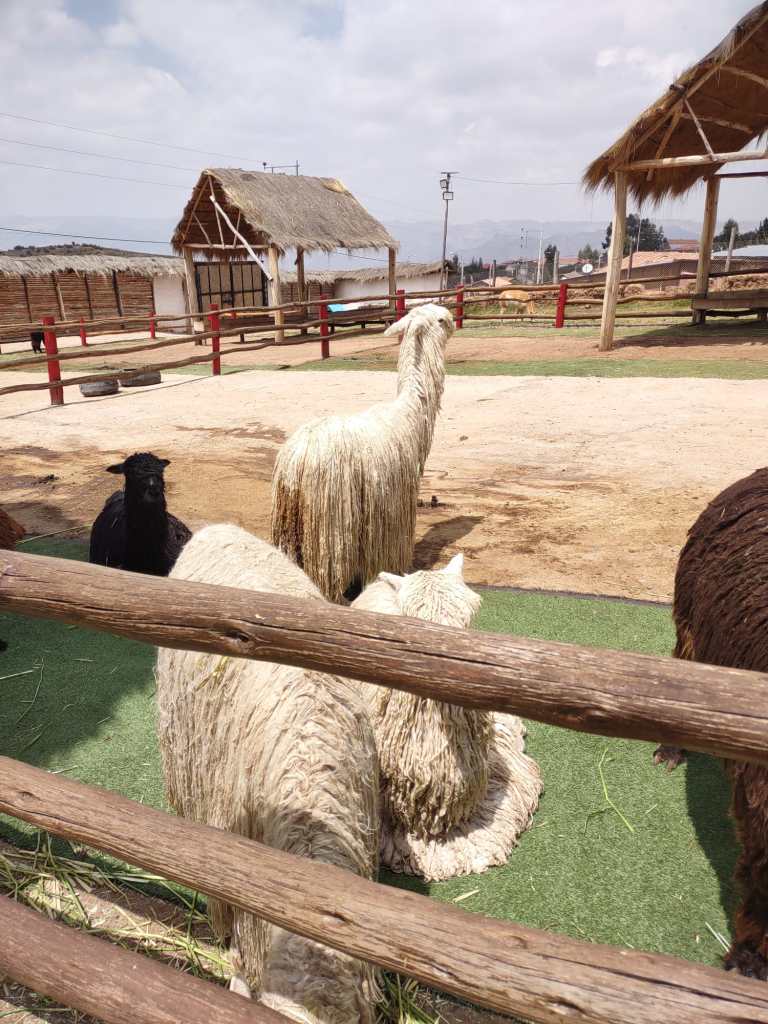
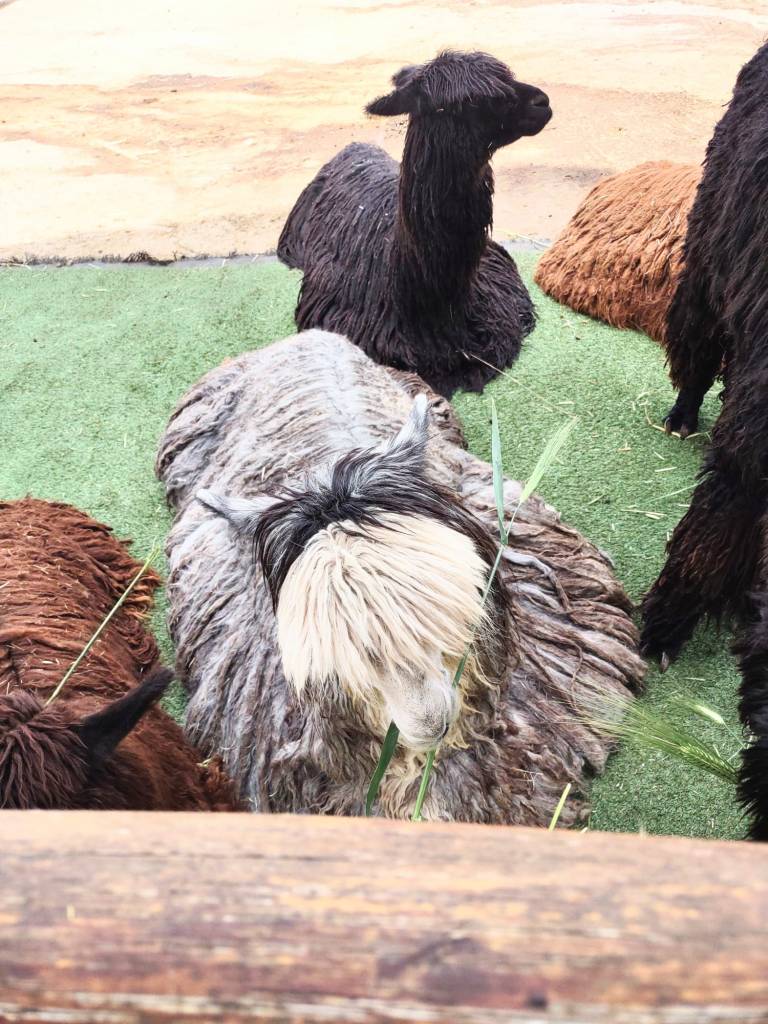


In a large textile showroom at the farm a woman showed us the different textiles made from llama, two types of alpacas and vicuna. We should now be experts in shopping for textiles.
Next on with our journey. We hiked up to the White Christ which is on a hill top overlooking Cusco also on our way to Saqsaywaman.


Saqsaywaman was the most significant Inca site we had seen up close. It served both as religious temple and a military fort. These temples were not destroyed by floods or earthquakes. The Spanish hauled the stones downhill to Cusco for their building projects.
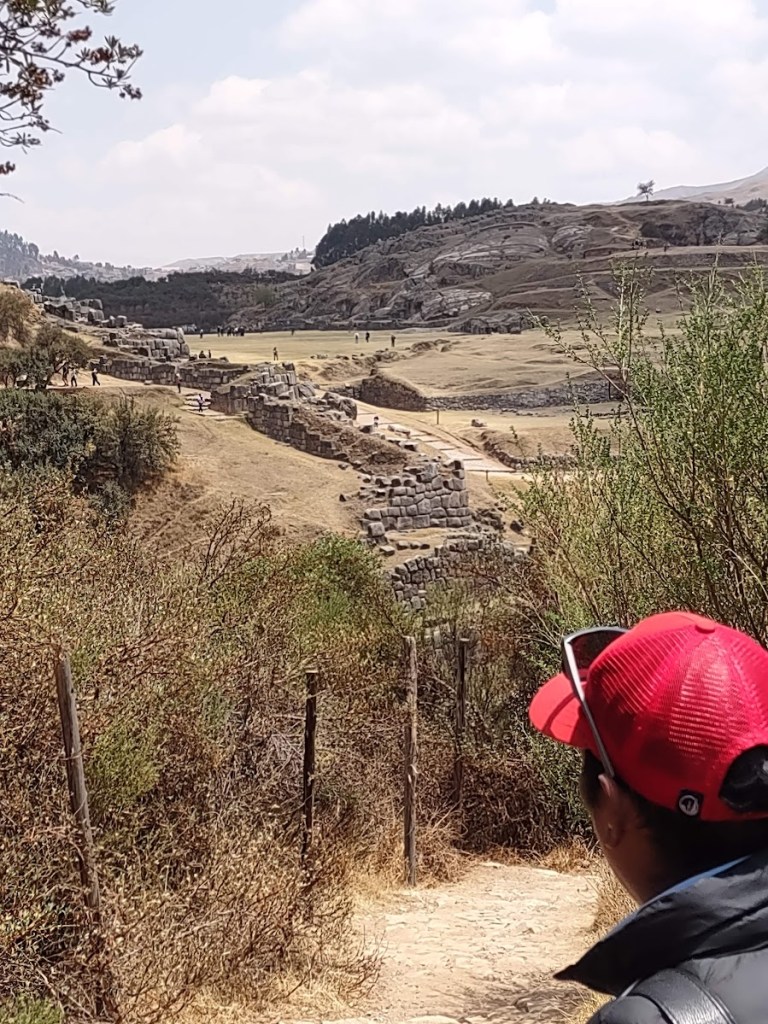
SLIDESHOW->Short hike to Saqsaywaman, still at 12,000 ft. I was panting climbing the hills 
Stairs to the Sun Temple. P. says Inca royalty were carried up; no walking for them. 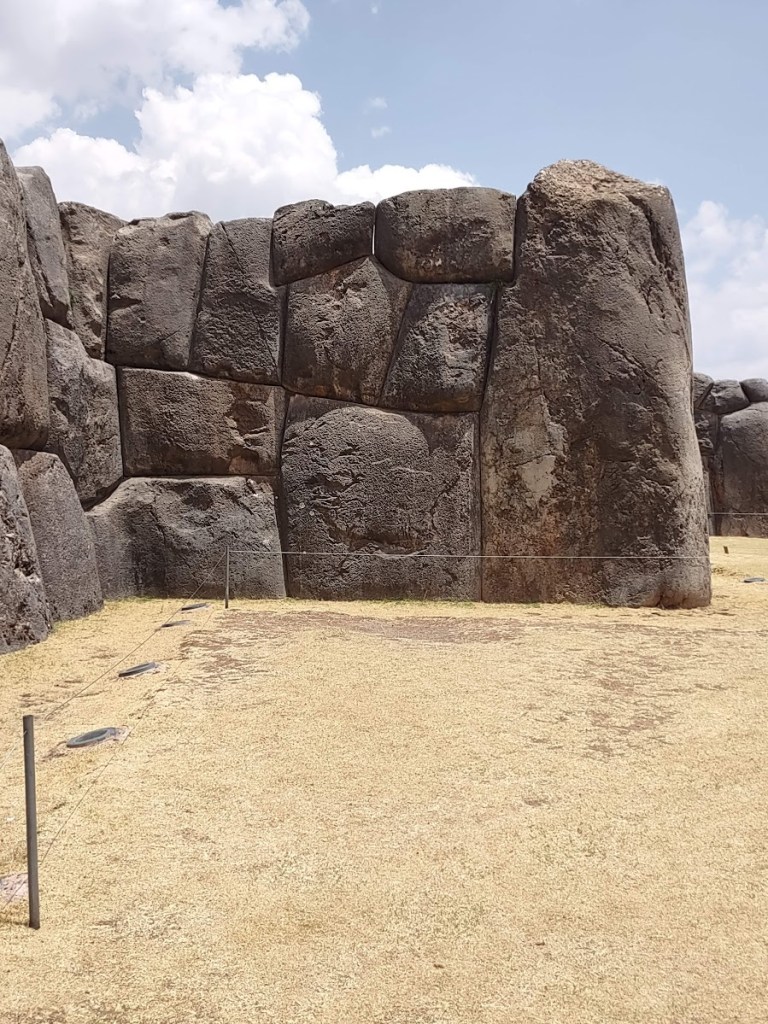
The Incas were great at transporting large rocks. 
Rocks were cut to fit. Women polished the cracks. No mortar used. 
Paulo stressed this was NOT built by slave labor. Work was done in lieu of paying taxes. Also, no work, no admittance to the Afterlife. 😦 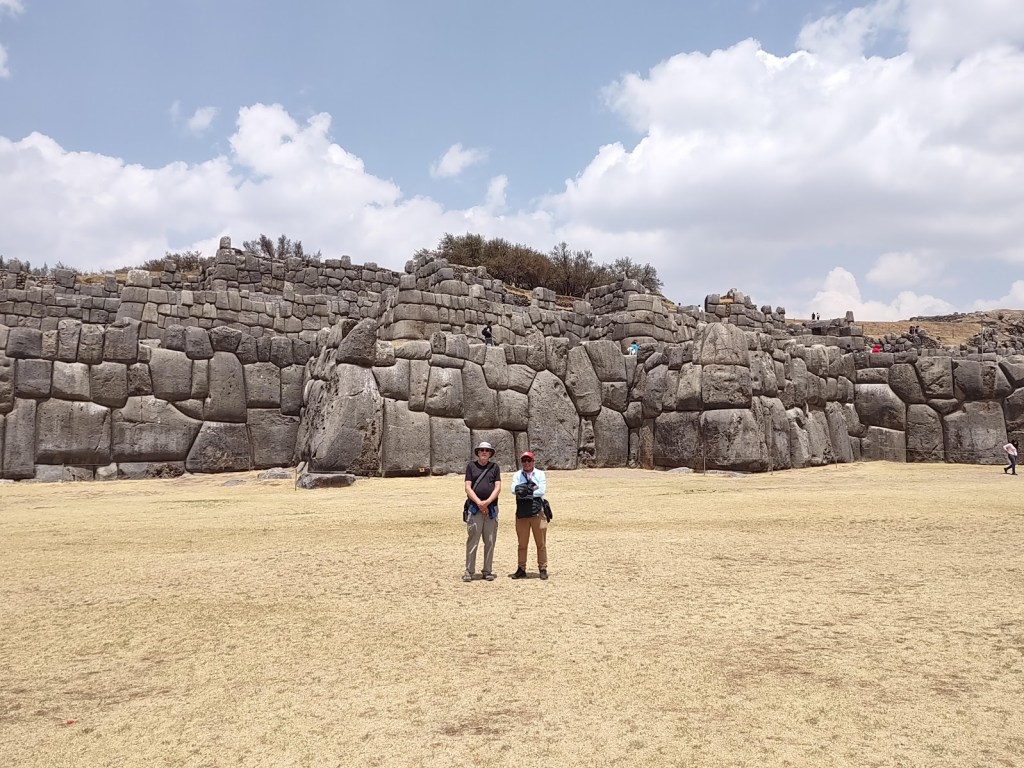
Paulo, Dennis and the wall that’s been standing for centuries 
Paulo thinks we will forget where we’ve been if he doesn’t take our picture. 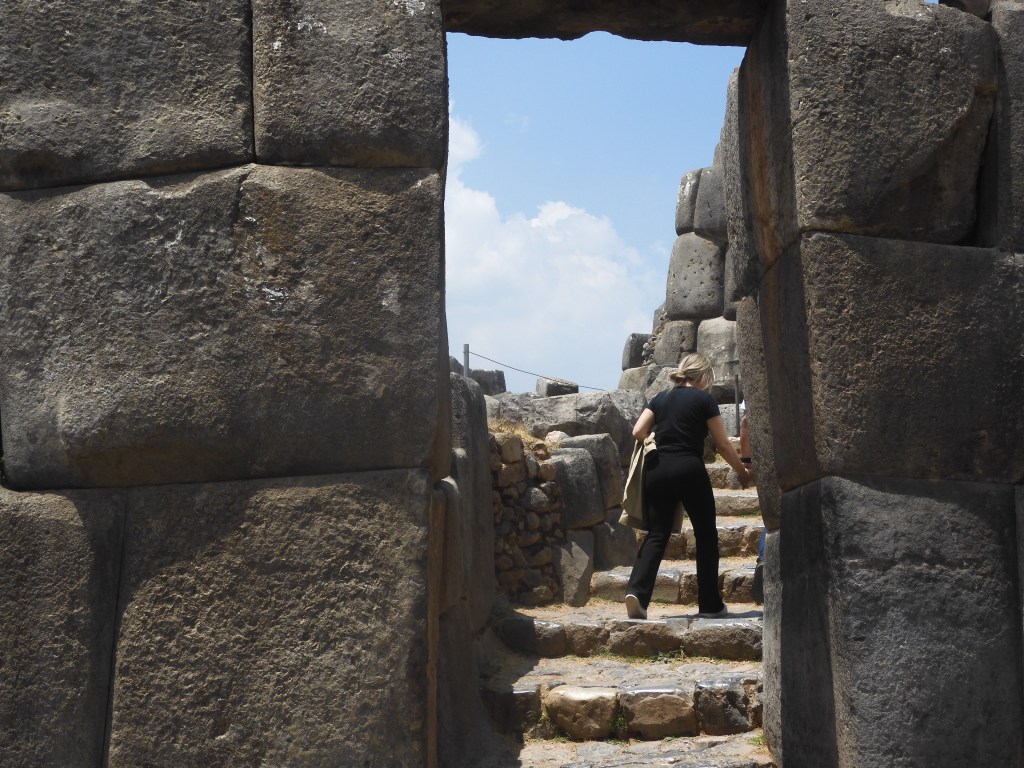
Paulo says we don’t need to go to the top but I insist I want to climb ALL the stairs. 
Paulo shows picture of the original Sun Temple built here.
From Saqsaywaman we hiked downhill back to Cusco. Harder than you think going down the steep stone streets and slippery steps but we made it.

Paulo gave us about an hour off for lunch before meeting for our afternoon activities. Keeping in the spirit of the day Dennis & I had lunch at the Inca Grill. I’m sure my lunch did not resemble anything ever consumed by an Inca.

Paulo led us first to the Cathedral. No pictures were allowed. We saw an impressive silver altar and intricate woodwork. Most interesting were the Renaissance style religious paintings. These were painted by a school of the indigenous painters in Cusco. The artists were instructed by Spanish artists to paint in the Spanish Renaissance style. Paulo pointed out the body types in the paintings are those of indigenous people not Spaniards and the scenery in the paintings is Cusco. The most famous painting is the Last Supper in which the disciples meal is guinea pig and Judas has Pizarro’s face.
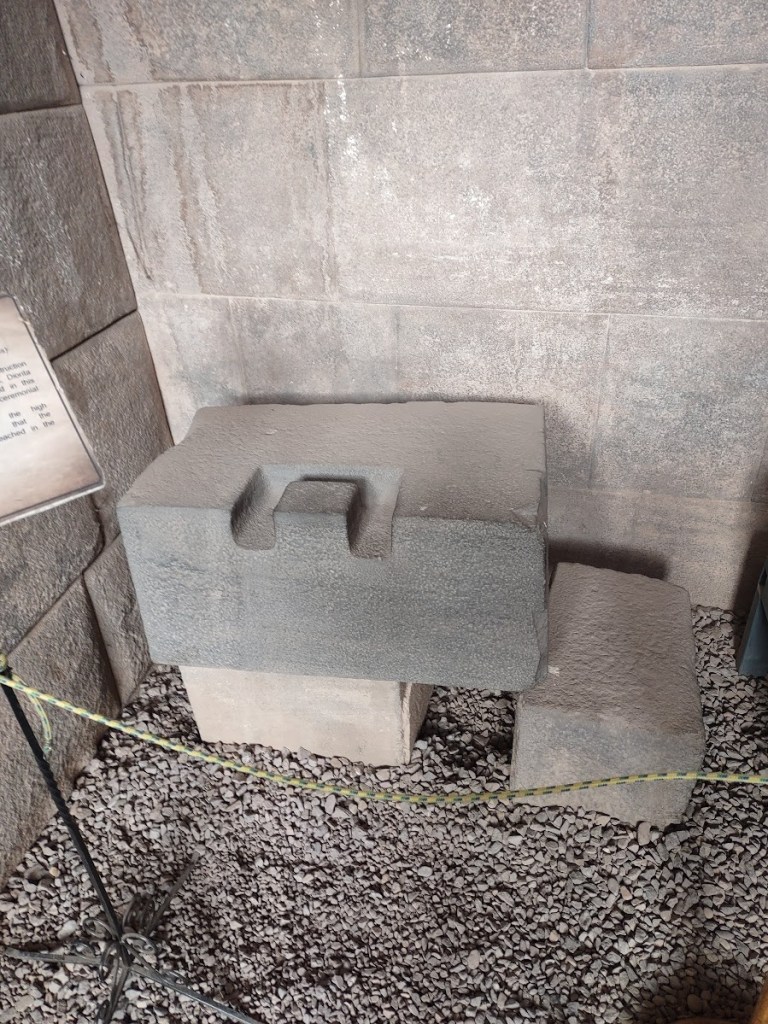
Next we walked to Qoricancha / the Convent of Santo Domingo. Worse than cultural appropriation. The Spanish came to town and looted the sacred Sun Temple. They took out solid gold walls and statues and melted them down. The current foundation walls are flat but you can see how the blocks have holes hollowed and matching and a protuberance in another rock so they could be fitted together like Legos. The Spanish built a huge convent on top of the Inca stone walls.
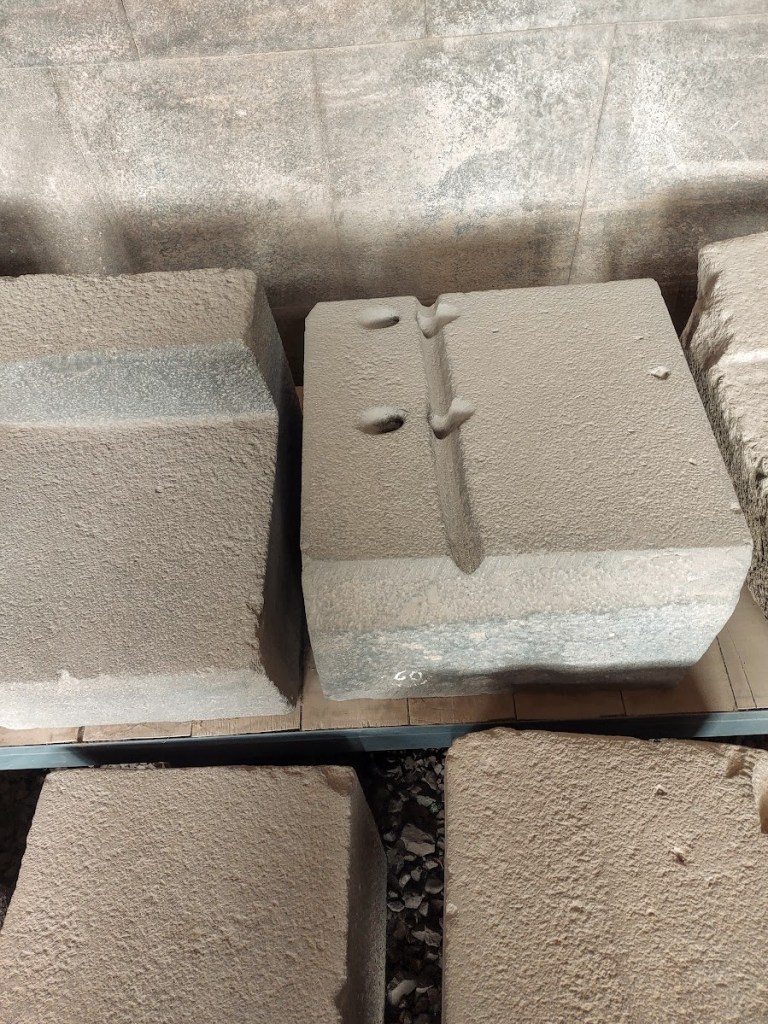


The next morning Dennis & I boarded our tour bus with Paulo and headed back to Ollantaytambo (Ollanta). This was the 2nd time Dennis & I packed a small overnight bag and left our luggage at our Cusco hotel. Each time we returned we were assigned a different room so we slept in 3 different rooms in the same hotel. We got used to the routine. One room had a nice view of the janitors closet.

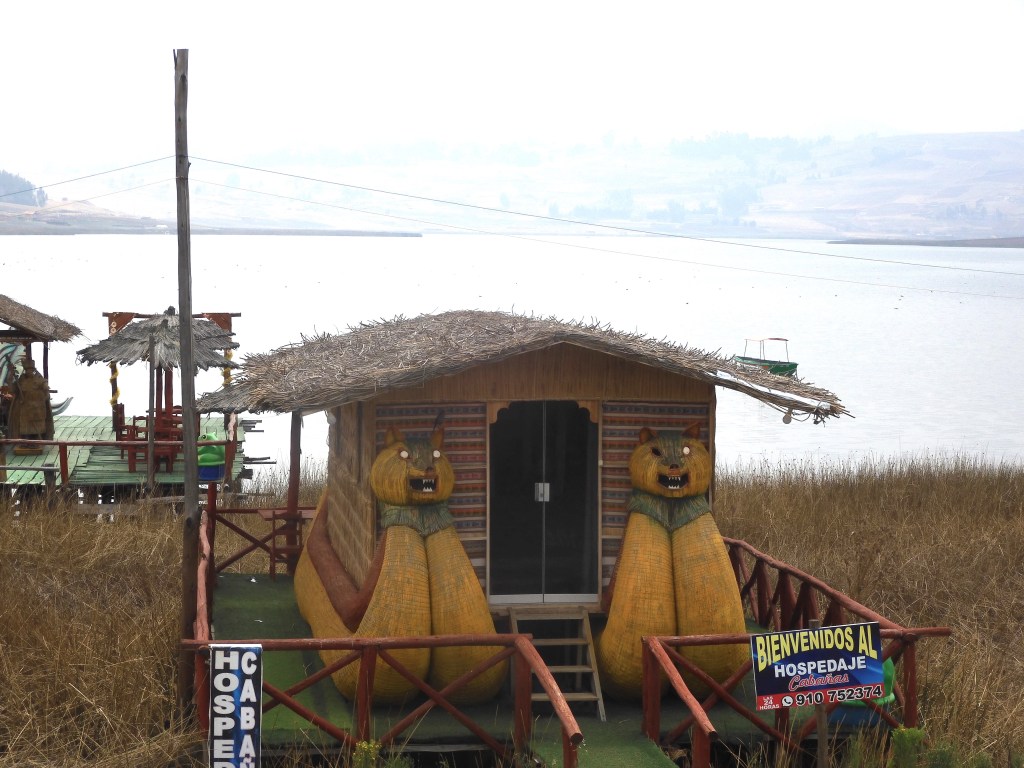
Since we’d done this trip before Paulo had our driver take a slightly different route so we could see some farm country. Paulo said this area was having a drought and unable to plant their crops. “You should be seeing lots of people out in the fields planting but they must wait for the rain.” We stopped at a lake It was pretty quiet we didn’t see anyone. Of course it was mid-morning and not exactly a day for hitting the beach.


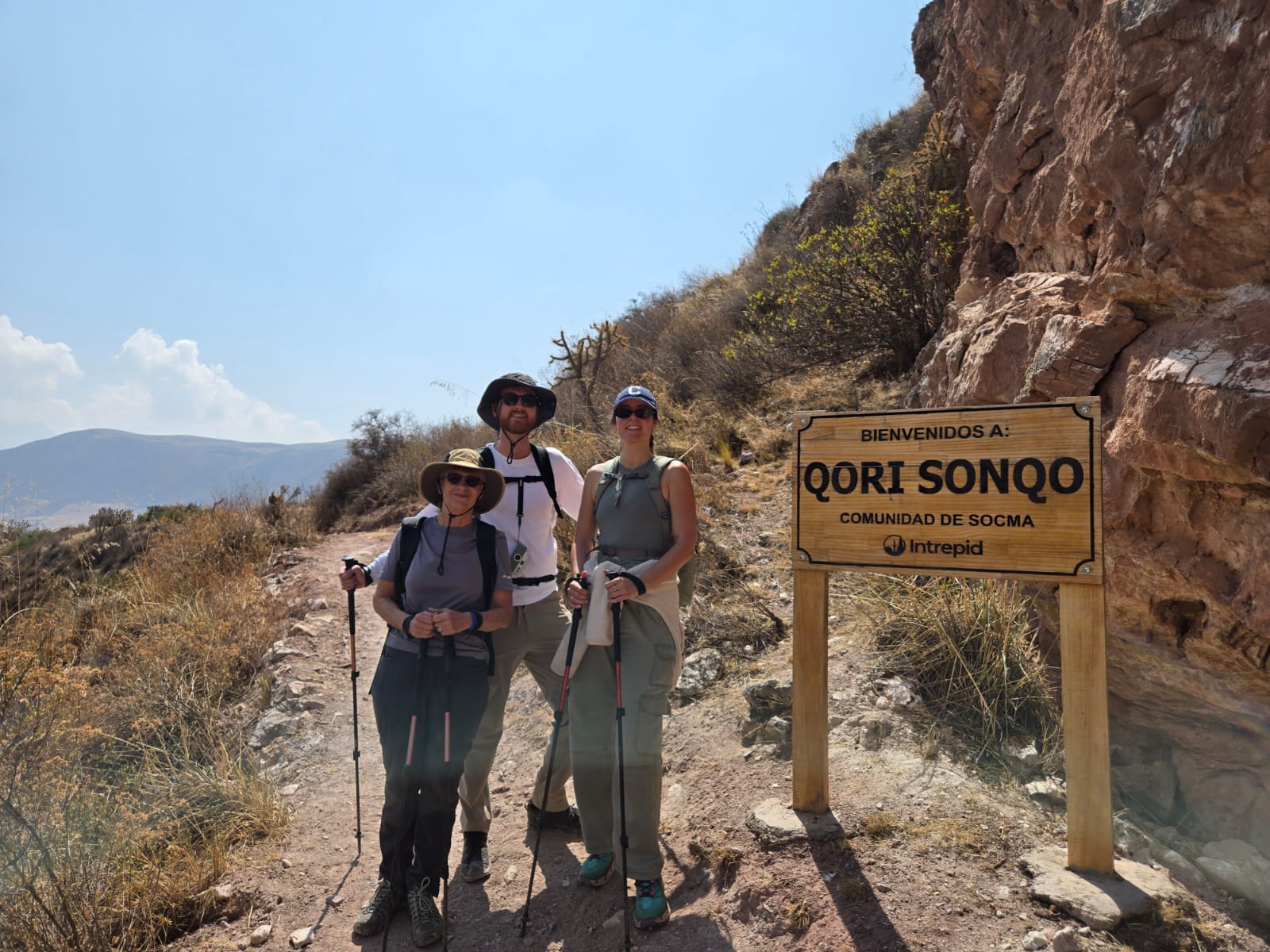
We reached Ollanta a little late to meet the three Quarry (Qori) hikers at the end of the trail. We found them in a cafe having a celebratory lunch. I believe Kris’s first words were “You made the right decision.” “You wouldn’t have made it.” That didn’t make me feel great but I enjoyed our trip through the Sacred Valley with Paulo. I wouldn’t have wanted to miss Saqsaywaman and our rambles around Cusco or the church museums.
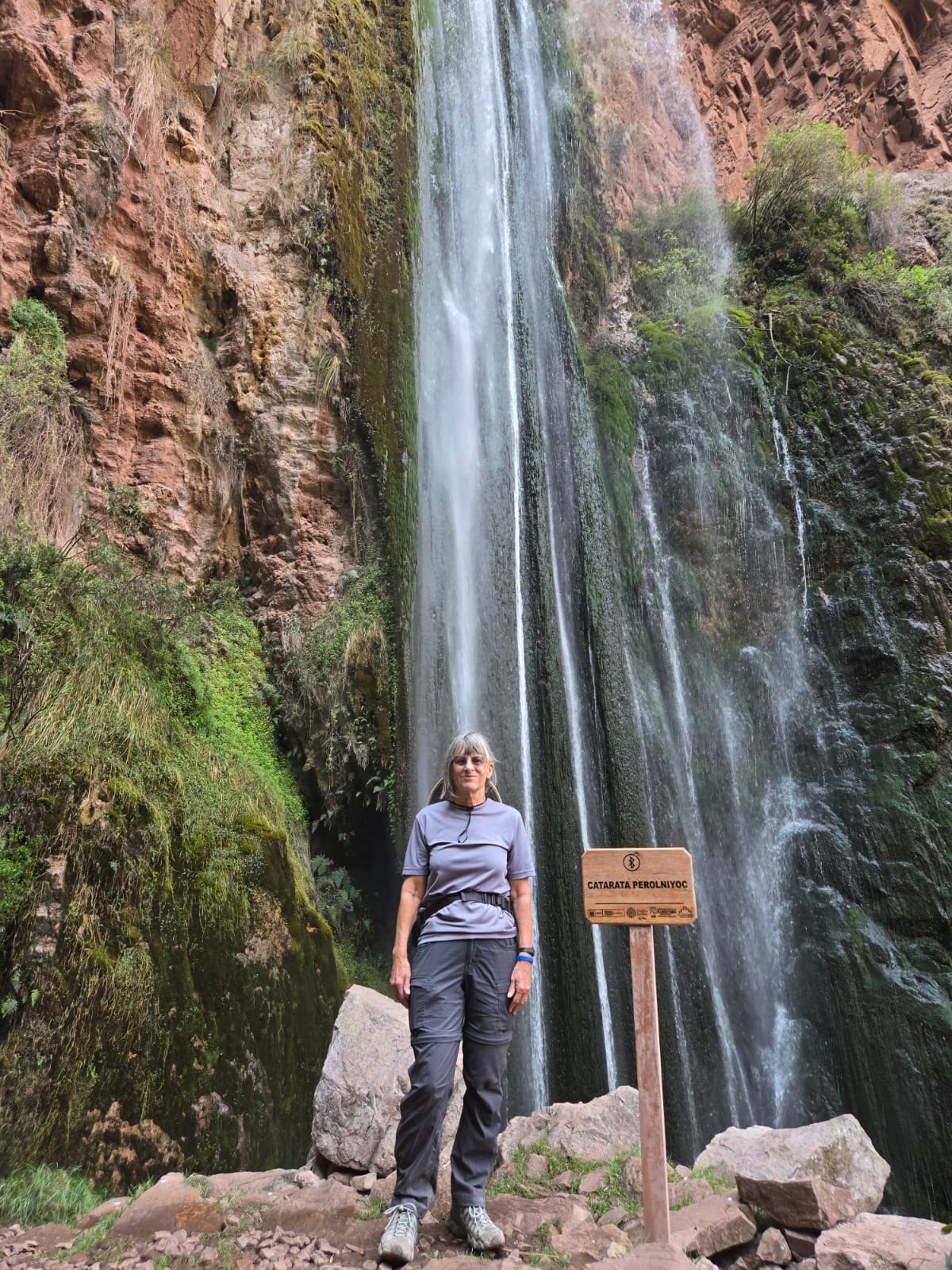
Pictures from Kris’s Quarry Hike

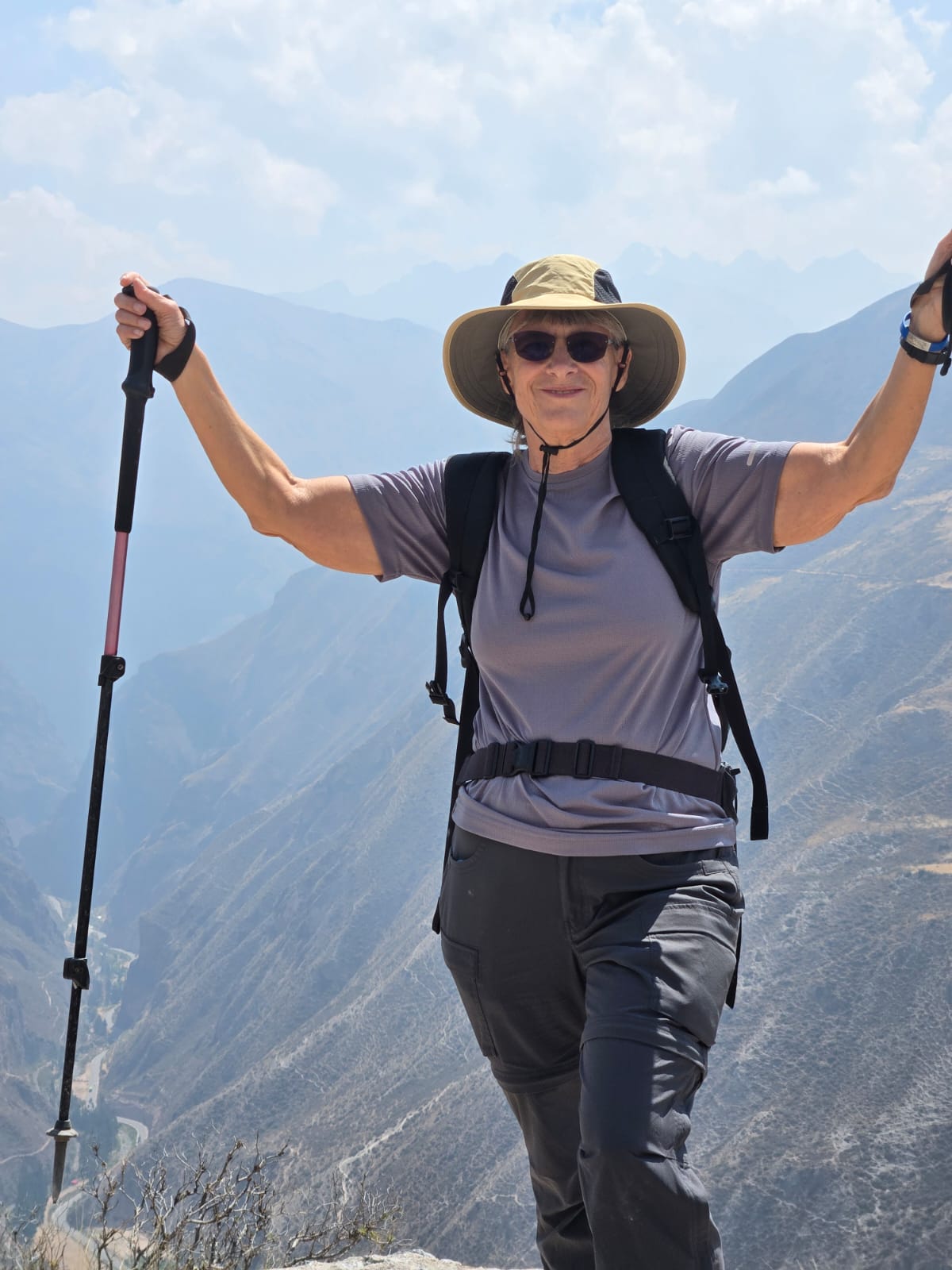


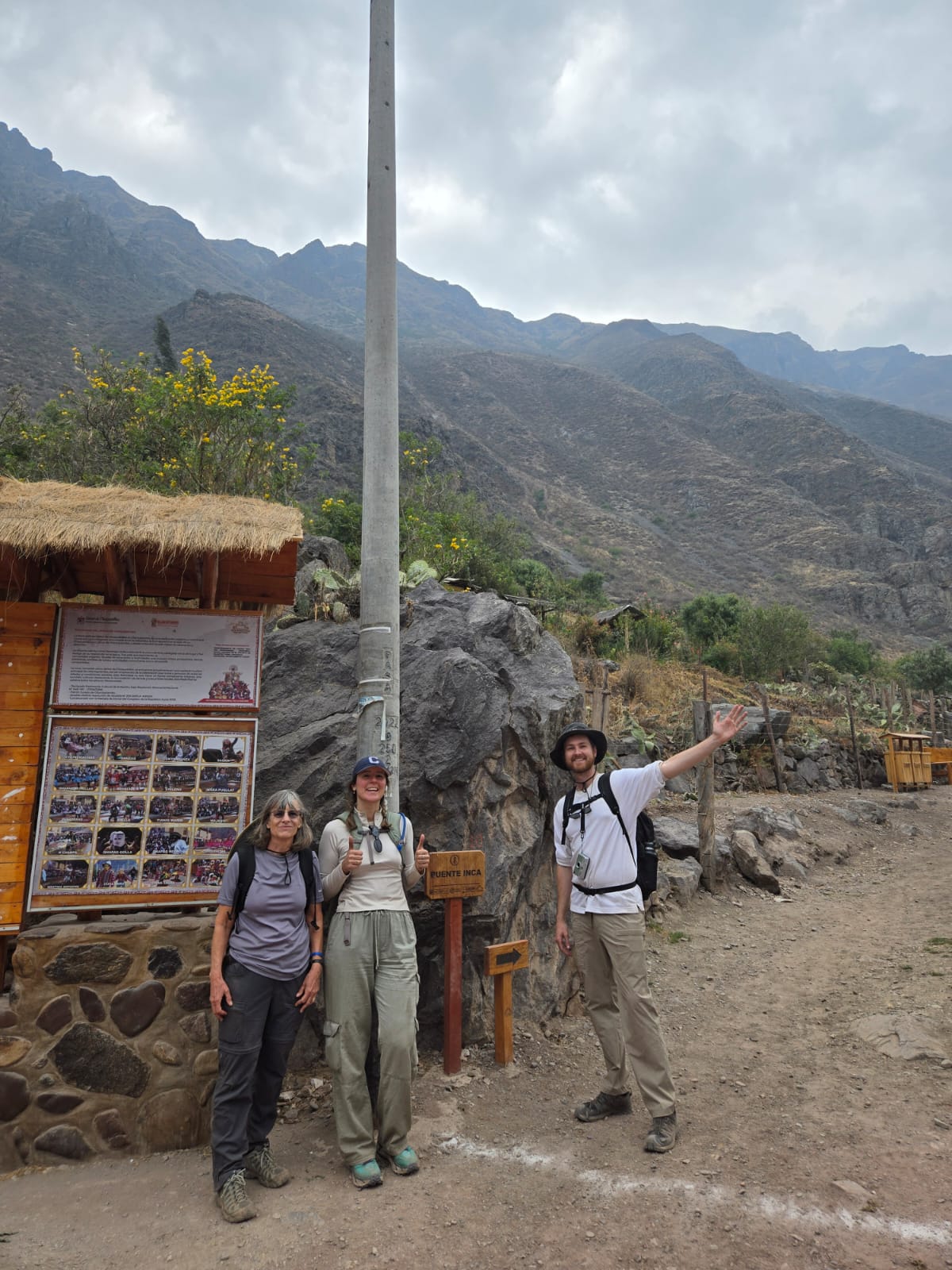
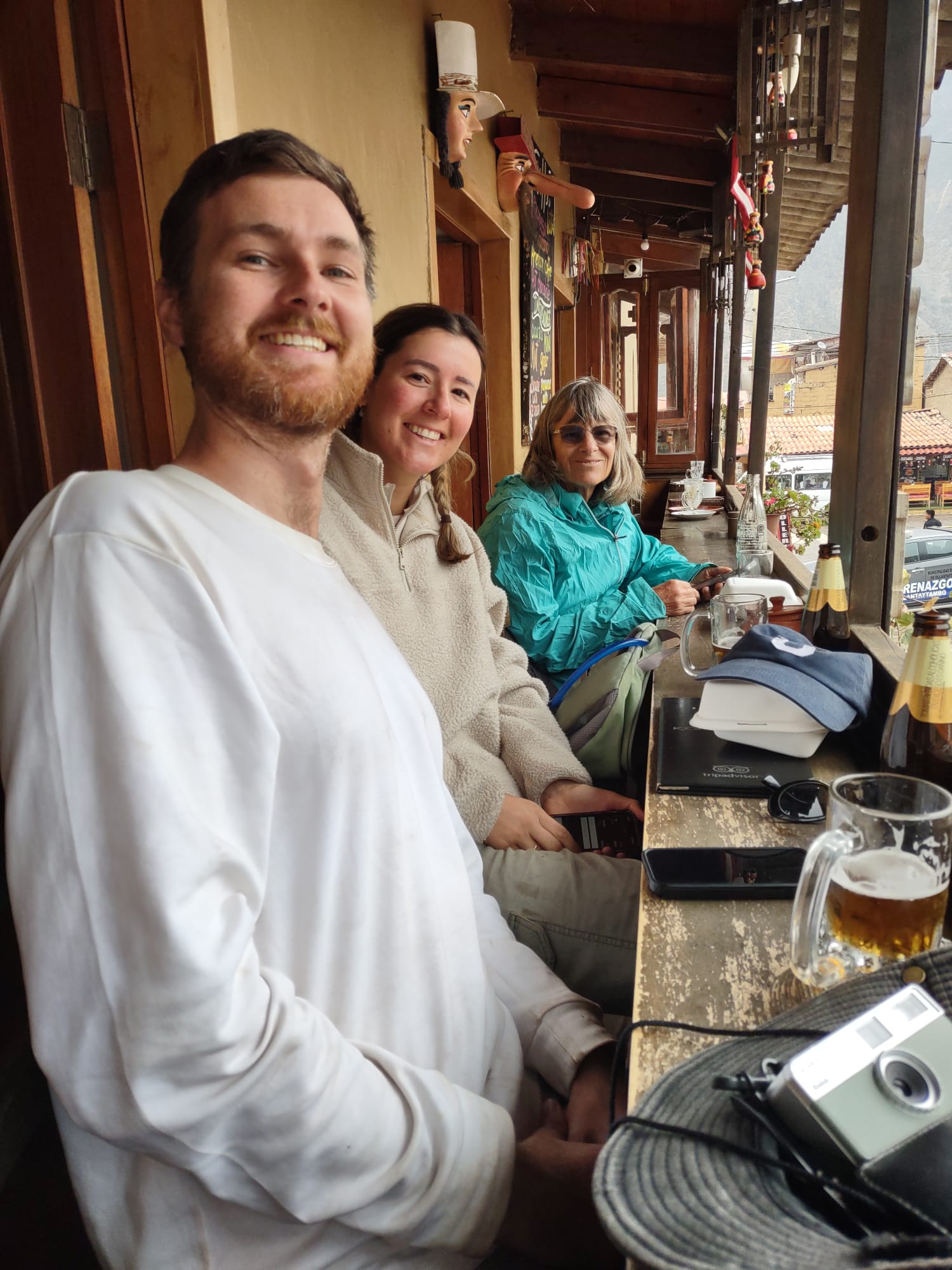
The next stop was Aquas Calientes and Machu Picchu
Aquas Calientes Population 4600:, Elevation:6,690 ft. Tourist per day 1,500
Paulo herded the 5 of us onto the train to Aquas Calientes. There are no roads. Paulo encouraged us to enjoy the view in observation car. A loud guitar player serenaded us with popular Spanish music while we watched the rolled along the river valley.


The 8 other members of our tour group were spending one more night on the Inca Trail. They would hike into Machu Picchu the following afternoon.
Paulo had a number of instructions for us when we arrived Aquas Caliente:
- Check into your hotel room and REST for the afternoon
- Don’t go farther that the corner drugstore for snacks and water. It’s as good as anyplace.
- When you go to dinner stick to this side of town. Everything on the other side is expensive, also too many tourists.
- Set an alarm or maybe 2 alarms. Breakfast in the hotel will begin at 5:30 AM. We will leave the hotel at 6AM to catch our bus to Machu Picchu at 6:30am.
Dennis and I immediately broke the first rule. We’d been in a car or the train all day. We hadn’t had to get up at 5am like the hikers and weren’t tired. We went out to explore both sides of Aquas Caliente.
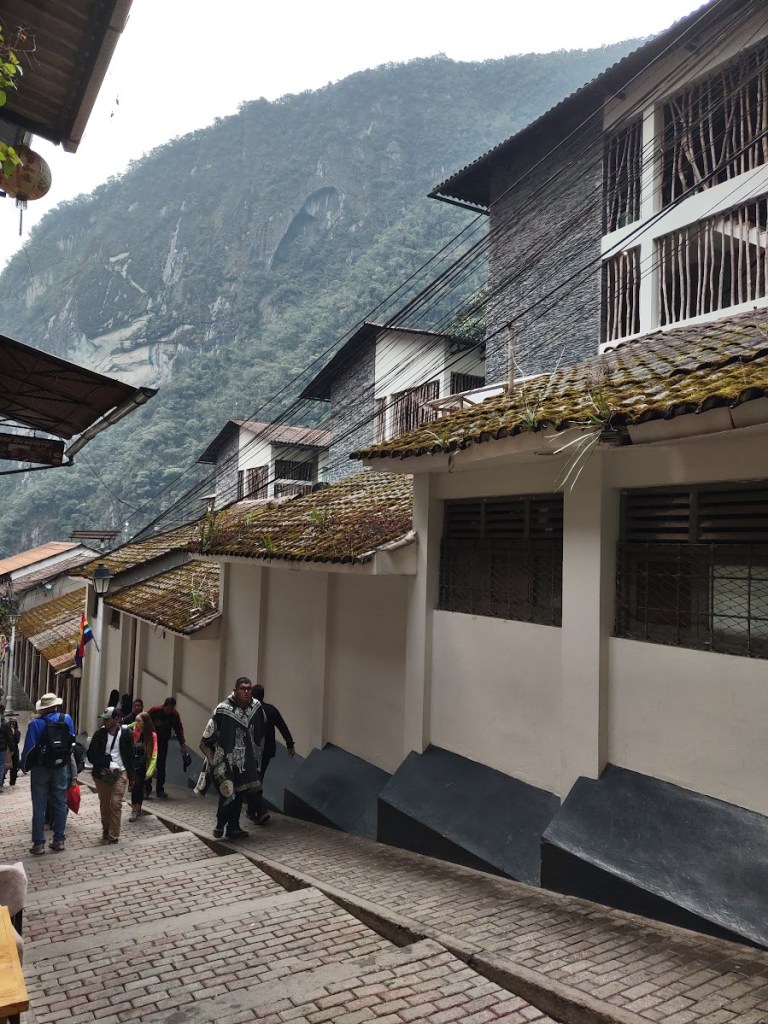
SLIDESHOW–>Aquas Caliente a Walk Was a Workout! 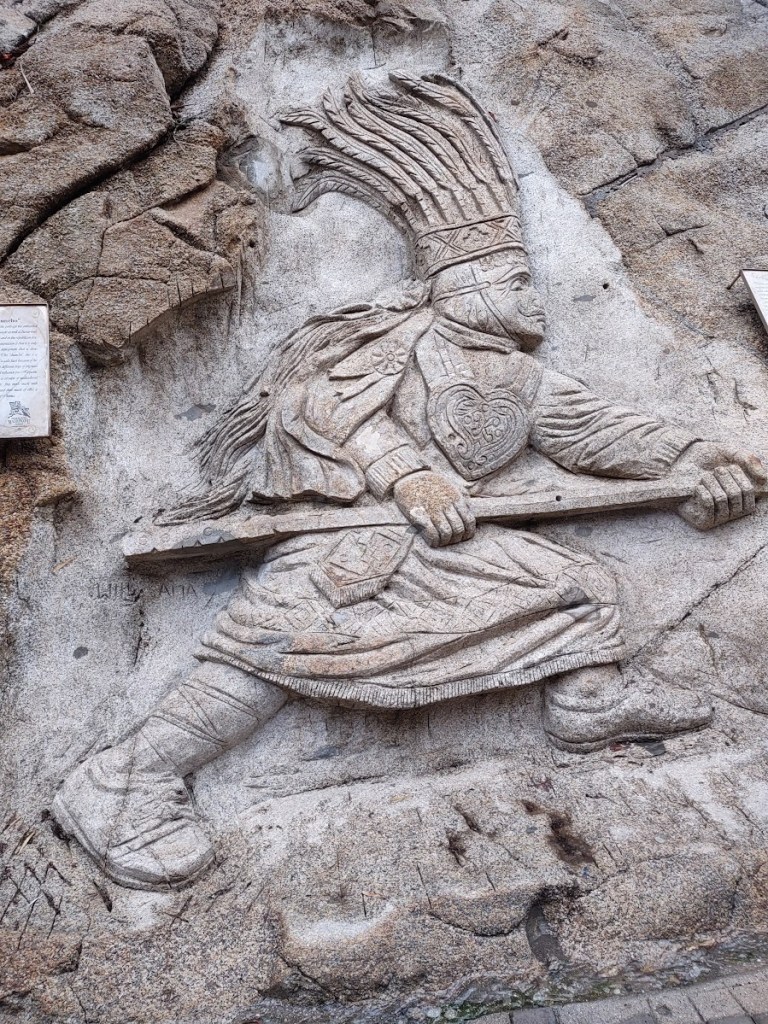
An Amazing Wall on the Quiet Side of Town 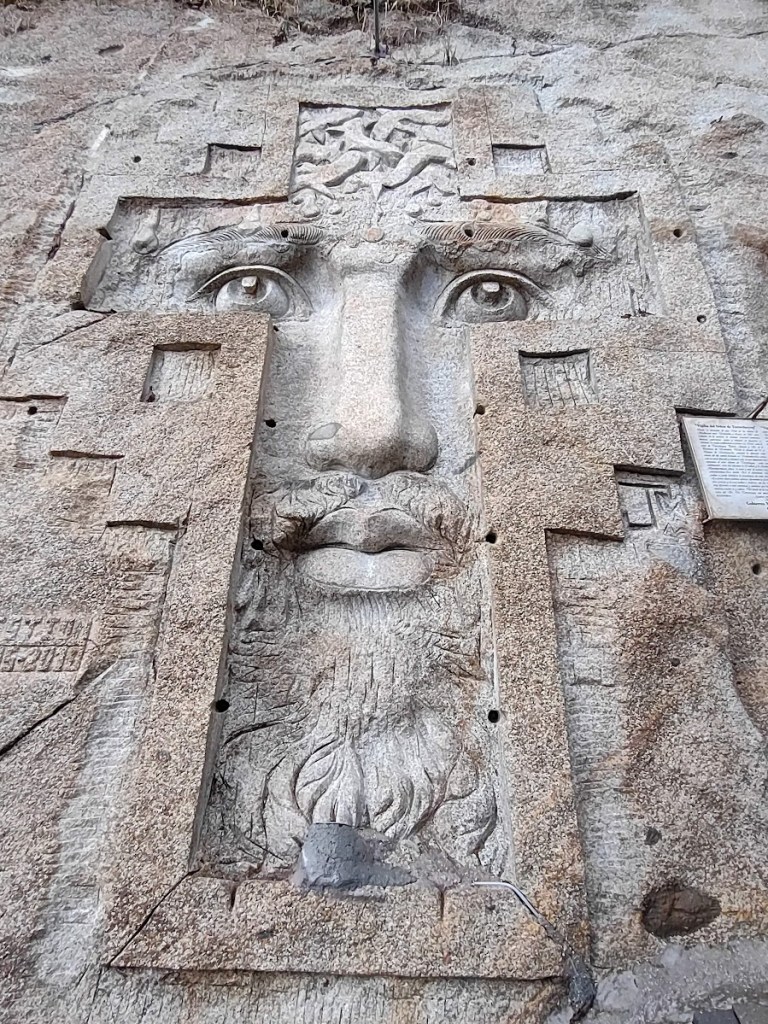
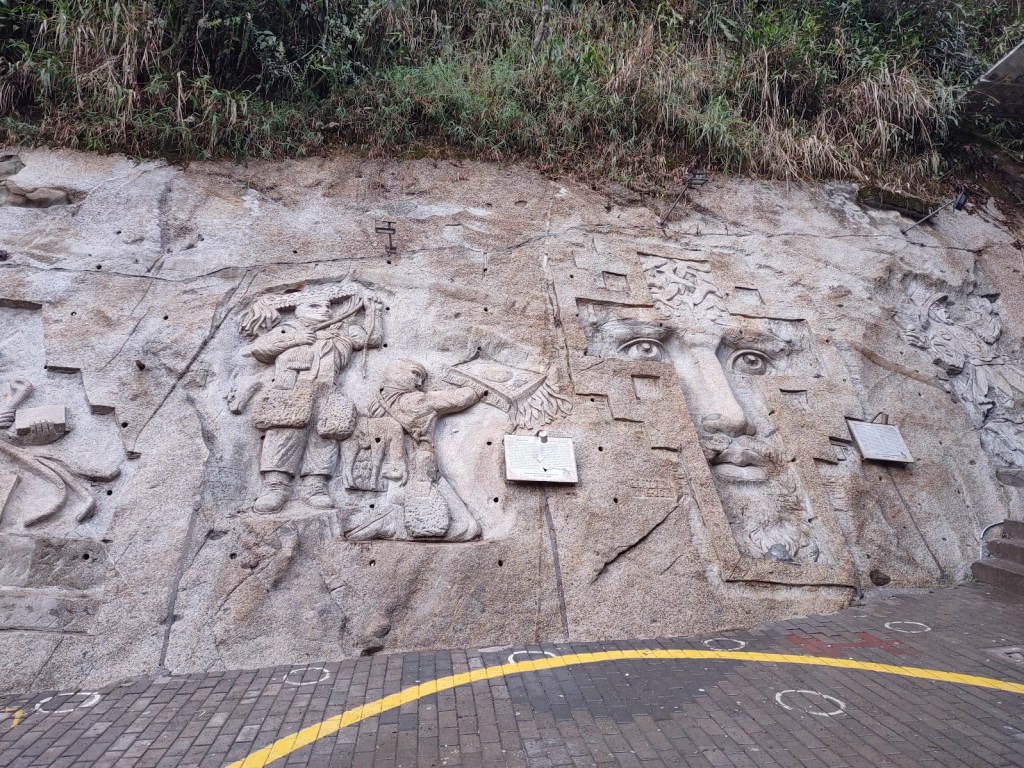
Retaining Wall 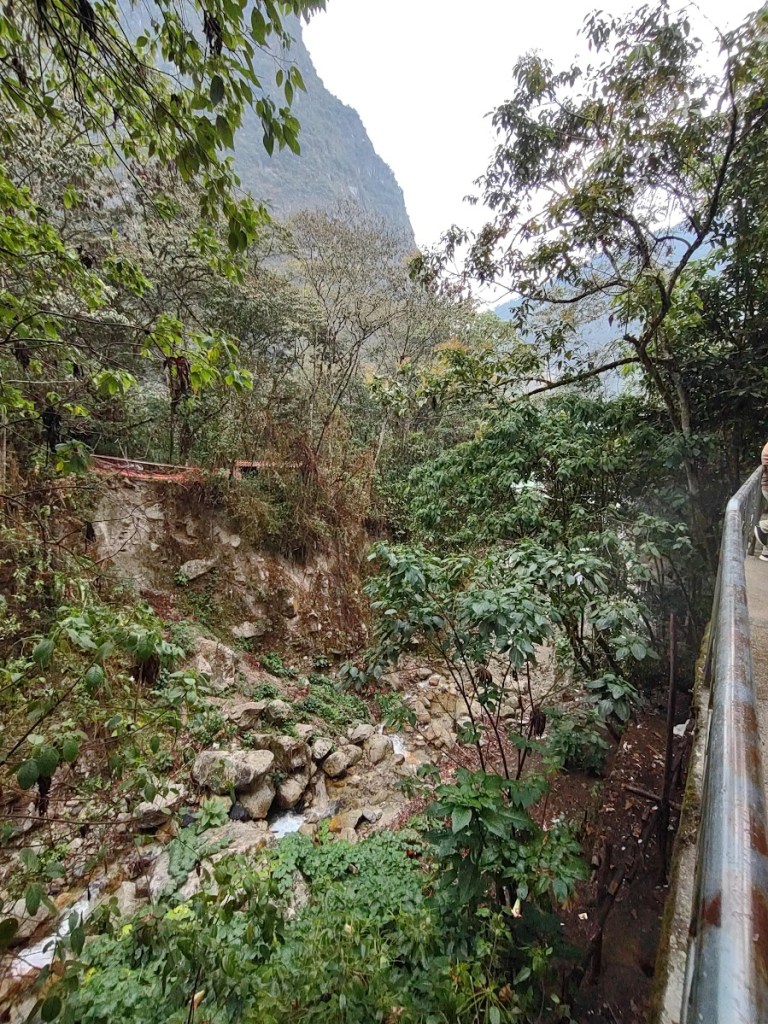
Aquas Caliente: The Jungle Begins at the Edge of Town 
Open Air Chapel? Shrine? or Memorial? 
Playground Ajoining the Soccer Field 
Aquas Caliente Town Center is a Soccer Field 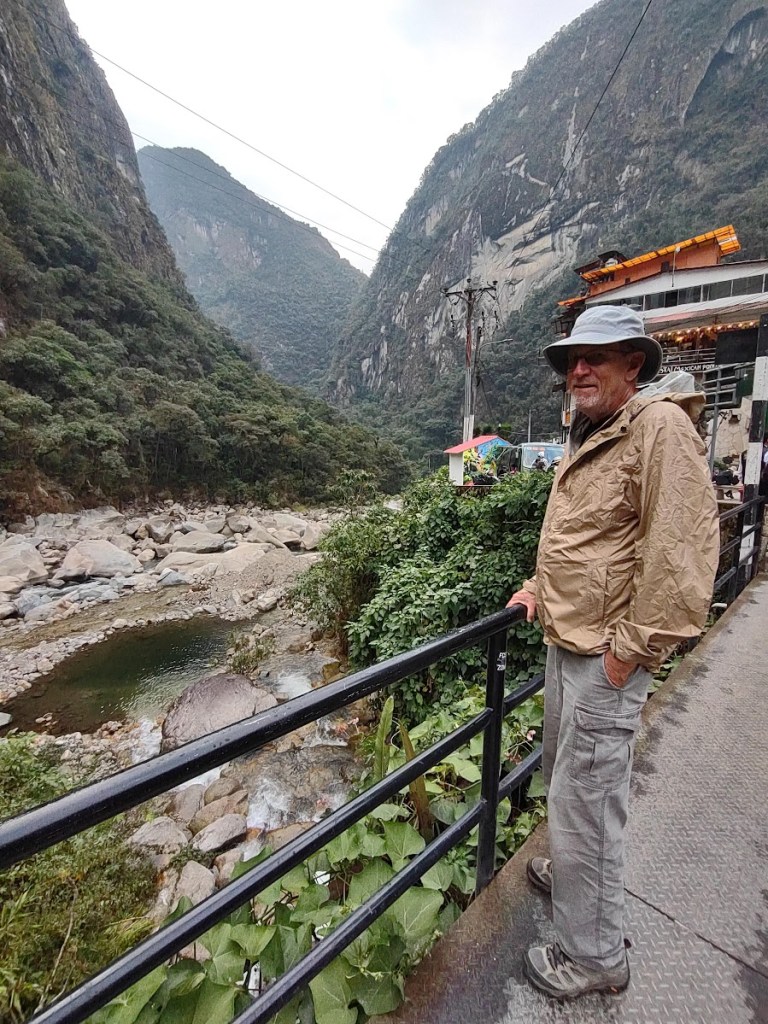
River at One End of Town 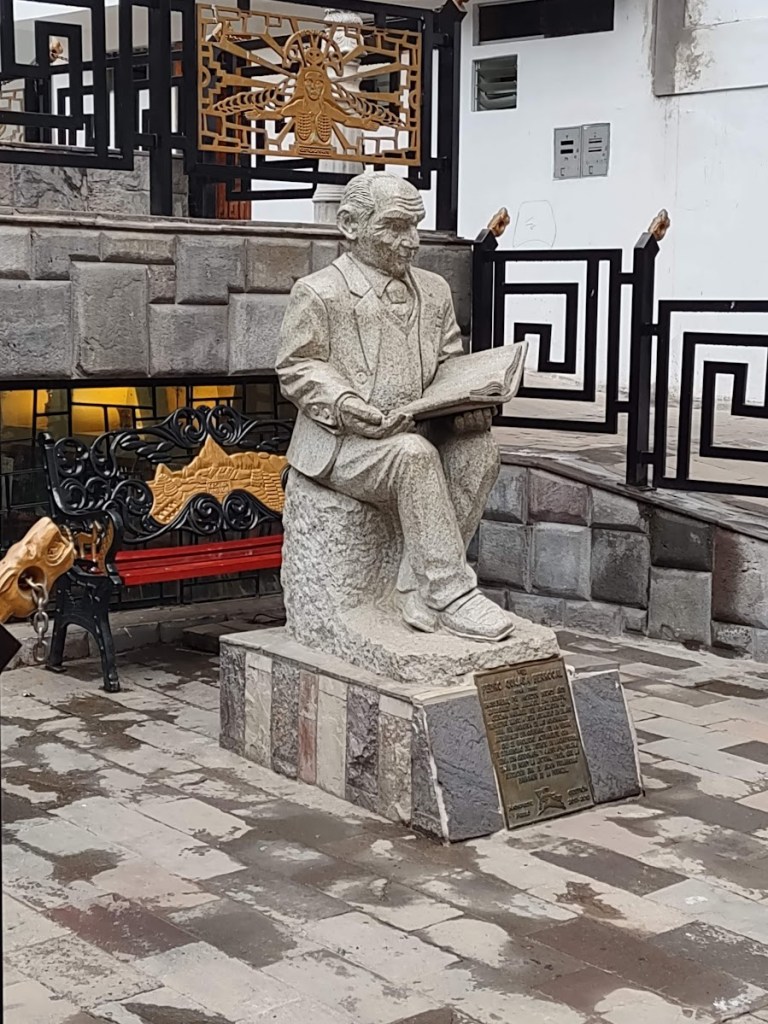
Memorial to a Local Man who Promoted Education 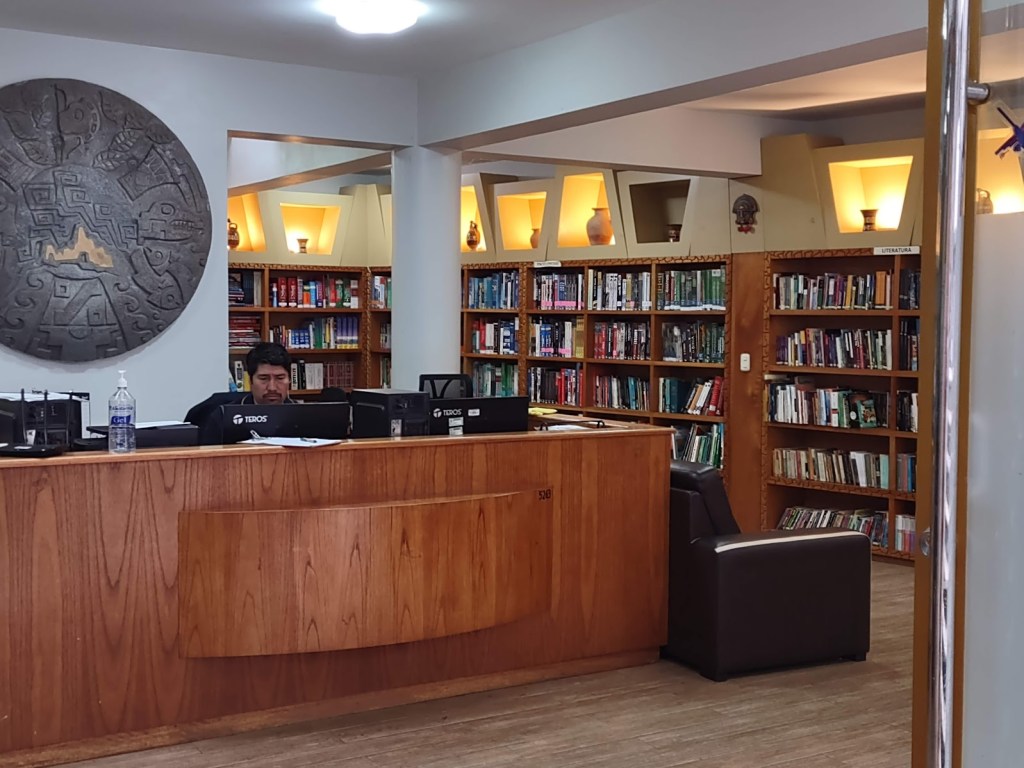
The Library is Open
Machu Picchu
The next morning we were all up on time. Paulo led us through the huge crowd of tourists to the line for the bus ride up the mountain. I can’t imagine how we would have muscled our way in line without him. Among the English speakers in the crowd were rumors that there had been a bus accident on the road up. This caused me some apprehension. We were finally boarded a bus and started up the mountain winding around the hairpin turns, to Machu Picchu.
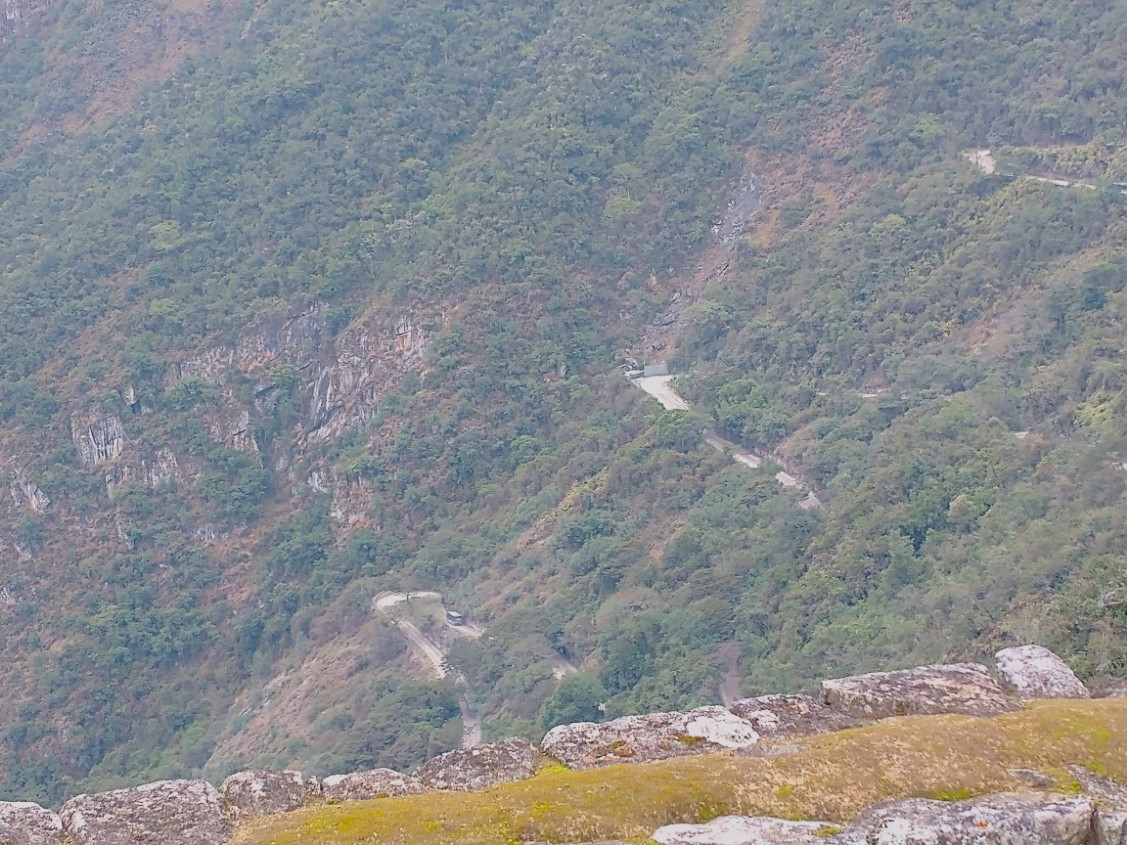


SLIDESHOW–> We ascended through the mist 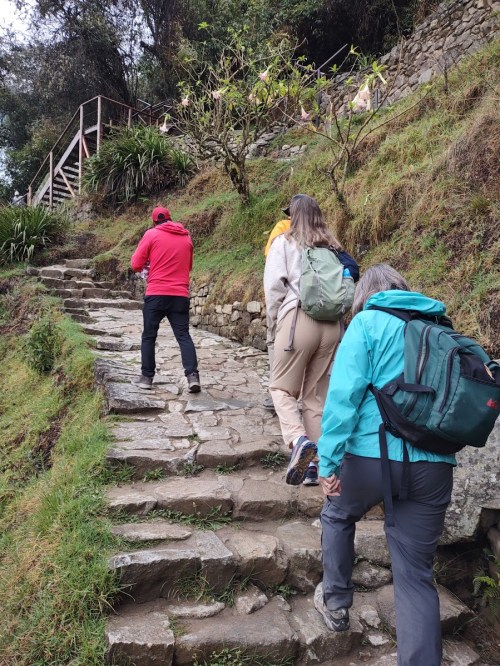
Paulo leads us up 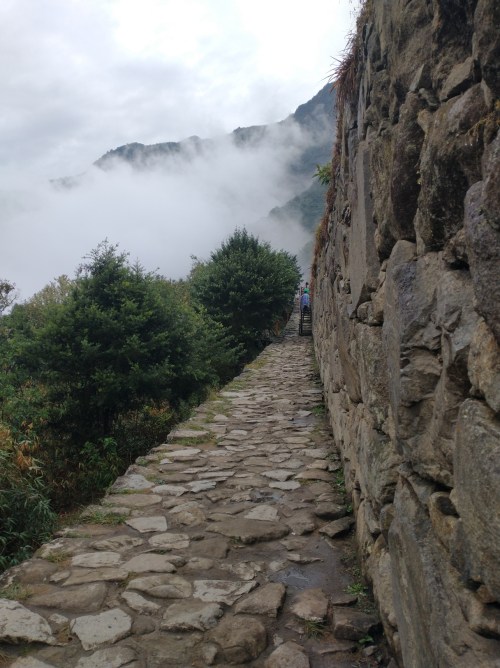
Climbing terraces 
Highest point our group is allowed to ascend 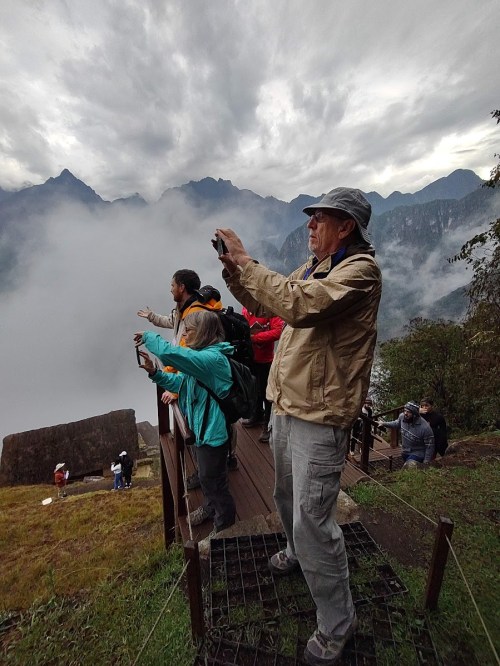
Dennis & Kris taking pictures 
Dennis amazed 
Not much a a view down 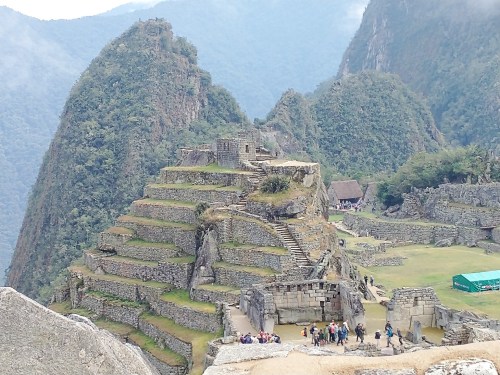
Mist clearing 
Lots of tourists. House on horizon our highest point 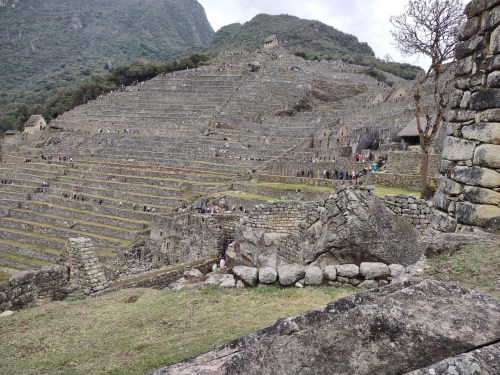
Terraces 
Inca Terraces 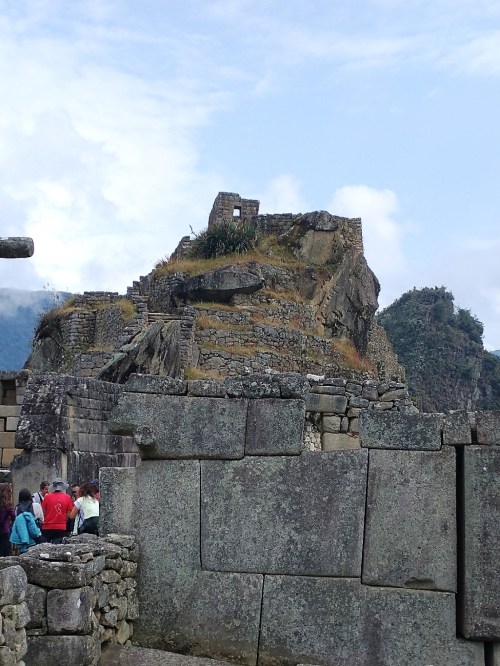
Inca blocks 
Inca Doorway 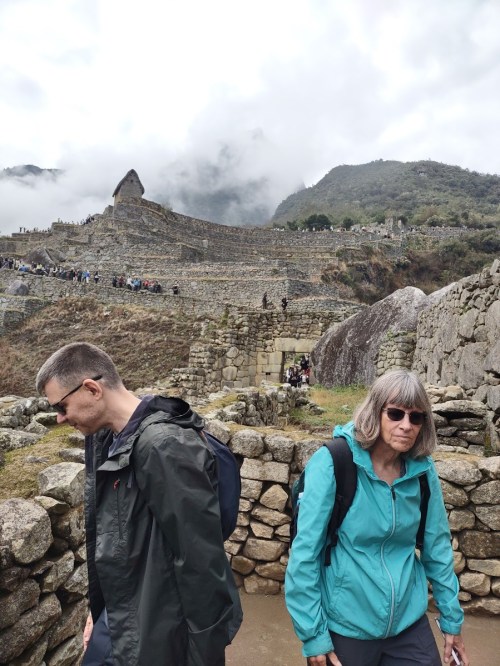
House in the background was are highest point 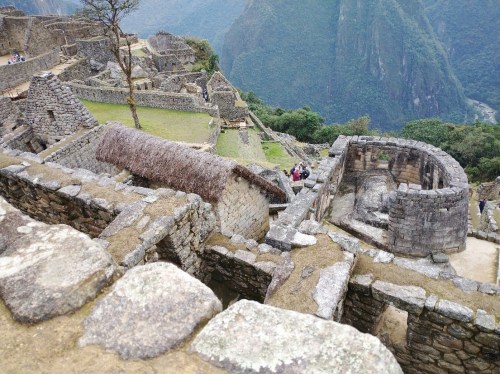
Climbing down to structures below 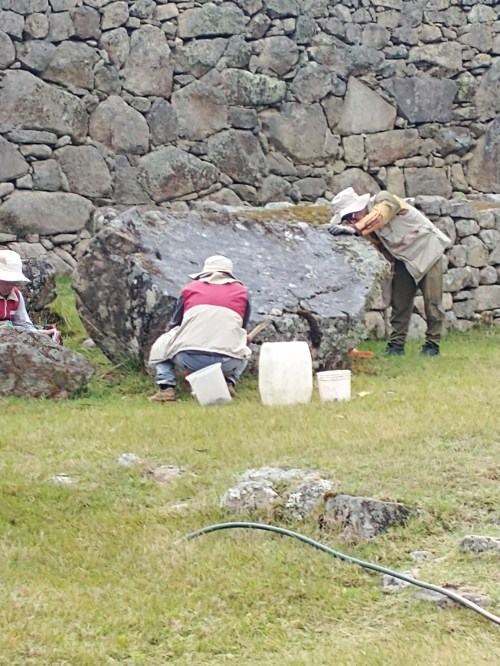
Archaeologist at Work
We lost all sense of time traipsing around Machu Picchu. After 3 or 4 hours Paulo told us our time was up. We went back to the entrance to stand in another long line to board a bus down the mountain. Paulo took us to a restaurant. He said it was the best place near the train station to eat. We waited there to reunite with Inca Trail hikers. Who had not entered Machu Picchu until afternoon.

Our happy, sunburned Inca trail hikers returned and we all managed to make it to the train and then to our bus and back to Cusco that evening. We could see managing a tour group with different itineraries is not a dream job. Paulo looked a little stressed. We sad a sad good-bye to him when he delivered us to our Cusco hotel for the last time.
Last Day in Cusco
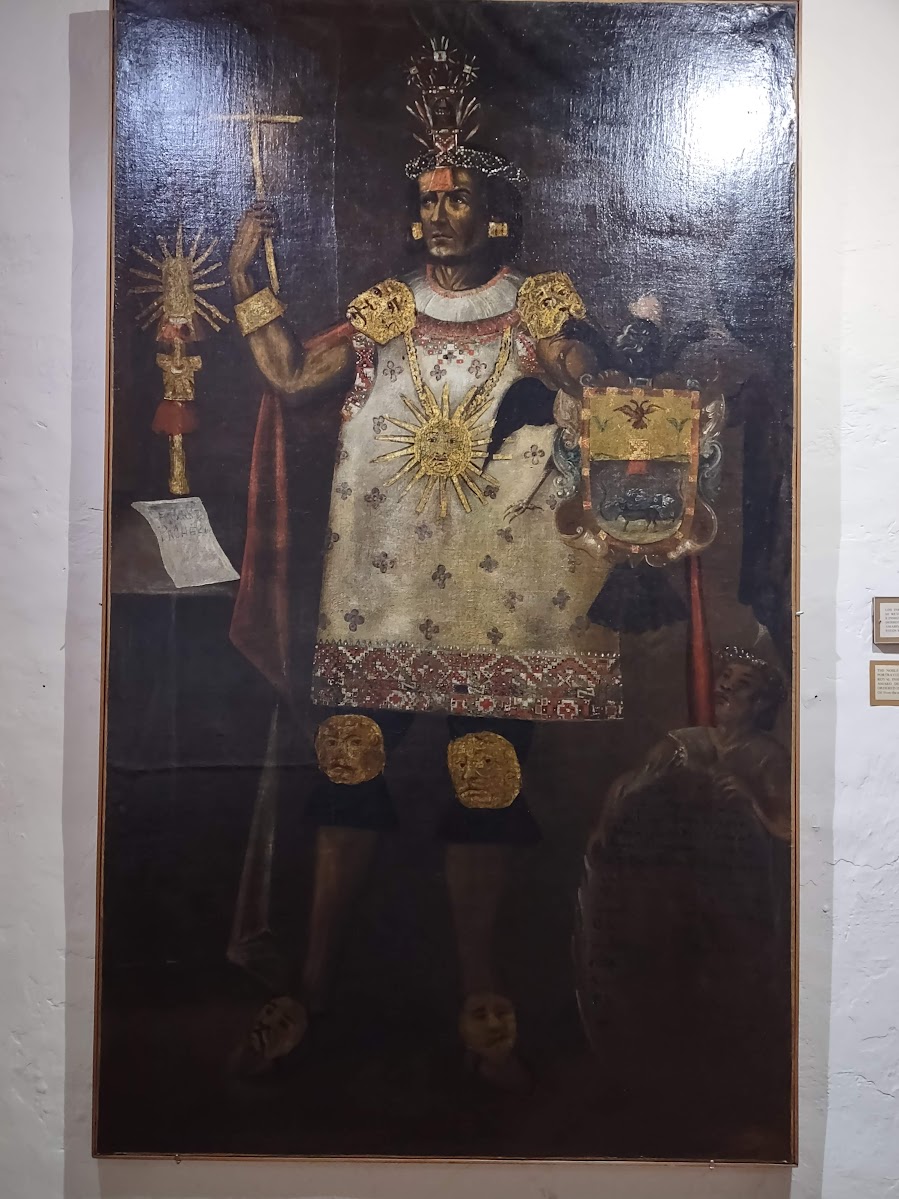
We told Kris about all the sites she didn’t get to see and then asked her what she wanted to do with her day. She chose to go to the Inca Museum. I whined a little about going to another museum but the building with an inner courtyard was beautiful and there were things we’d hadn’t seen before like paintings of Incas done after the Spanish conquest.
Also in one room a man who both made and played tradition musical instruments.
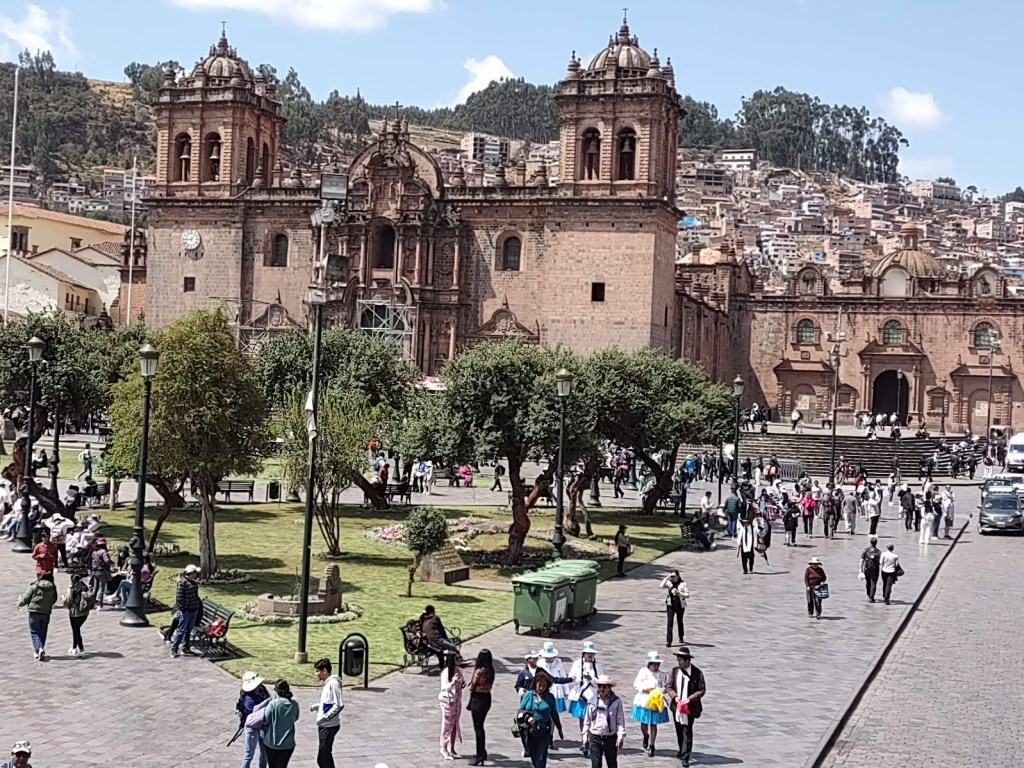

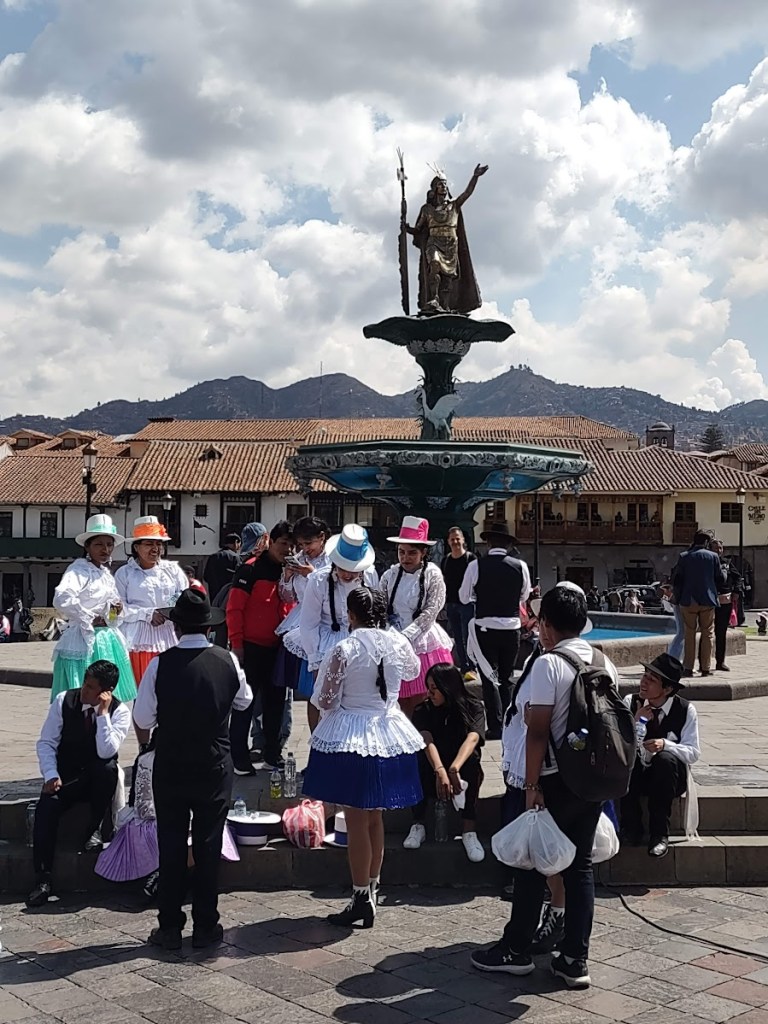

After lunch on the Plaza de Armas where some event or entertainment was always going on we decided to walk uphill in a new direction.
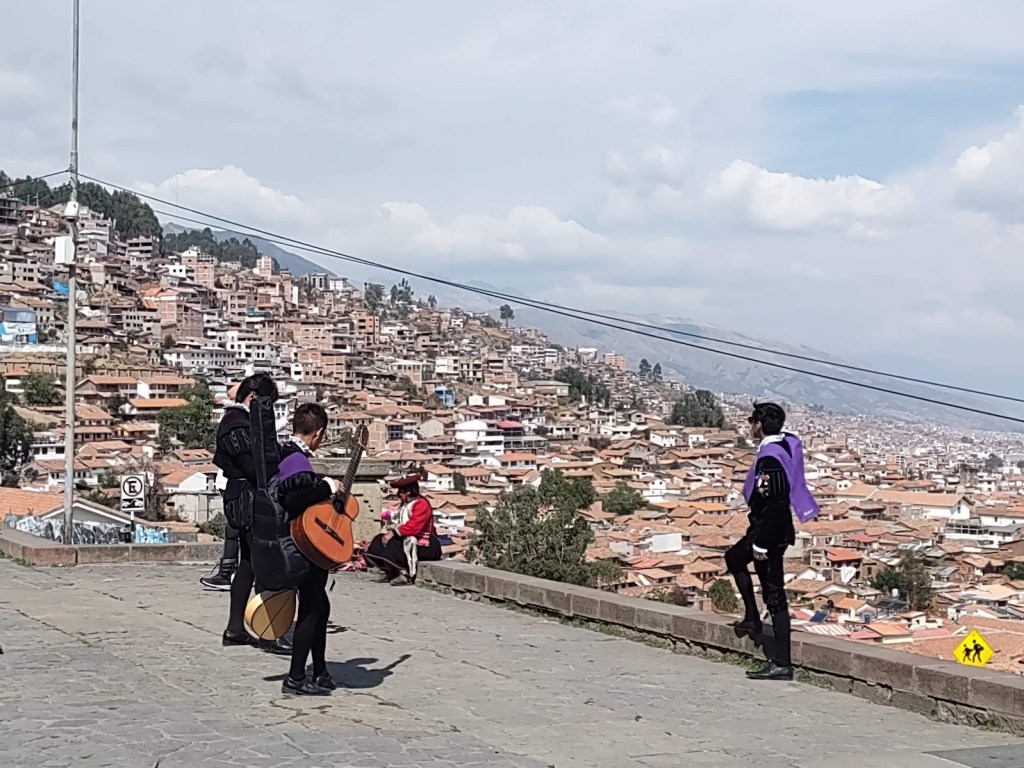
We found a plaza with a beautiful view and picturesque people.

The next morning Kris, Dennis & I flew with 4 members of our original Lima tour group to the Amazon Basin. CLICK HERE–>TO SEE AMAZONIA

Return to Lima
Our flights left Lima in the following evening so we had another full day for exploring Lima. I couldn’t believe Kris & Dennis wanted to go to another museum. I didn’t have any better ideas and they said we could walk to the cliffs in the afternoon so I didn’t whine this time. Still the Museo Oro del Peru the museum of gold sounds like a tourist trap. The museum had 1 star in Frommer’s. Lonely Planet gave it quite a lengthy write-up, so it’s not a trap.
No one mentioned it was also known for the Weapons of the World display. If you ever want to see how Samurais or any other warrior was costumed through the ages THIS IS THE PLACE to go. I was quite fascinated by the famous swords, rifles and pistols. Hermann Goering’s pistol, Daniel Boone’s rifle, prehistoric weapons, are here. I was most impressed that the founder had collected Lafayette’s sword.


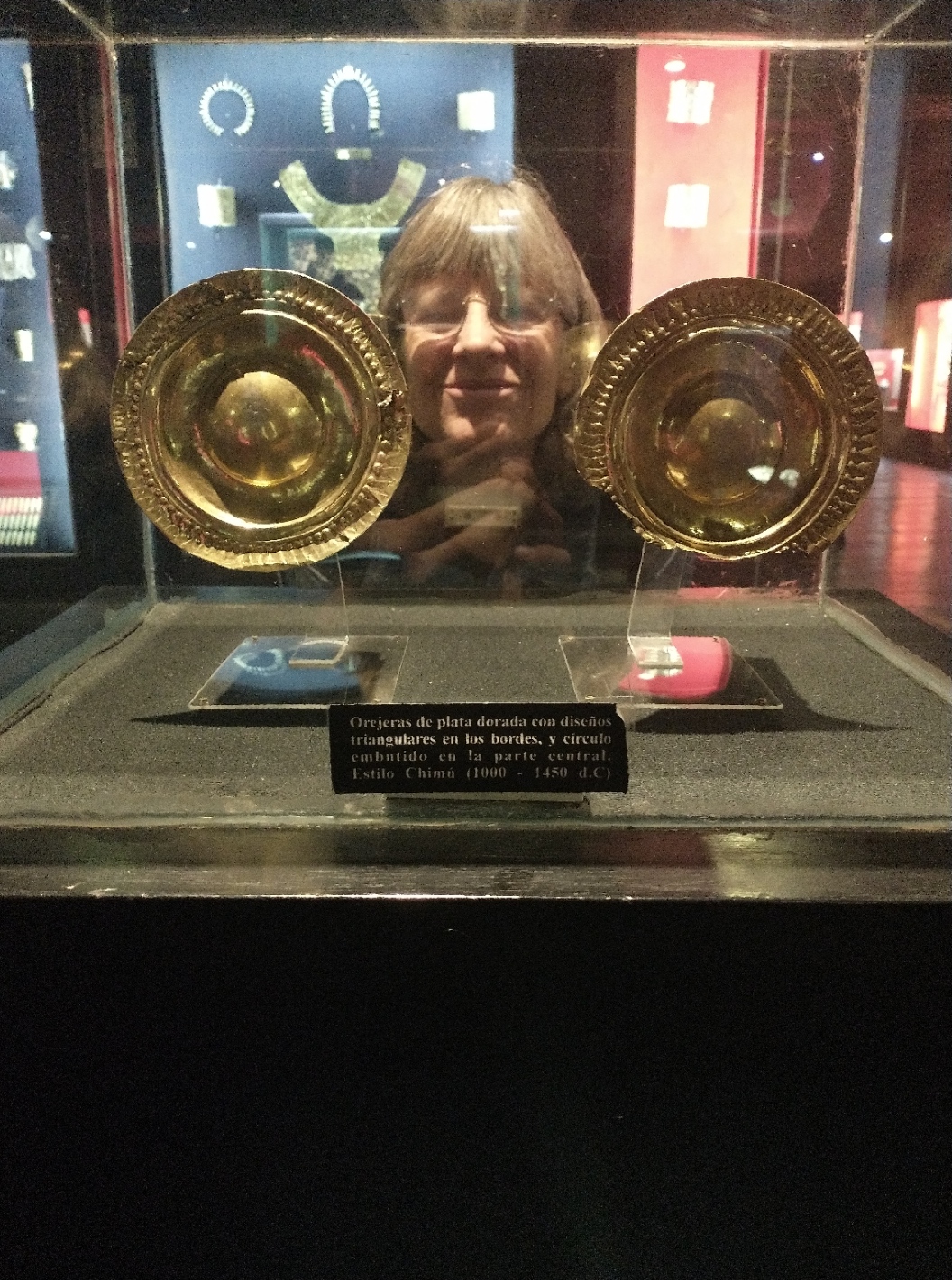
As we approached the museum a Japanese Peruvian man approached us and offered his services as a guide. By now we understood that this is standard practice in museums in Peru. Our guide led us through 100s of items to the most famous weapons and armor. The basement had the Peruvian gold collection. Our guide insisted that Dennis take pictures of Kris and I with Inca style ear wear. After about an hour we paid our guide $20 for his introduction to the huge collection. We had no regrets about choosing this museum to visit.
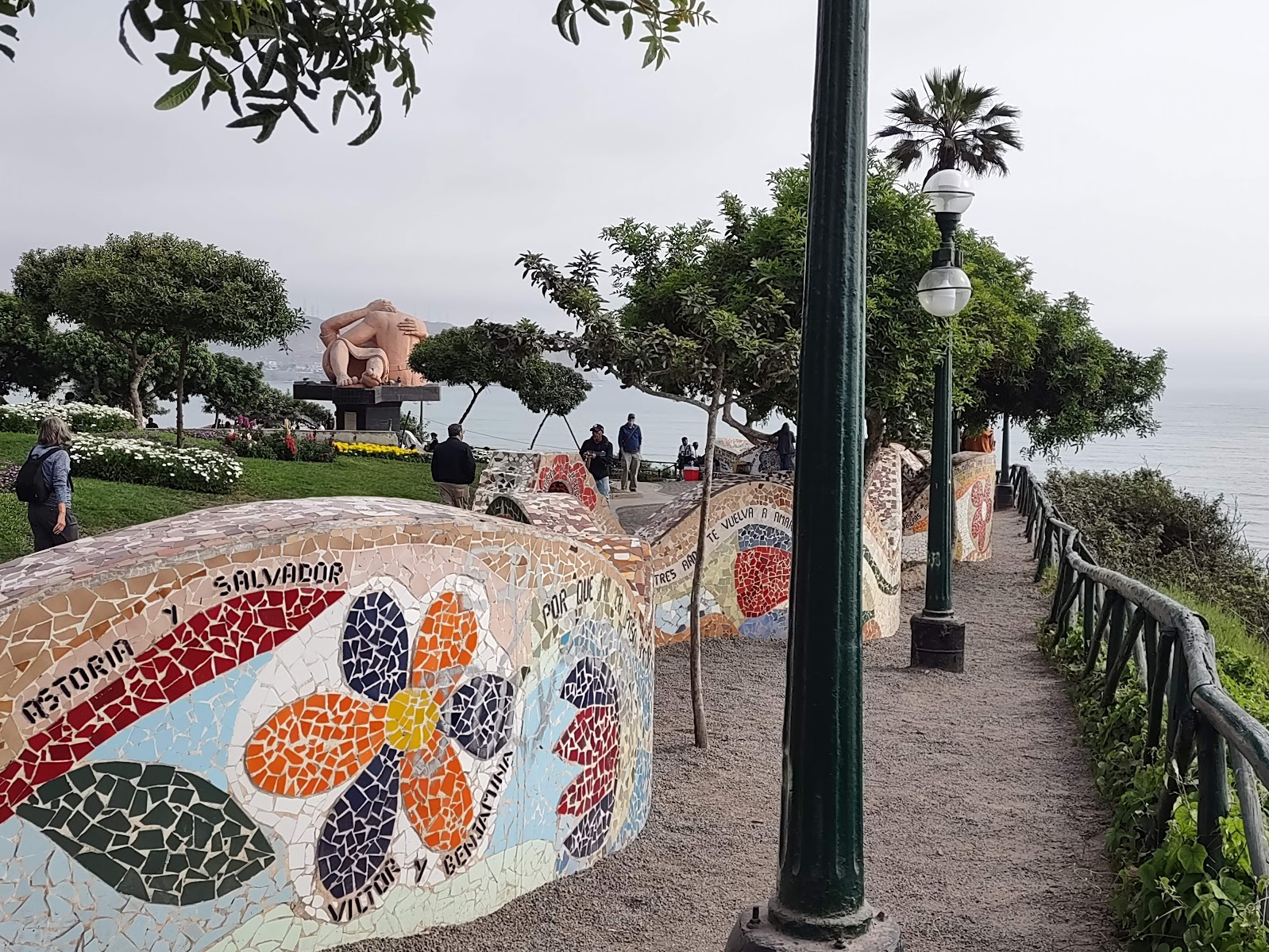
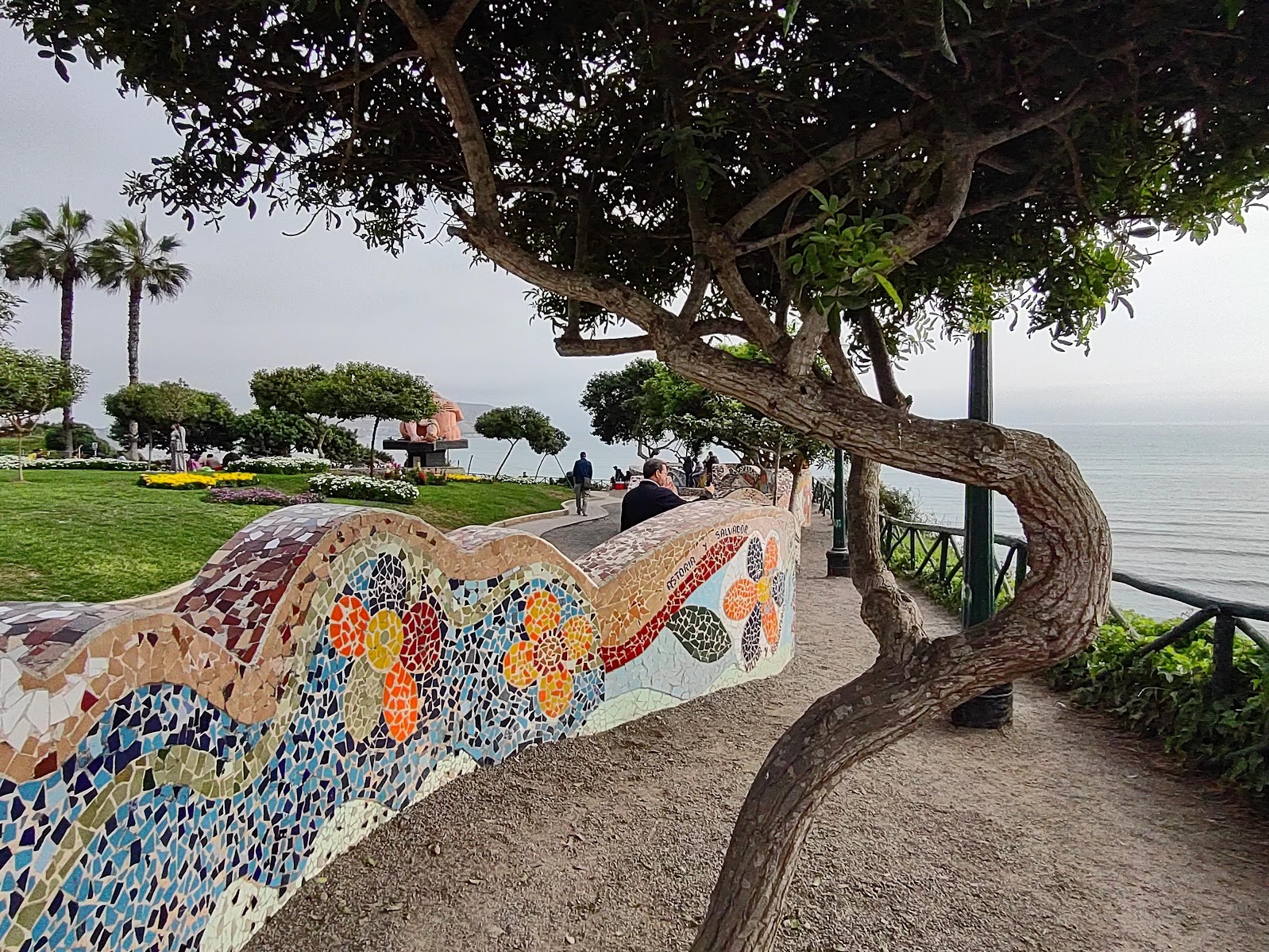
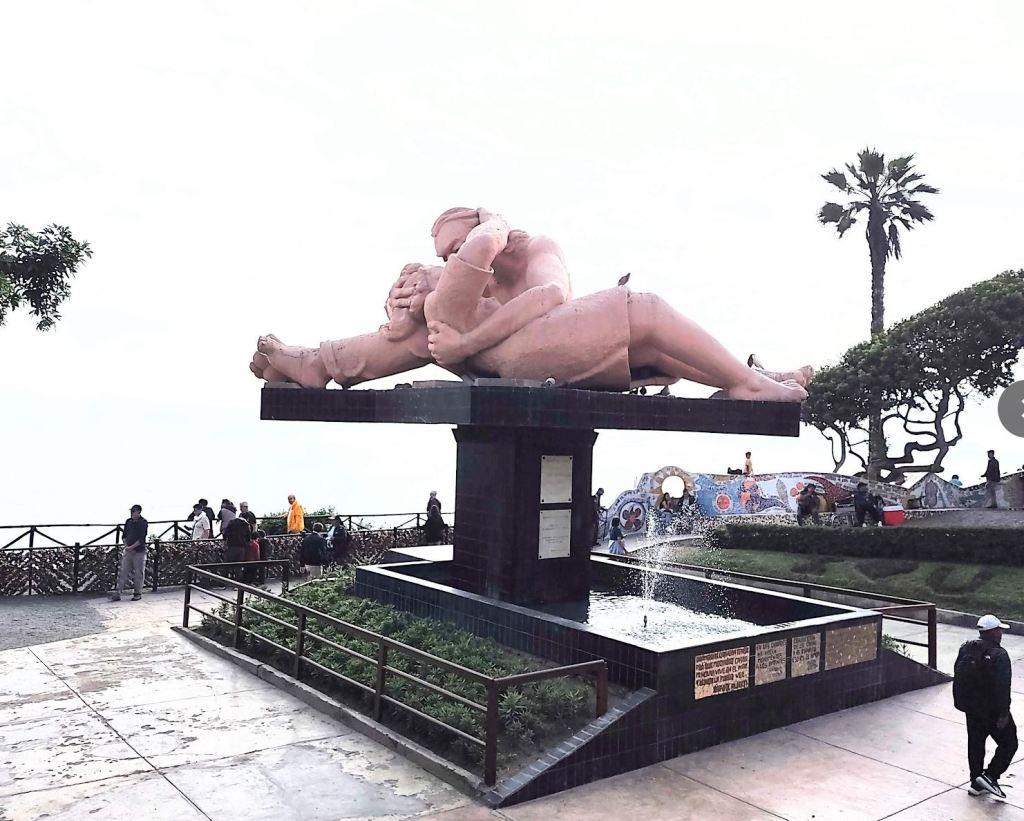
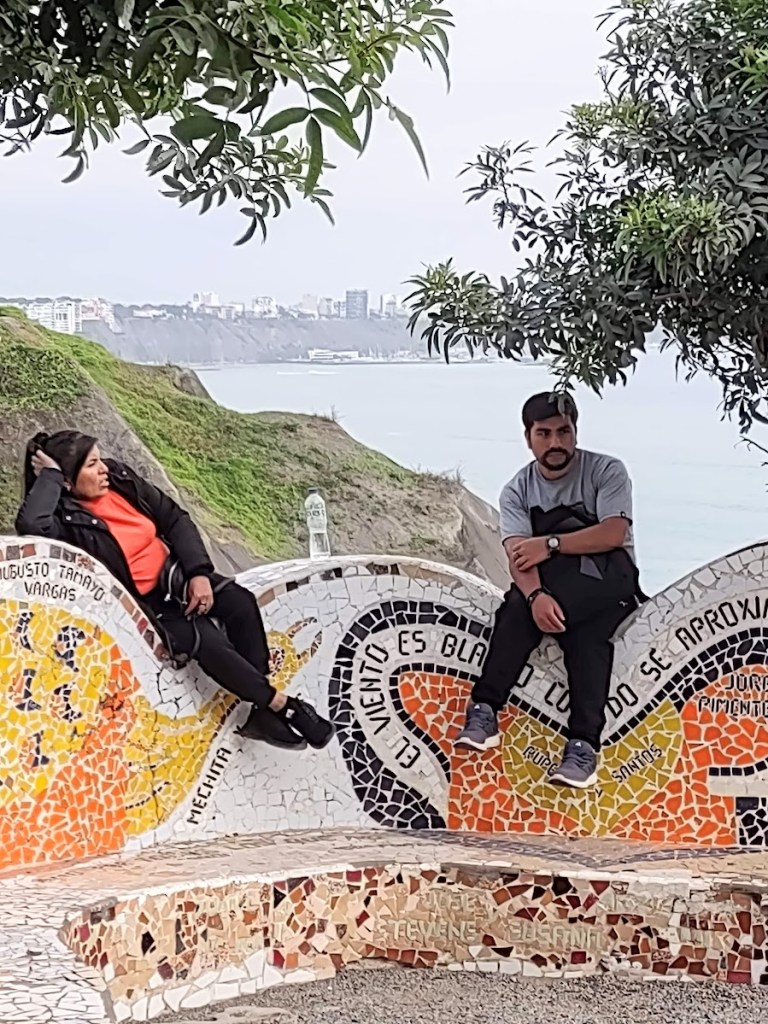
In the afternoon we braved Lima traffic and walked to Love Park. The park has a path on the cliff above the Pacific Ocean. The mosaics were inspired by Gaudi. Amazingly, the sun actually shone for an hour while we were there. Rain or shine you can always see surfers below.


Wall of Love Locks


Good-bye Peru When we returned to our hotel our bus driver was ready to take us to the airport.
I learned a lot about Peru both the current culture and history, particularly early indigenous culture. This is thanks to visiting many museums and our very good Intrepid guides. There is still lots more to see in Lima and other areas of Peru. I don’t know if we will ever go back but it was a great trip.
 Janlw's Weblog