Our only experience in Virginia was an afternoon visit to Mt. Vernon about 25 years ago. They changed the color of Mt. Vernon! It used to be white. Now Mt. Vernon is the sandstone yellow George Washington wanted it to be.
Because we love history and had always wanted to see Jefferson’s Monticello a Road Scholar trip to the homes of the 7 Virginia born presidents seemed right for us. It was! We learned things that help us better understand life and culture in late 18th and early 19th century America and specifically Virginia.
Now we also know a lot of Virginia presidential trivia: A favorite dish of our early presidents was oysters. John Tyler had 15 children. William Henry Harrison fathered 10. Jefferson insisted all his grandchildren move in with him. Washington and Madison never produced any children although they both assumed the role of father to the children of their widowed wives.
Don’t ask what Washington’s false teeth were made of. You don’t want to know.
We arrive in Charlottesville
Arrived at our hotel in Charlottesville hungry at 10pm. The helpful guy at the Hyatt desk had NO suggestions except walk —> that way. Mr.Google saved us.
Took an Uber to what we thought was an historic Unitarian church. Turns out it’s historic like we are, built in the early 1950’s.
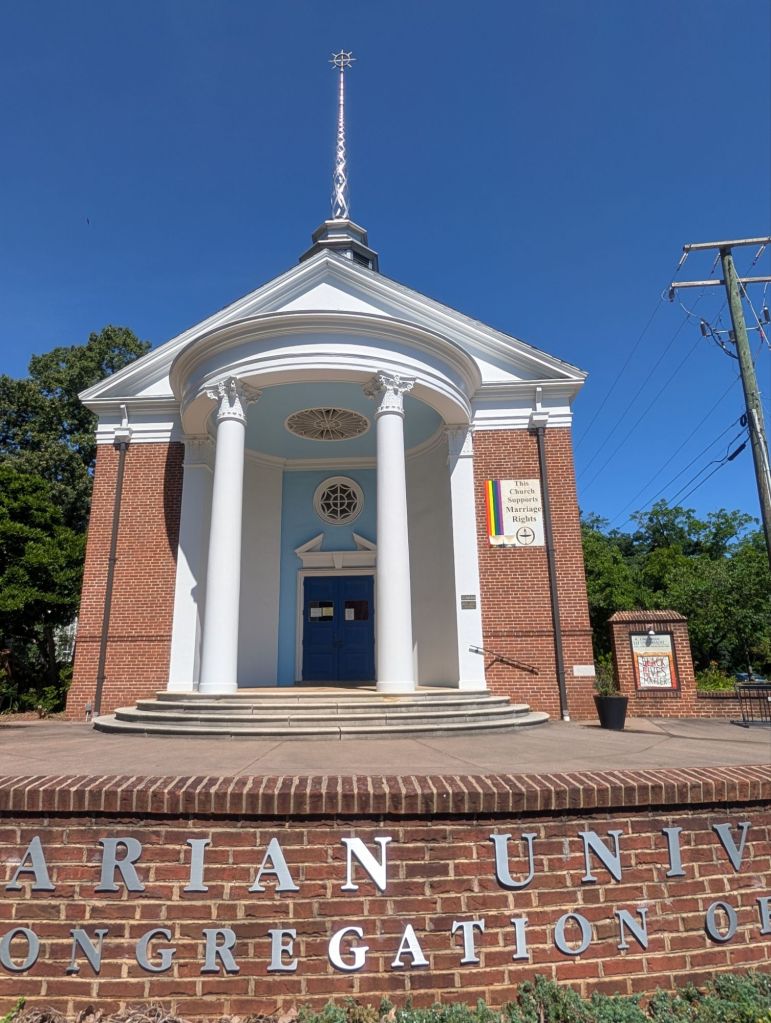
The service was a “Bridging” ceremony for high school seniors. I think 6 were recognized, 3 attended. After a lot of inspiring words, the congregation members formed a bridge for the students to walk under. I found it moving even though I didn’t think I should.
Walked back which was pretty until we came to the busy highway traffic circles. Dennis literally saved my life when he pulled me back as I started to cross when our signal said go. I stepped without looking. A speeding car in the turn lane would have hit me for sure.

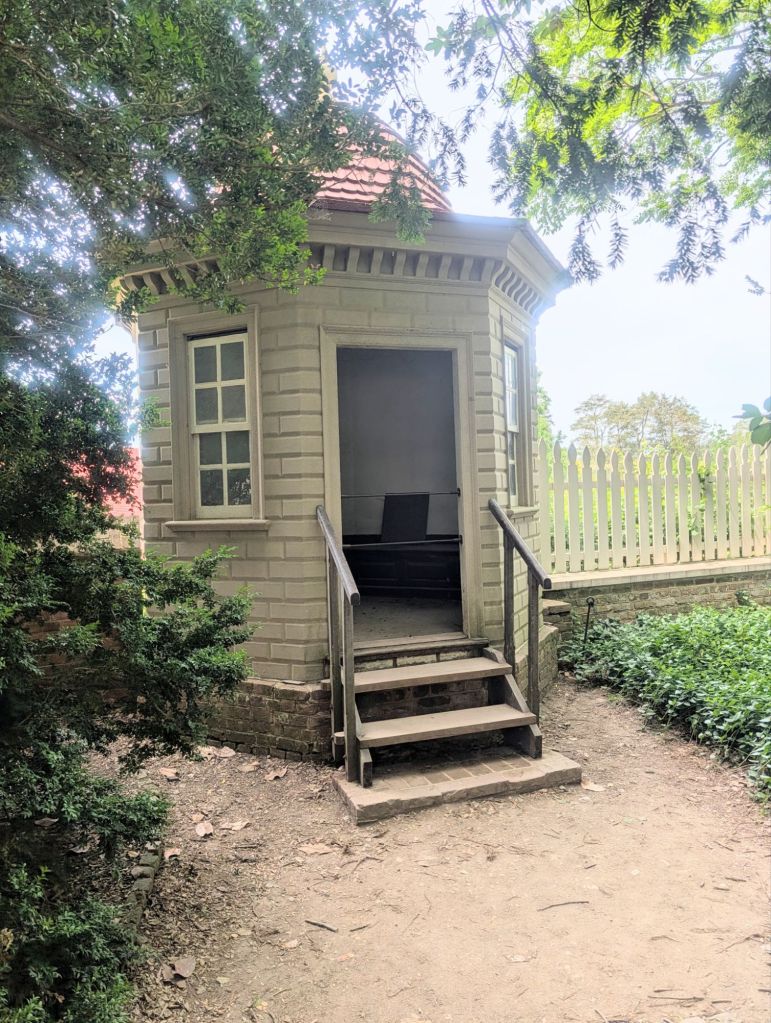
June 1 was not a good start to the month for me. We began our Road Scholar Virginia Presidents trip at Mt. Vernon. Shortly after taking this beautiful picture of George Washington’s perfectly designed privy. I lost my phone.
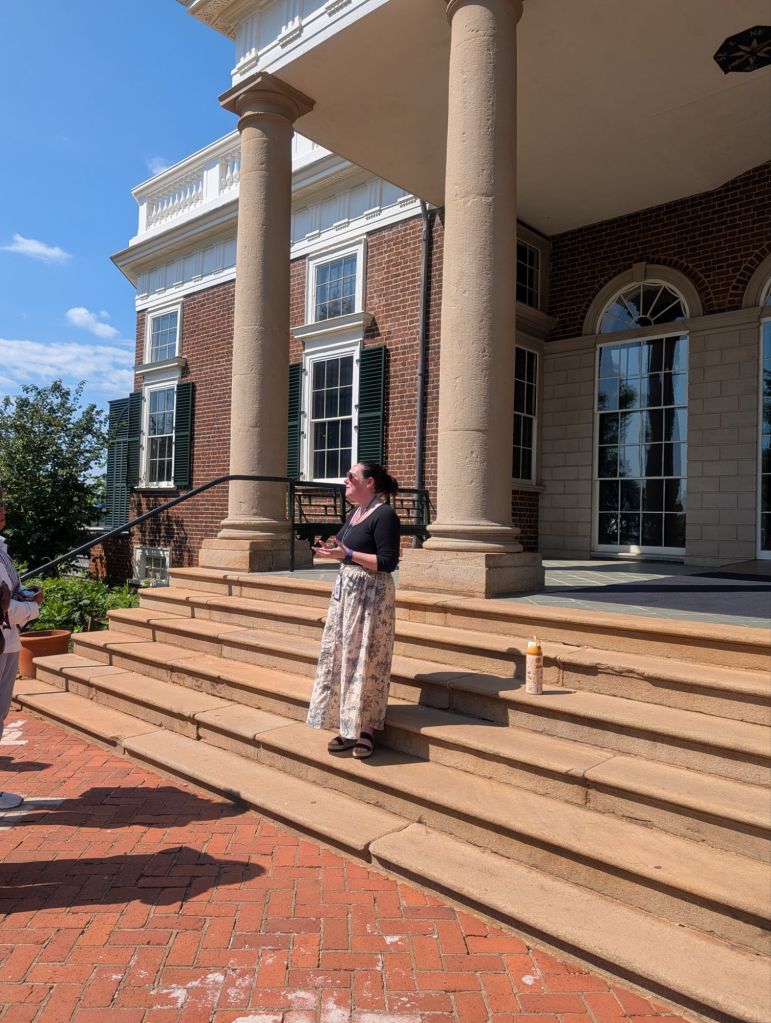
I spent most of the rest of my tour either retracing steps or trying to pay attention to each of the 3 tours our group had with Mt.Vernon guides: kitchen gardens, slave quarter and of course the home. All the guides were excellent and I tried to pay attention and ignore the sick feelings in my stomach.
At last my phone was turned in to the lost & found. I was elated! 😄
Jefferson & Monroe
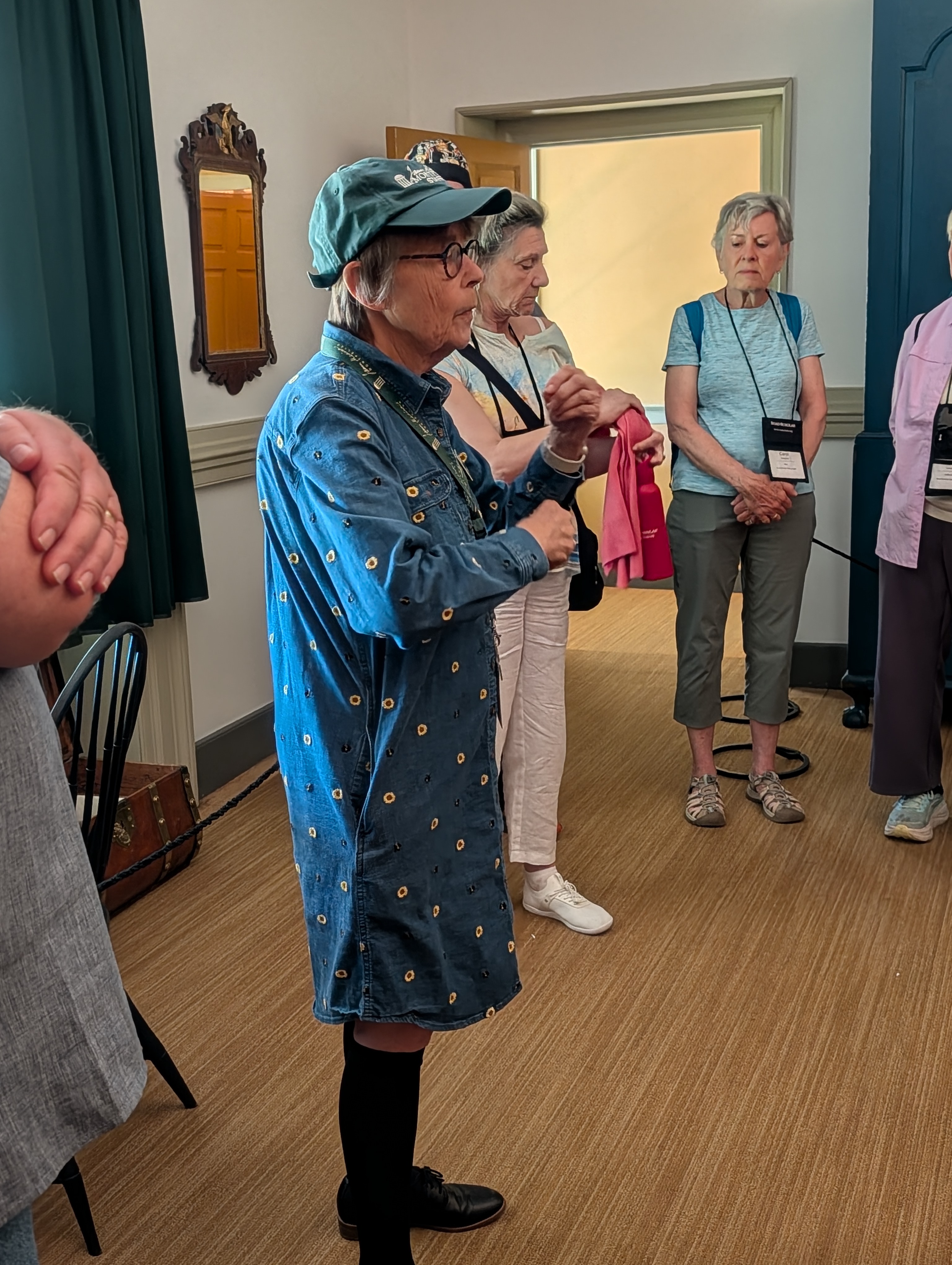
I never imagined this could happen. Today we met both Thomas Jefferson and James Monroe. Both seemed to be wonderful men of integrity in spite of their excuses about slavery and in Monroe’s case a spirited defense of the Missouri Compromise. They were both too shy for pictures.
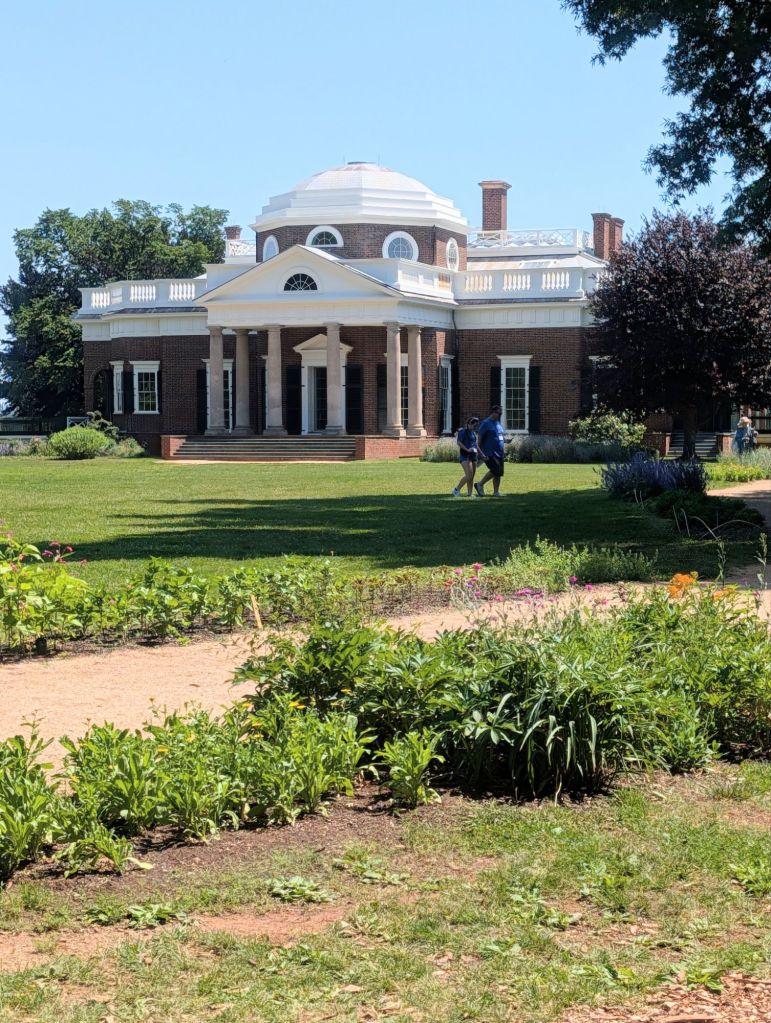
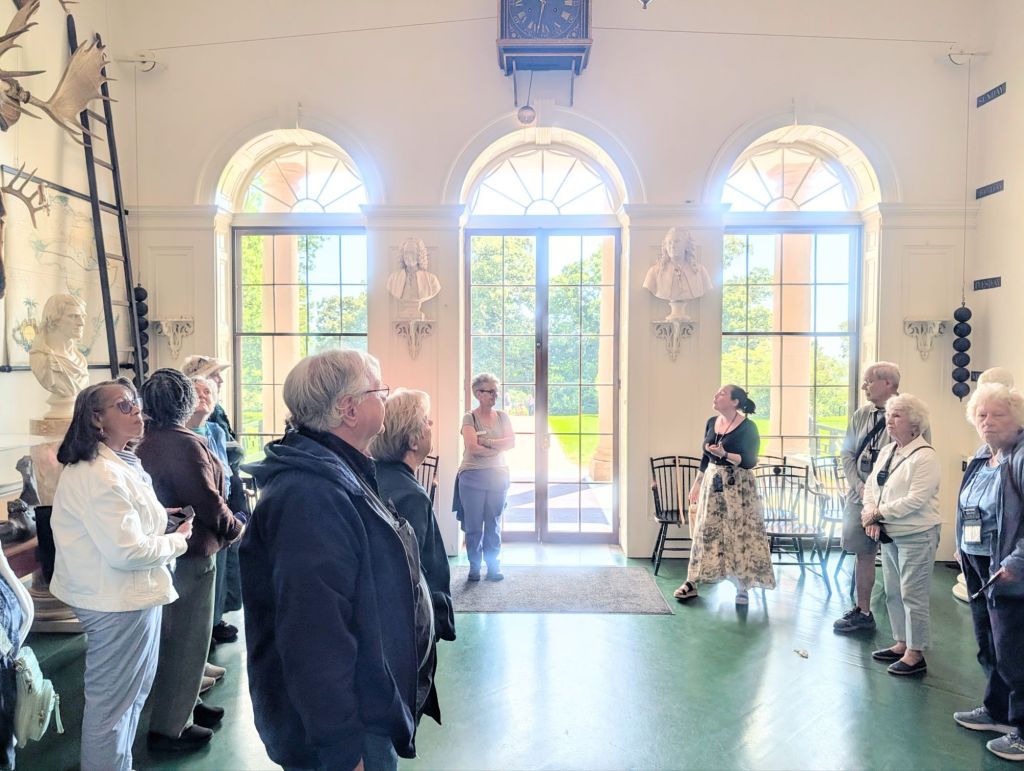
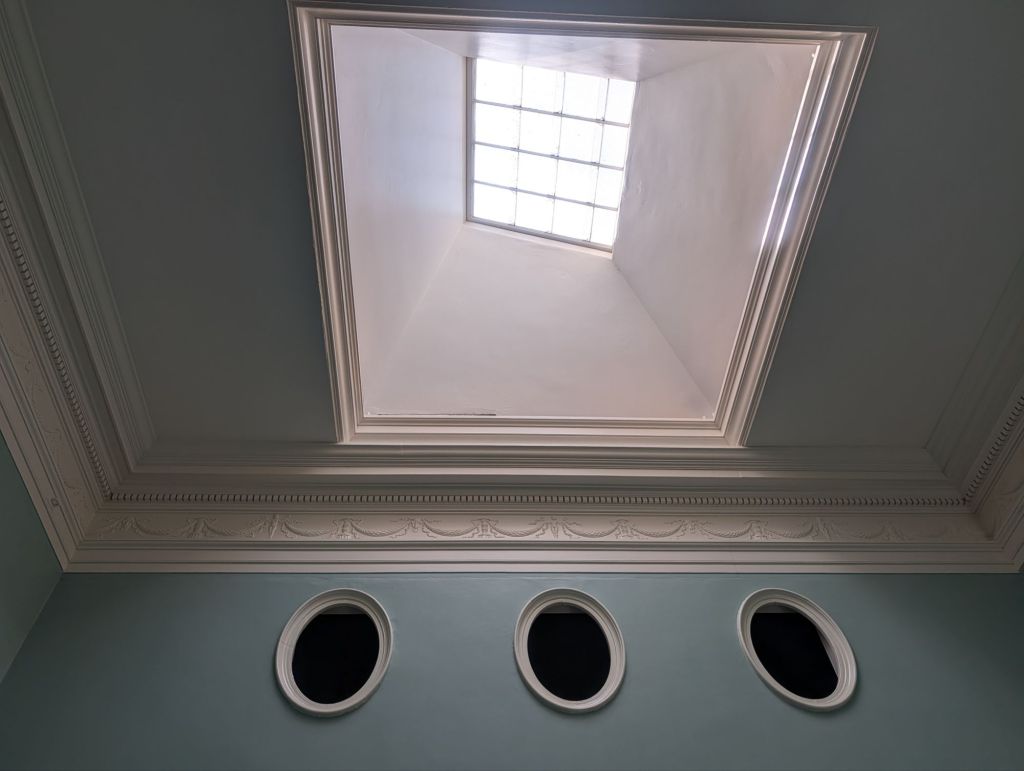
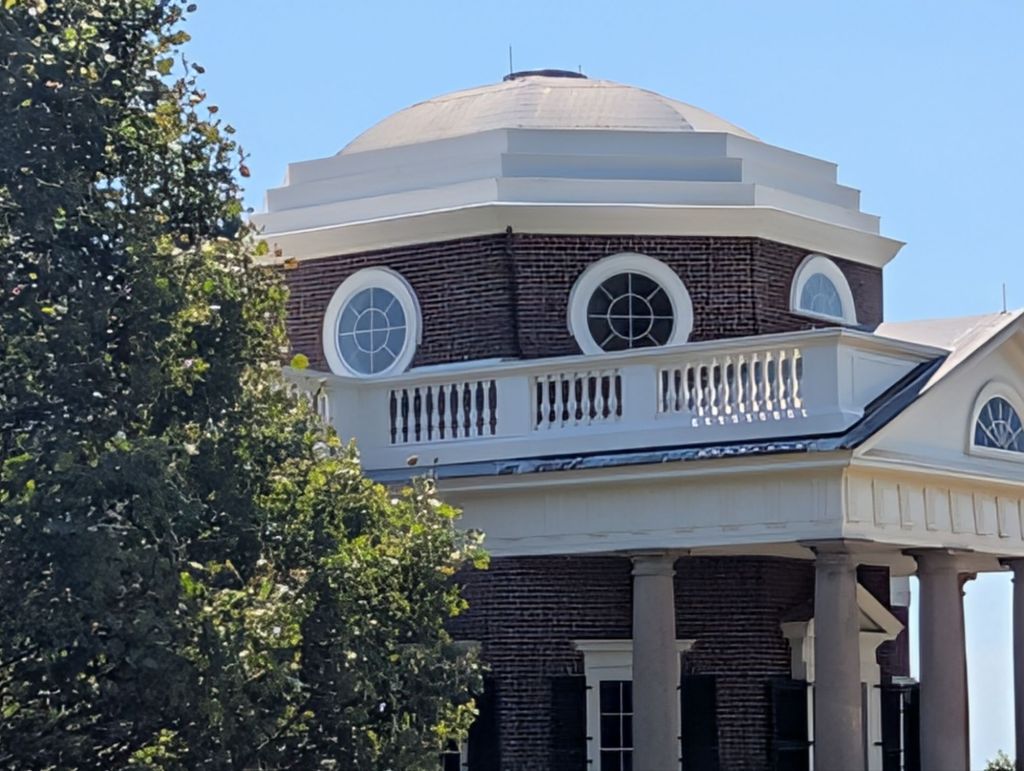
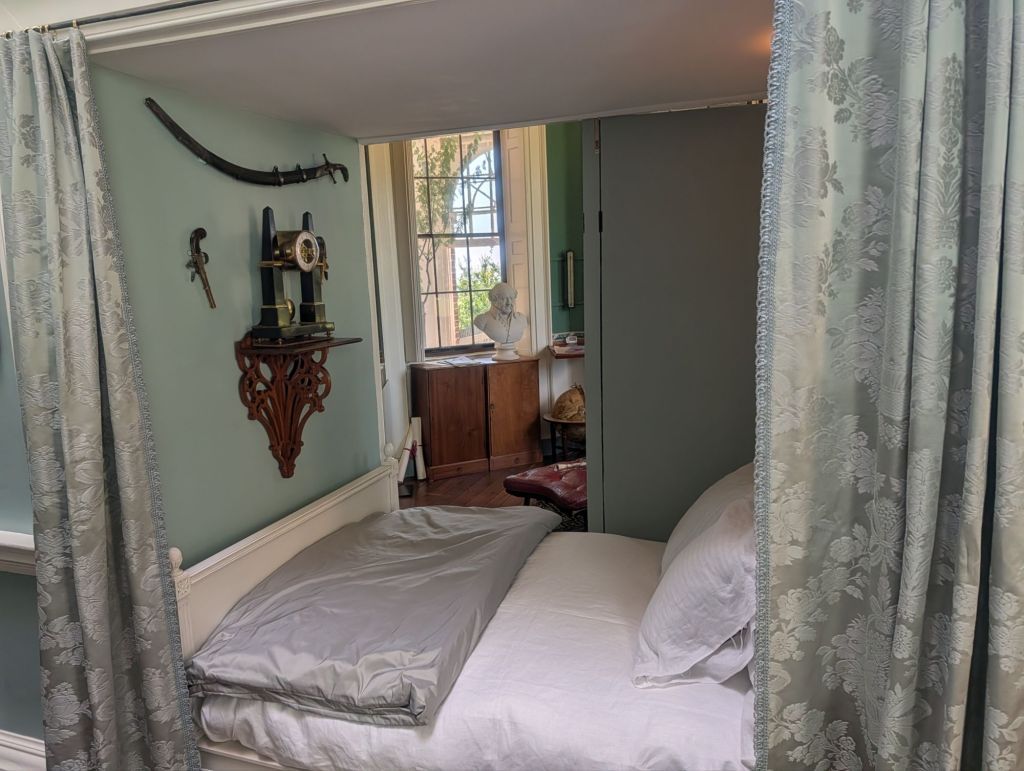
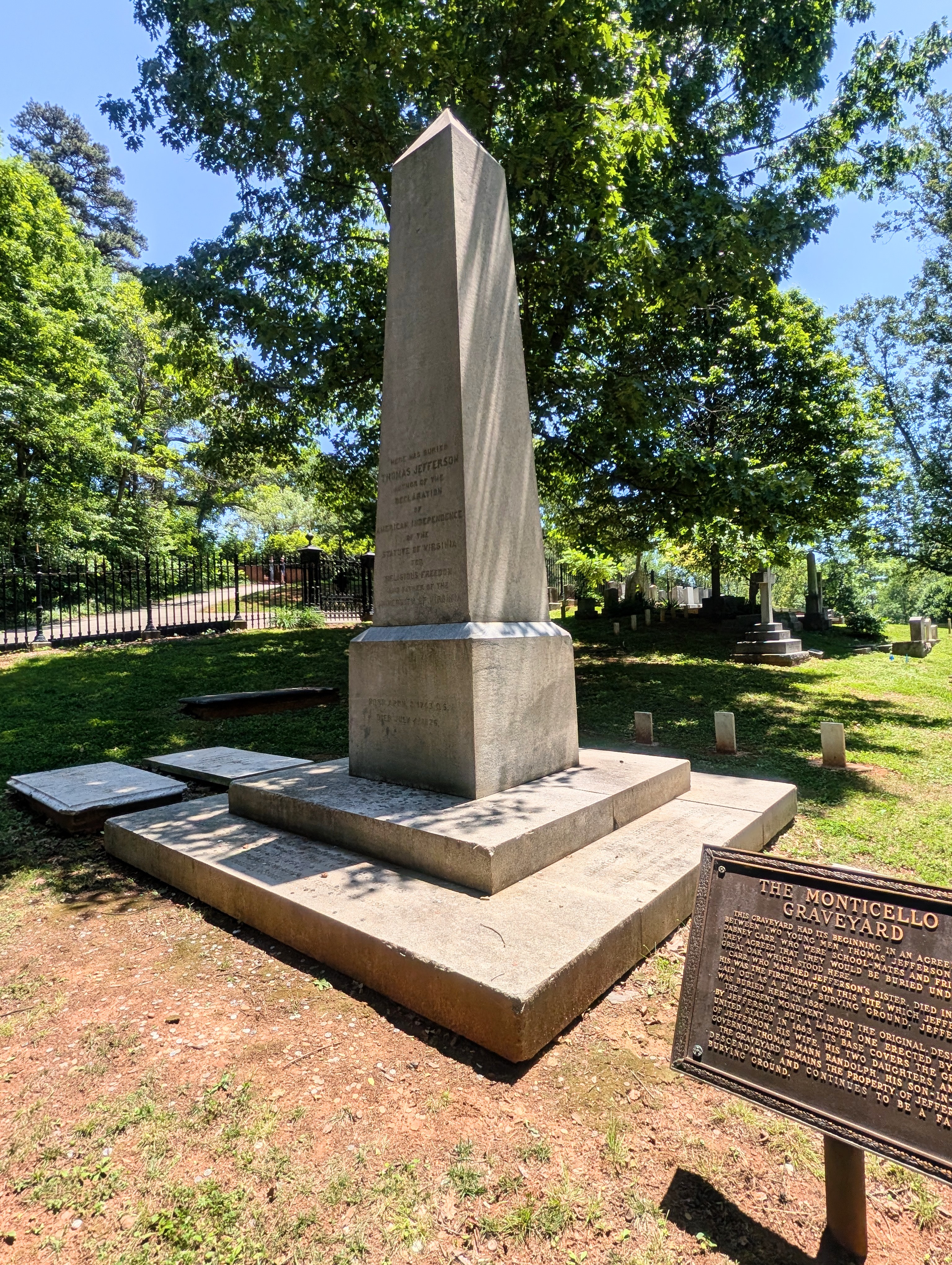
Author of the Declaration of American Independence
of the Statute of Virginia for religious freedom
& Father of the University of Virginia
Our time to explore Monticello was less than we would have liked. We decided to hike through the woods past Jefferson’s grave rather than wait in line for a bus. We would have liked to take the garden tour and spend more time hiking around the grounds.
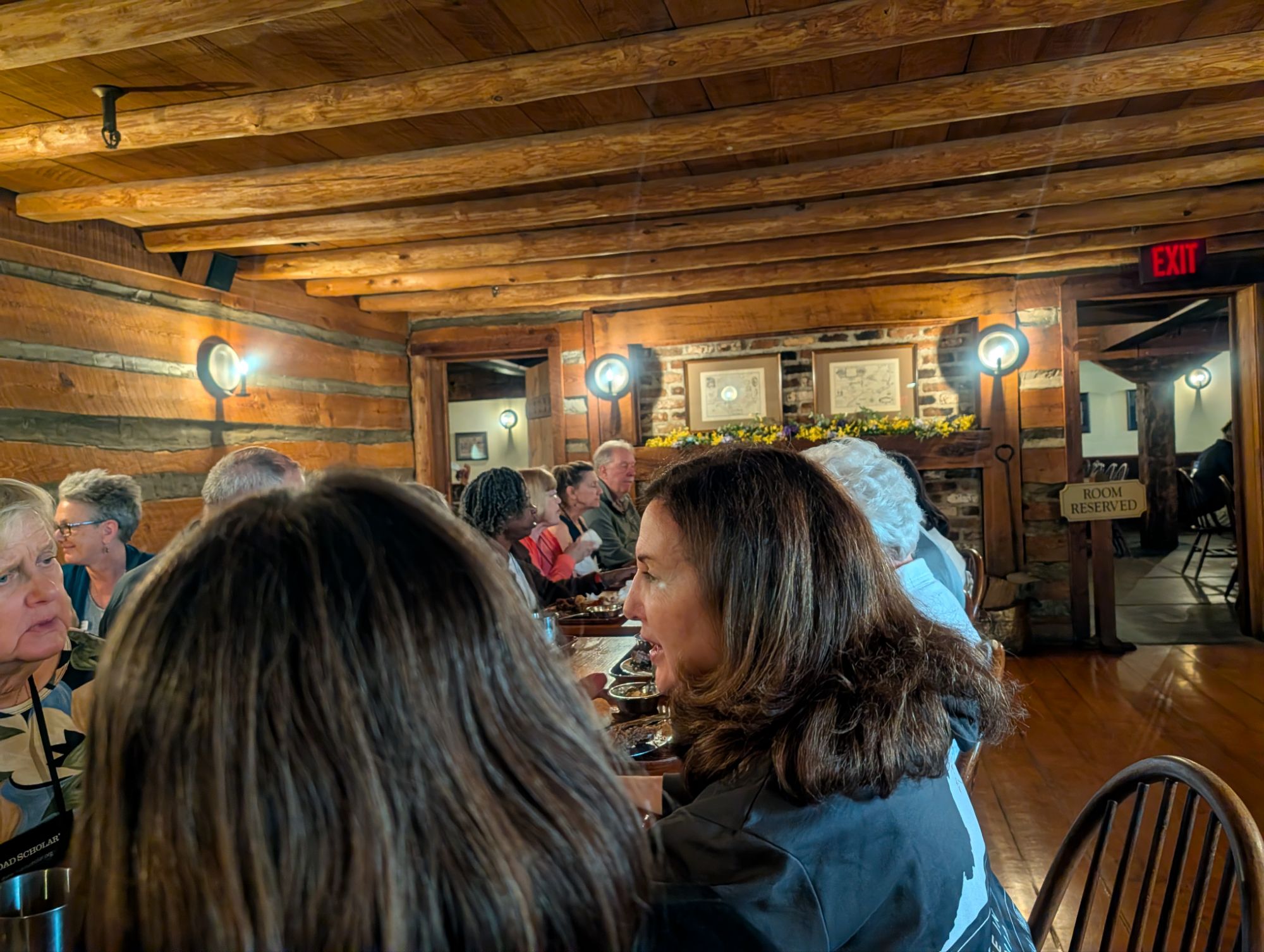
Lunch at Michie’s Tavern We all ate too much fried chicken at Michie’s Tavern. We understood overeating is a required & historic tradition here.
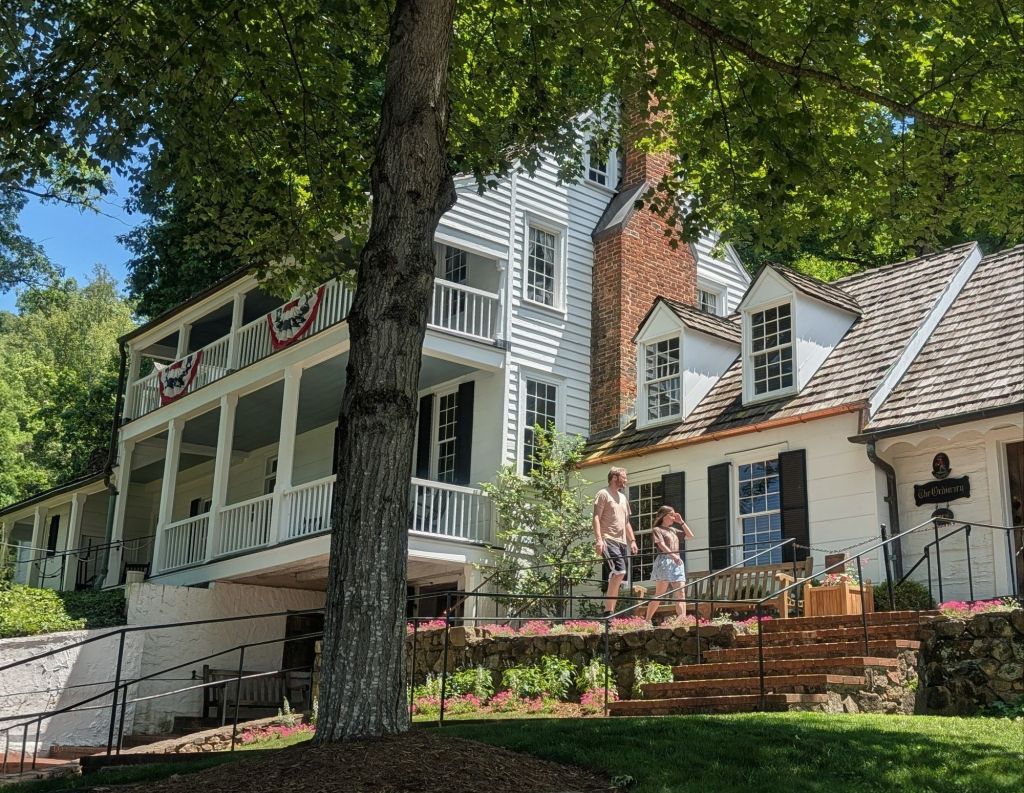
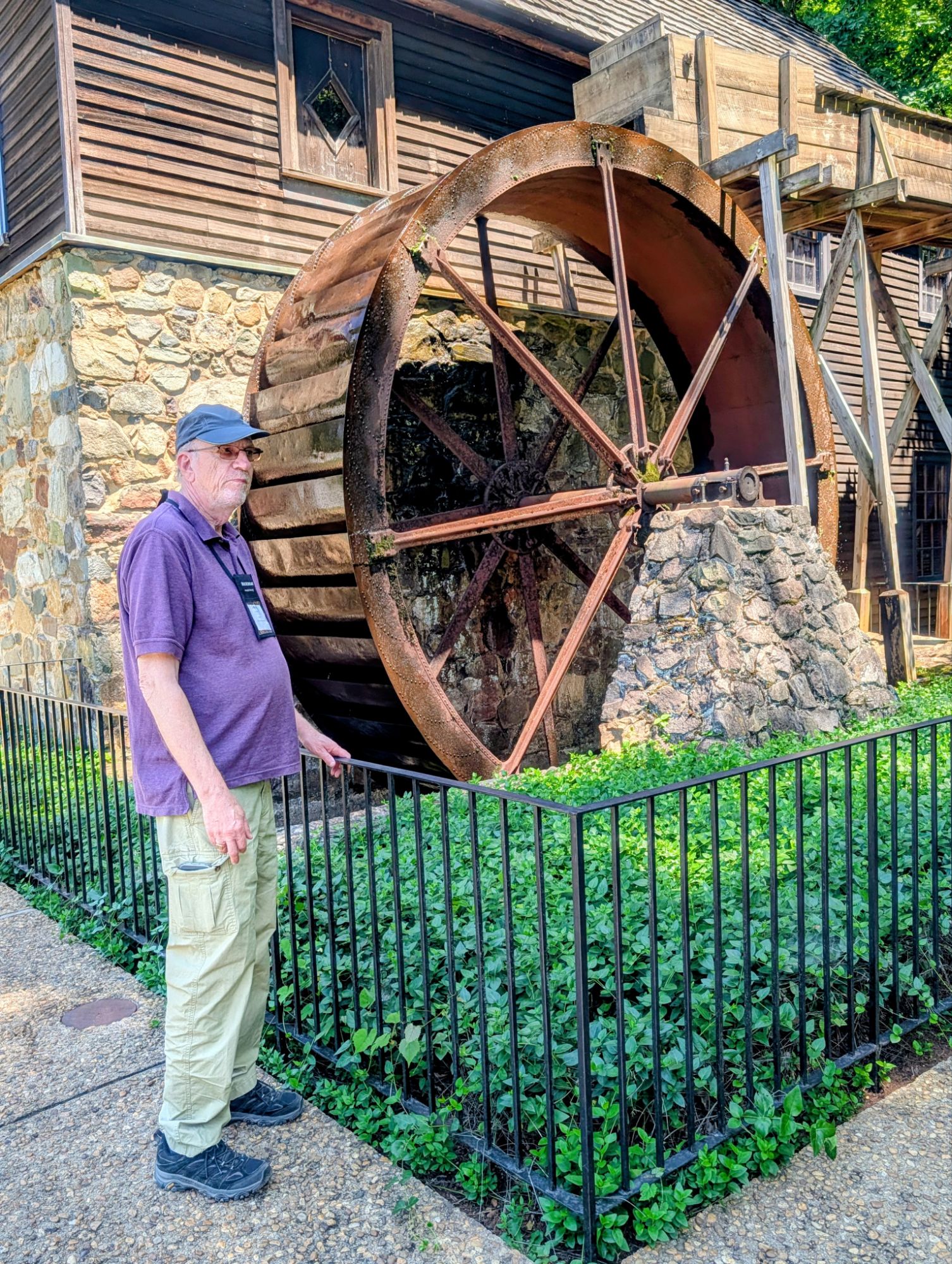
James Monroe’s Highland
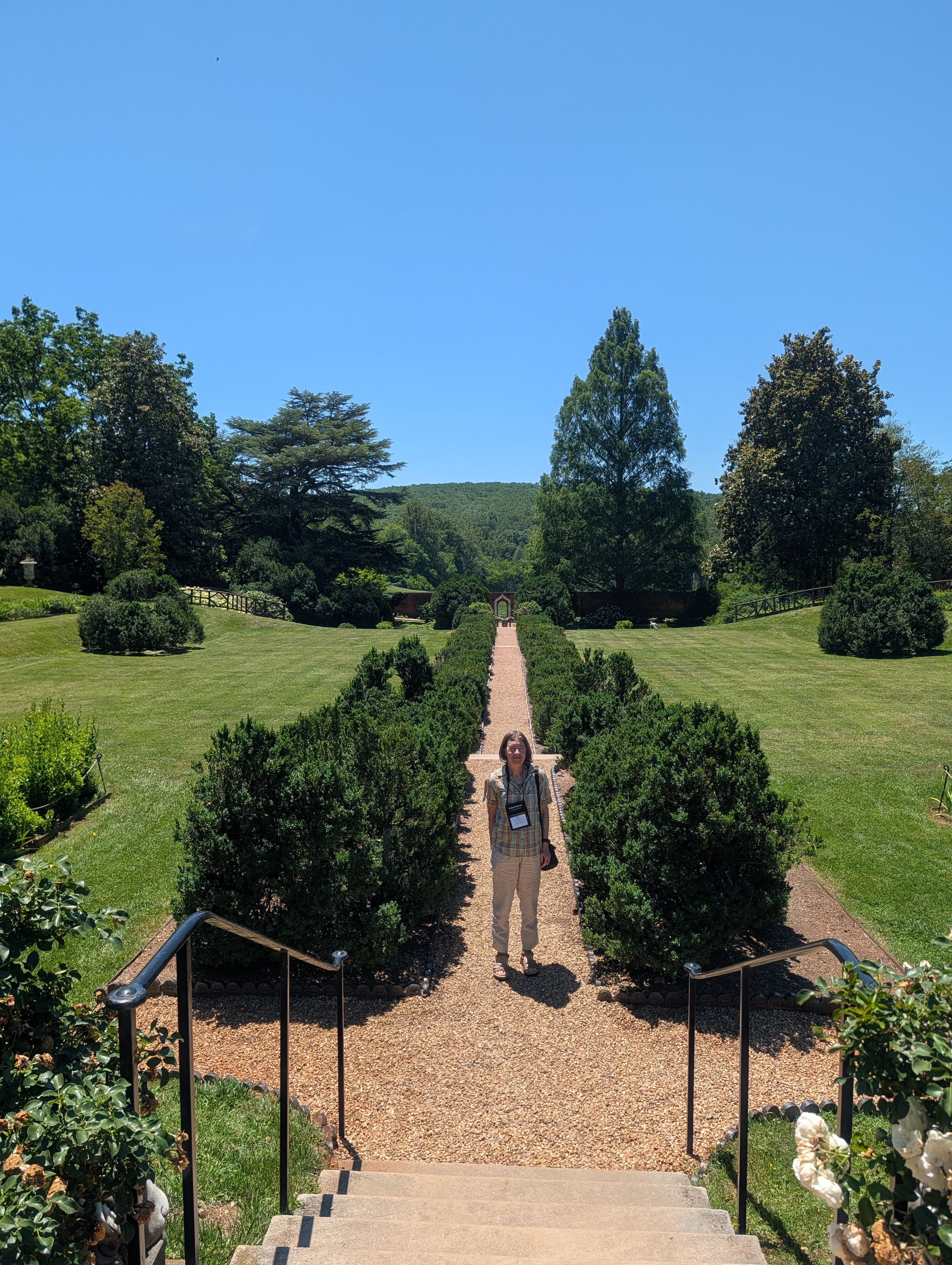
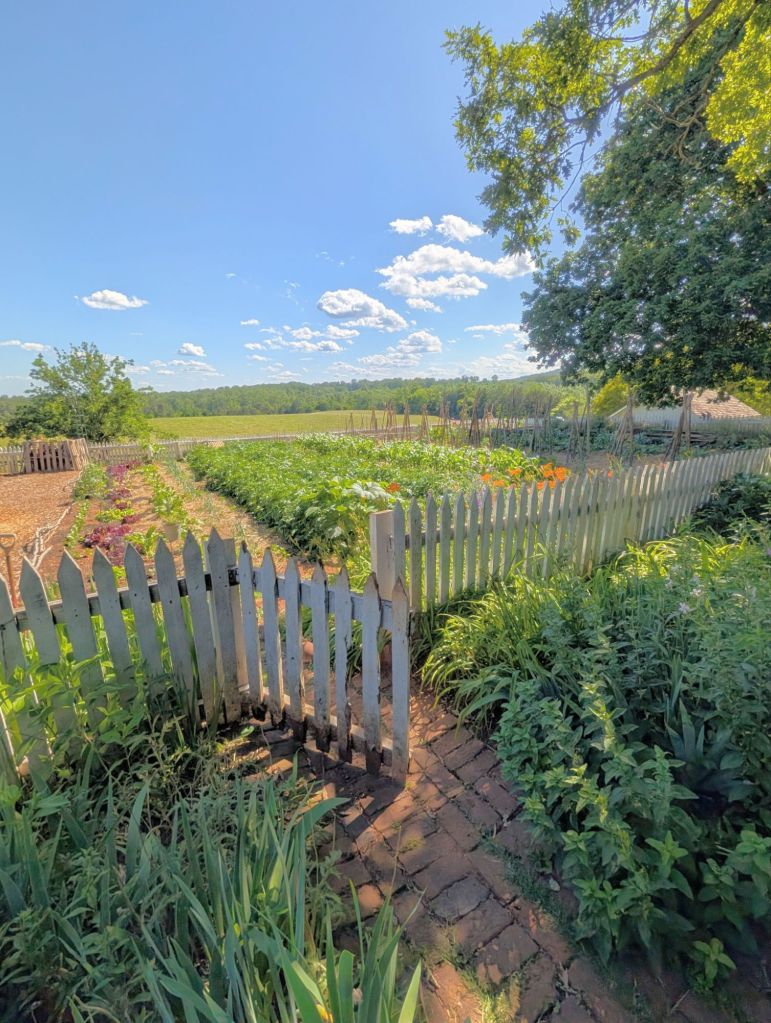
Monroe’s home Highland burned down but we went in his guest house, slave housing, and gift shop. It’s a beautiful location in the hills. I took a picture of the garden. The guides get to eat the vegetables.
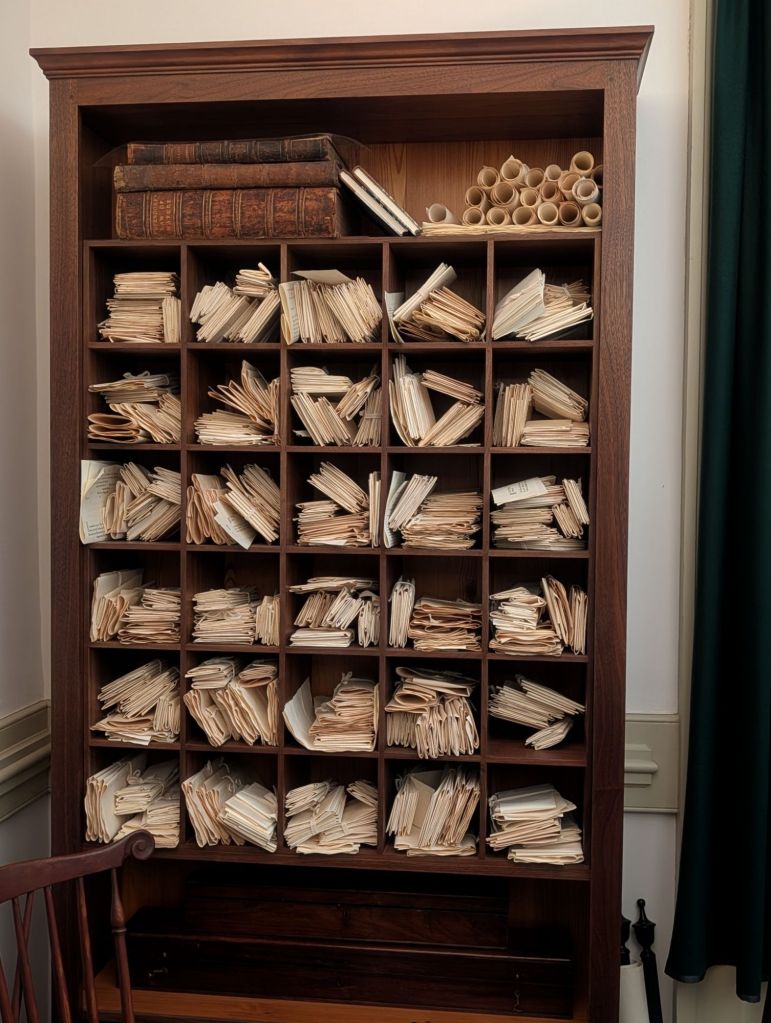
Madison so much correspondence
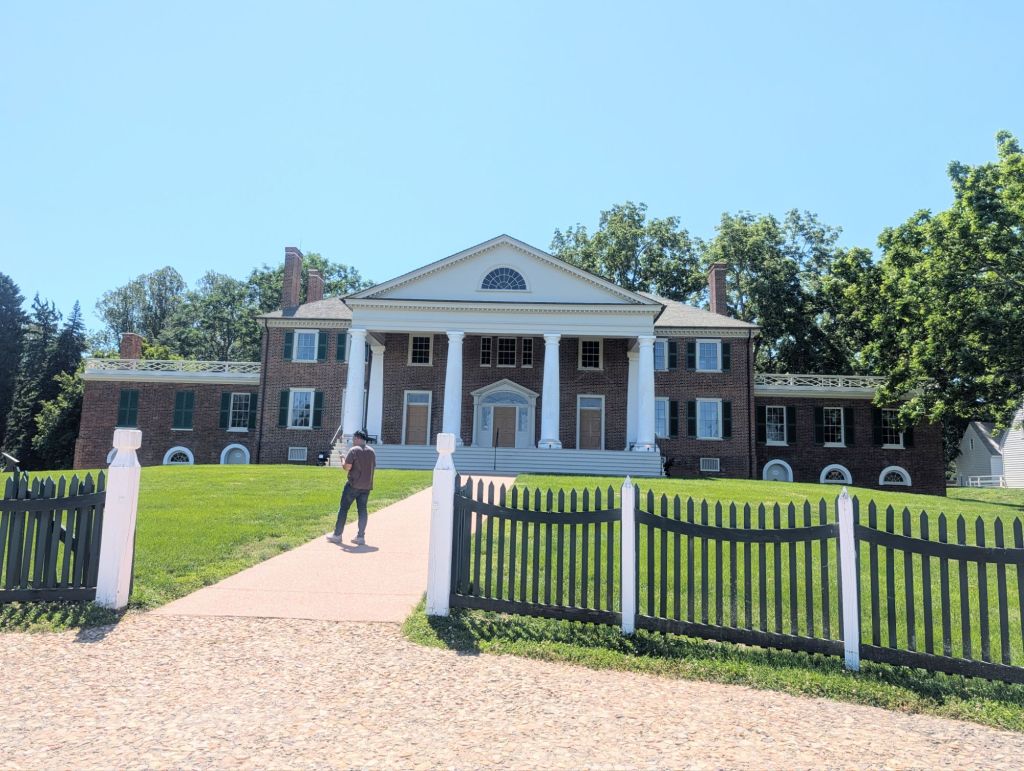
Madison’s Montpelier & Jefferson’s University
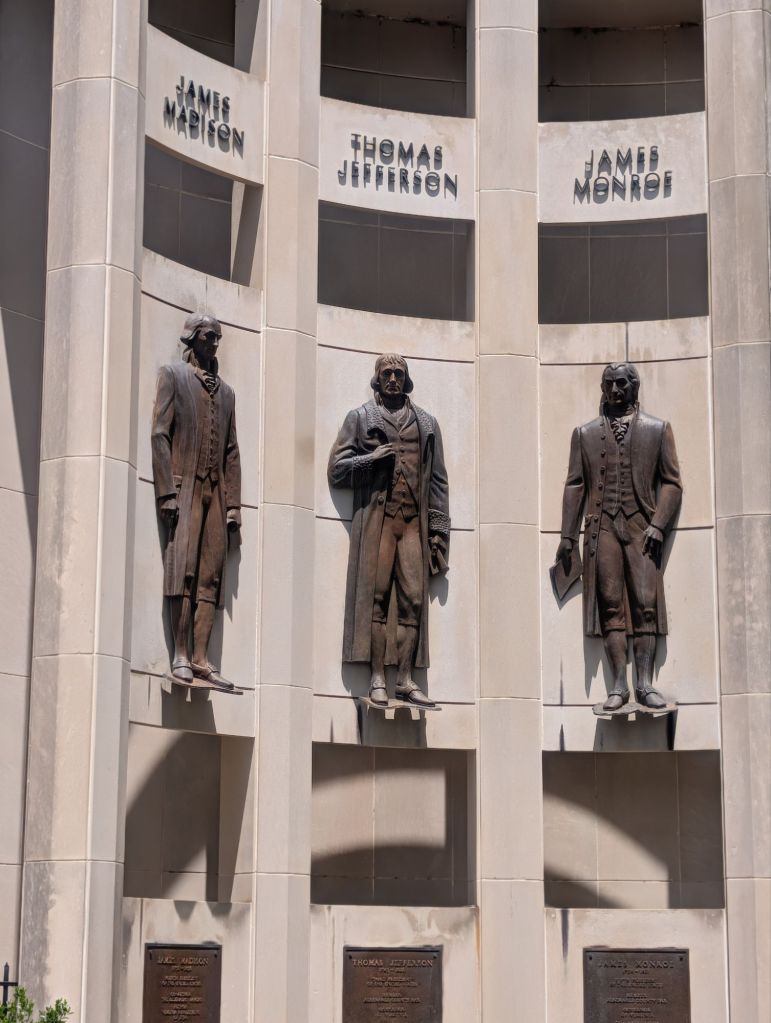
Other Founding Fathers recognized James Madison as a great thinker & writer.
After leaving Washington he and Dolley entertained a lot of visitors which they both seemed to enjoy. Due to the somewhat remote location of their home they added a wing crammed full of beds for visitors.
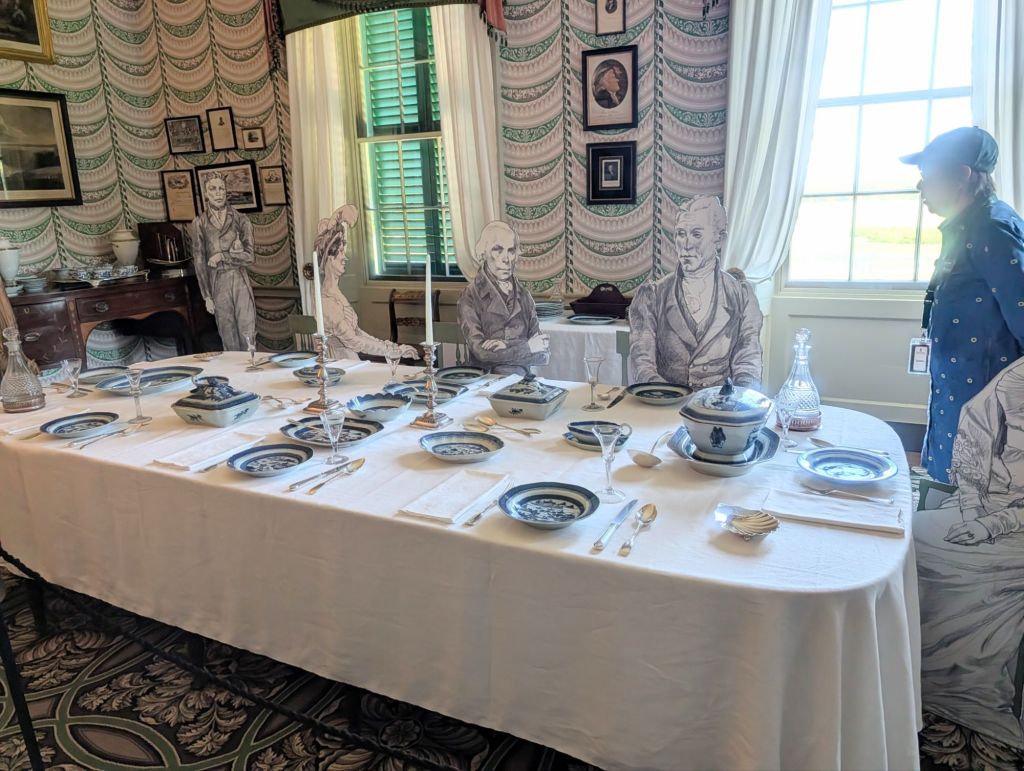
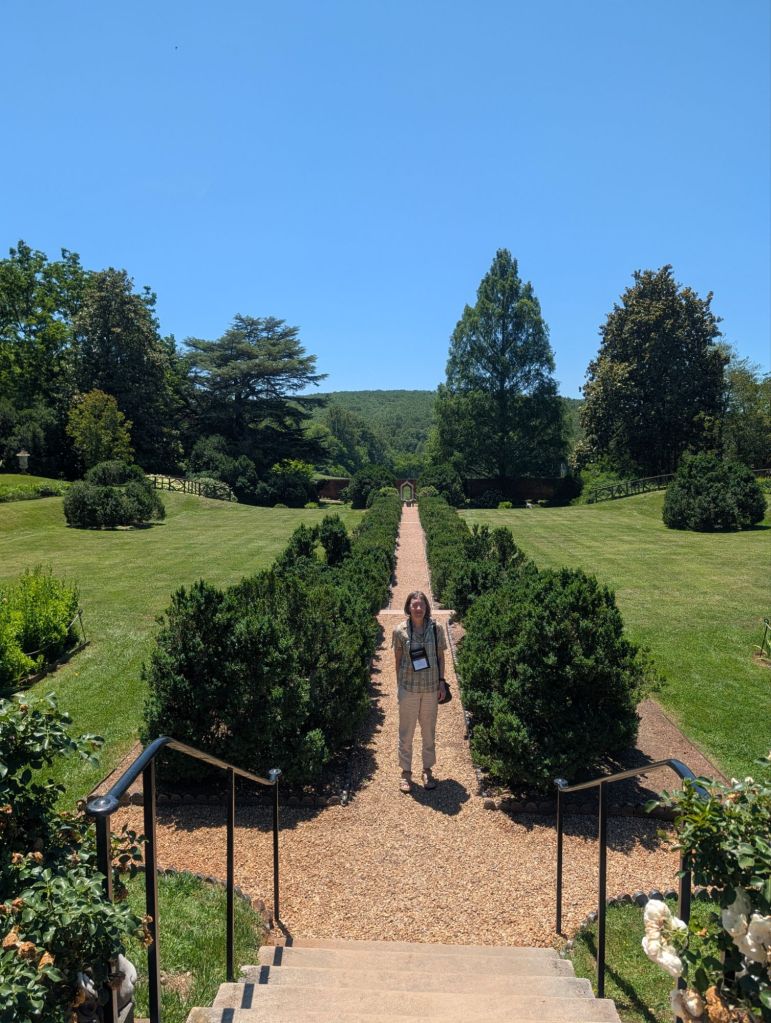
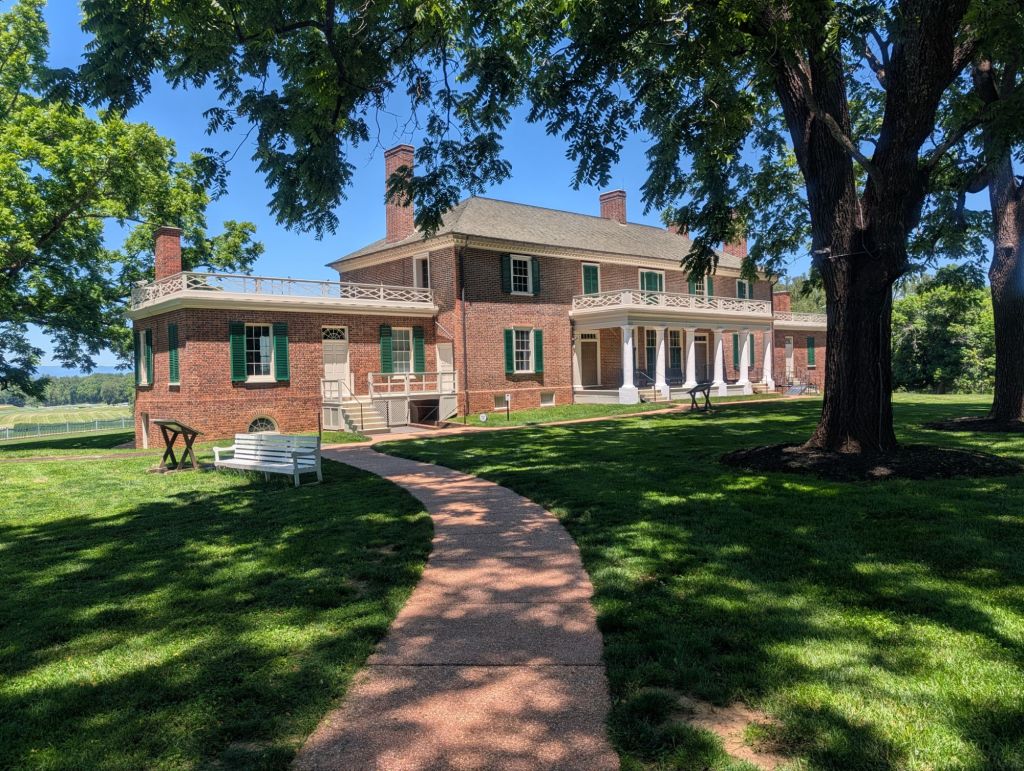
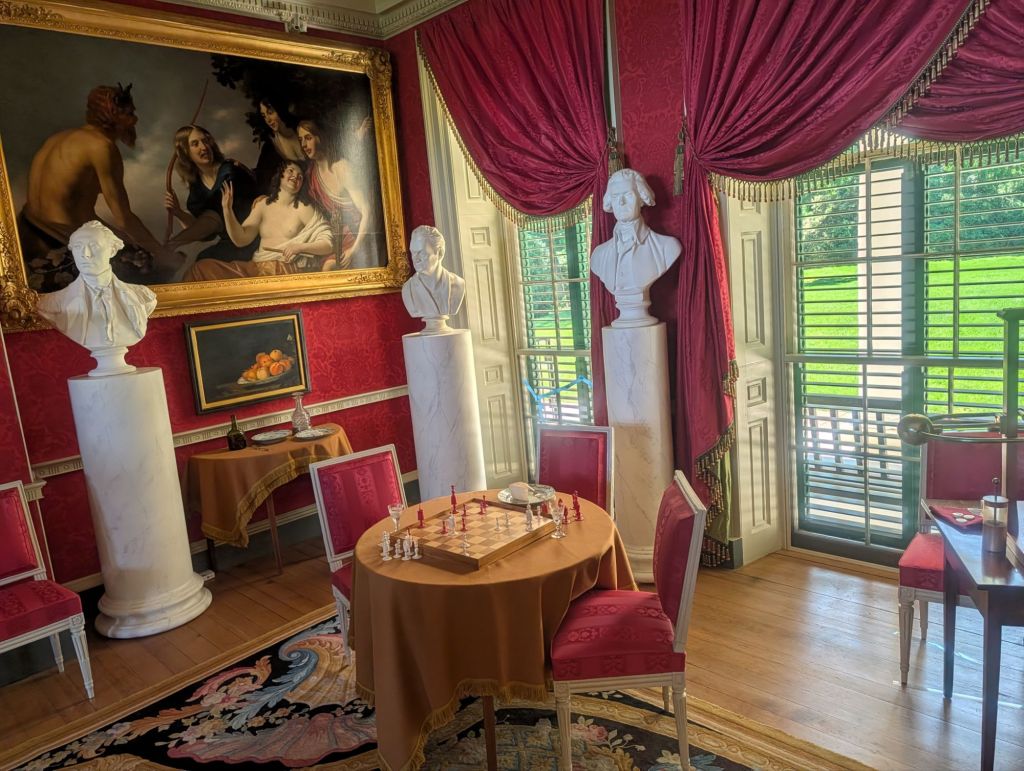
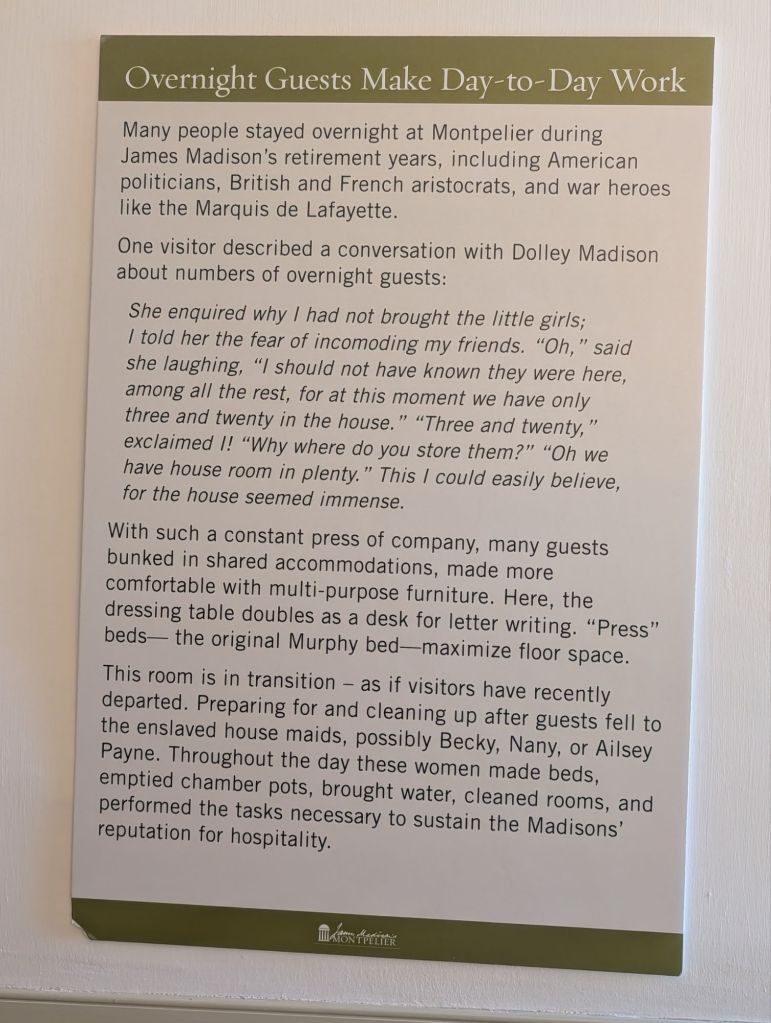
Only 23 guests?
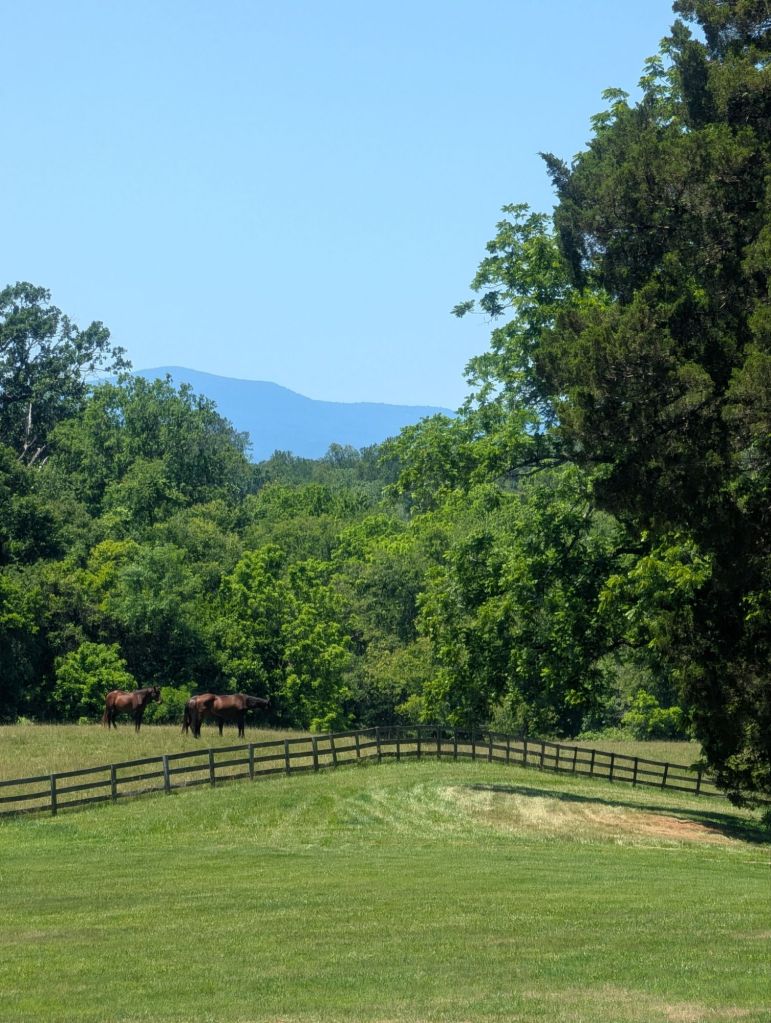
Madison had a beautiful spot with a view of the Blue Ridge Mountains.
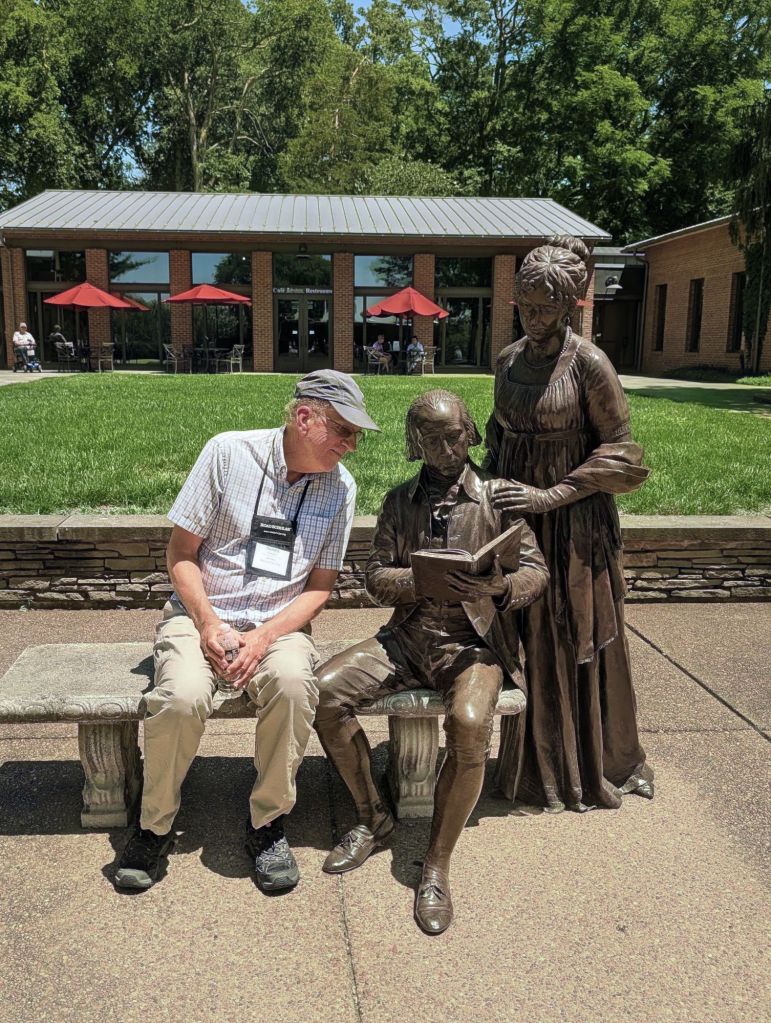
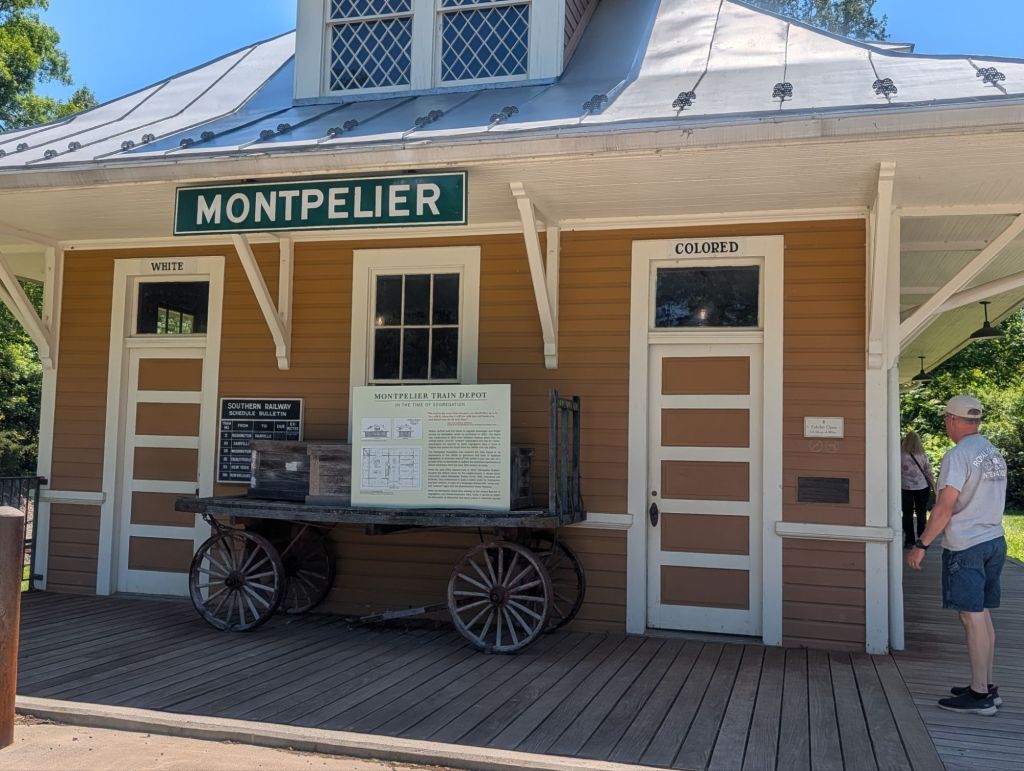
We made a brief stop at the Montpelier Station Museum & Post Office. The station museum preserves separate WHITE and COLORED waiting rooms as a reminder of past segregation.
University of Virginia
It was back to the bus. We rode back to Charlottesville and directly to the University of Virginia.
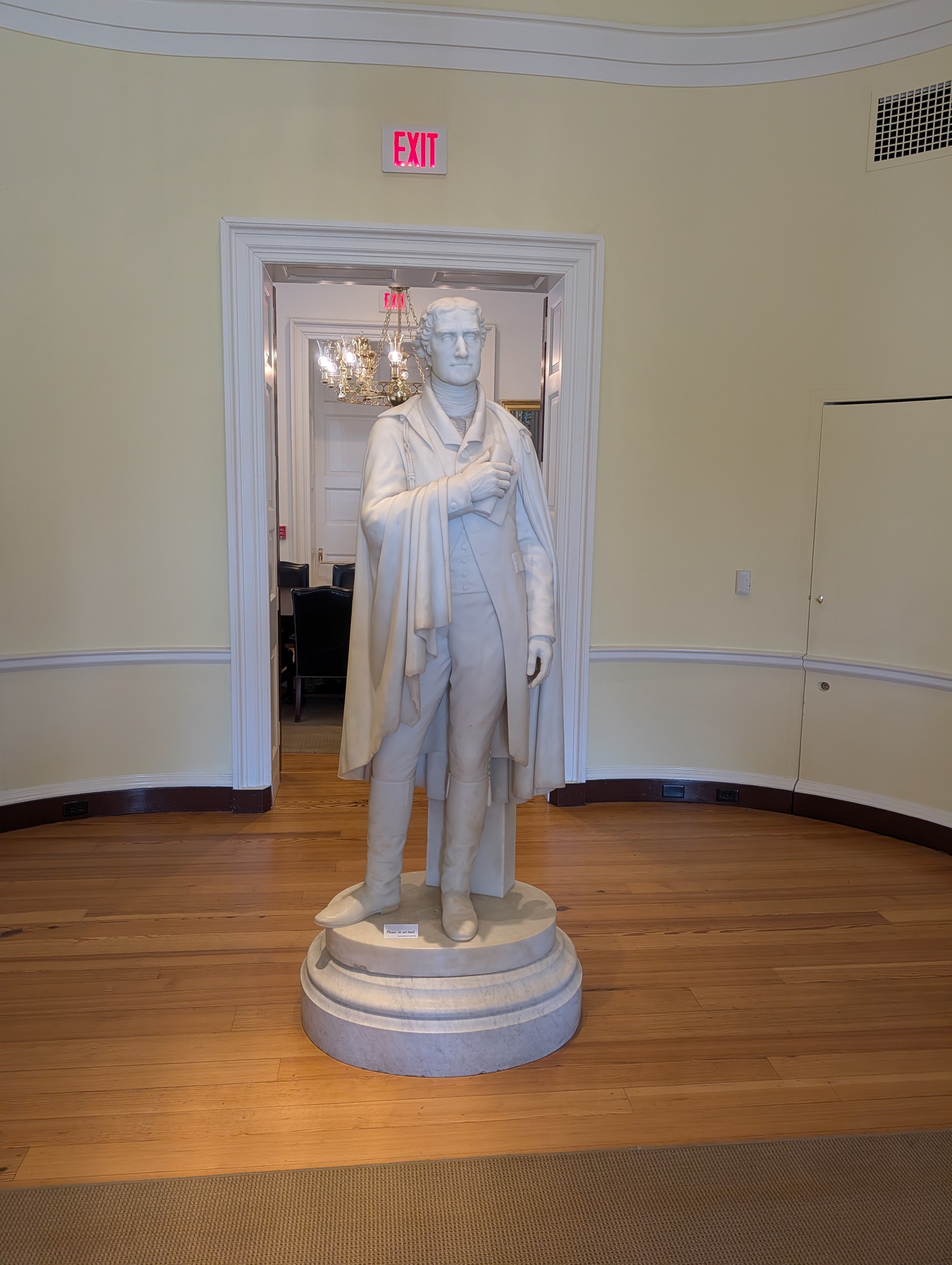
The University of Virginia was Thomas Jefferson’s baby. Jefferson and also Madison were keen on separation of church and state. The University of Virginia was to be a state school with no religious requirement or religious affiliation.
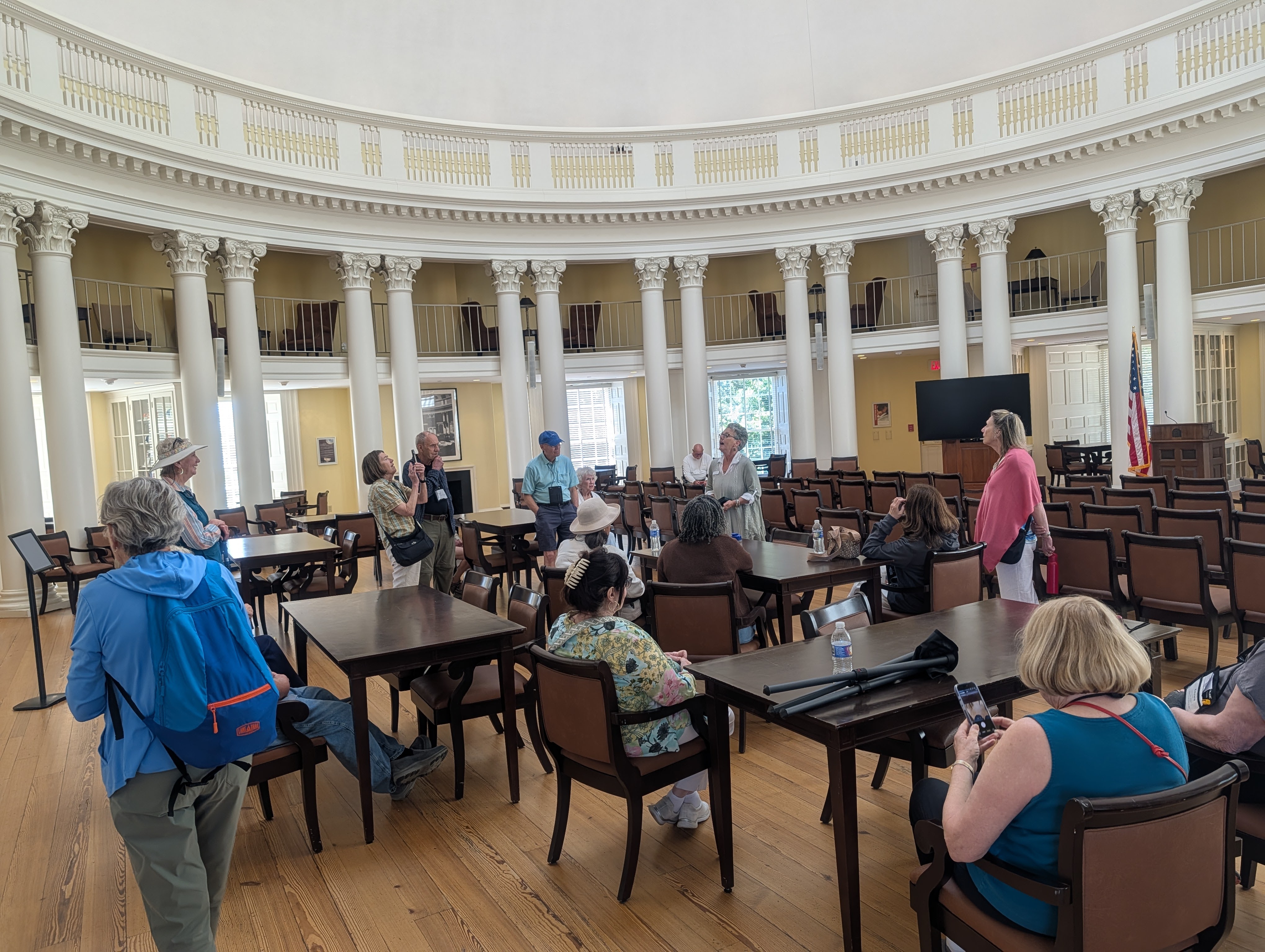
Jefferson’s love of round buildings and the use of natural light were evident in the rotunda.
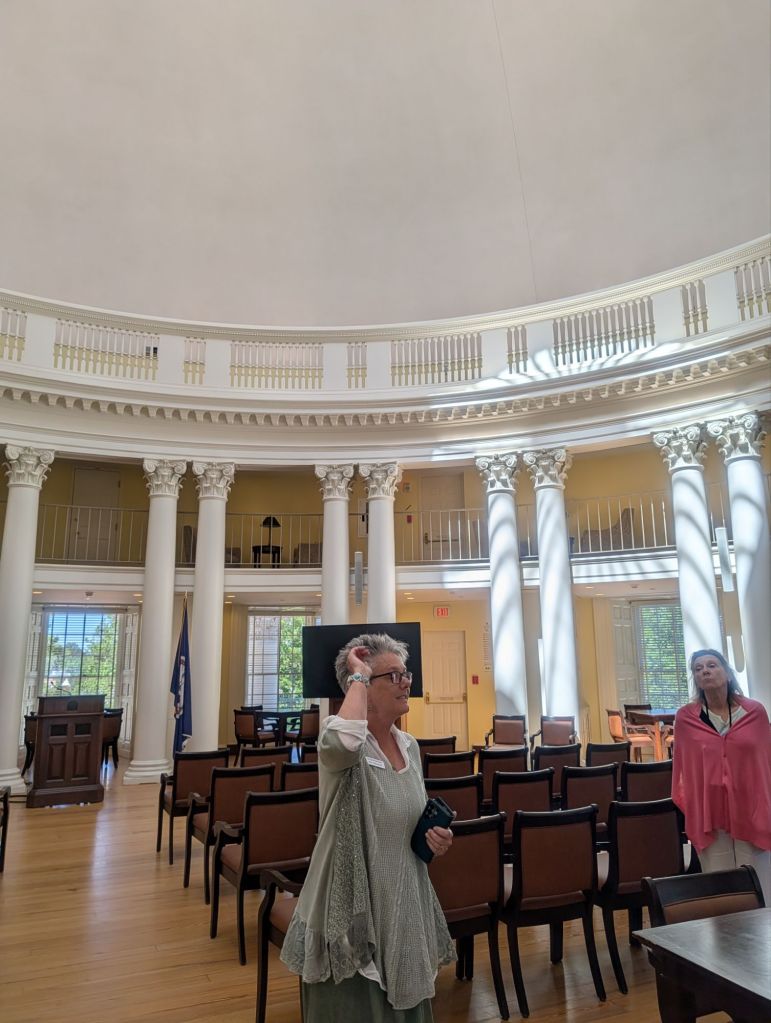
Millie our guide received her B.A. and Master’s degree at UVA. Millie made sure we knew the history of the Rotunda and many of the UVA’s somewhat quirky traditions.

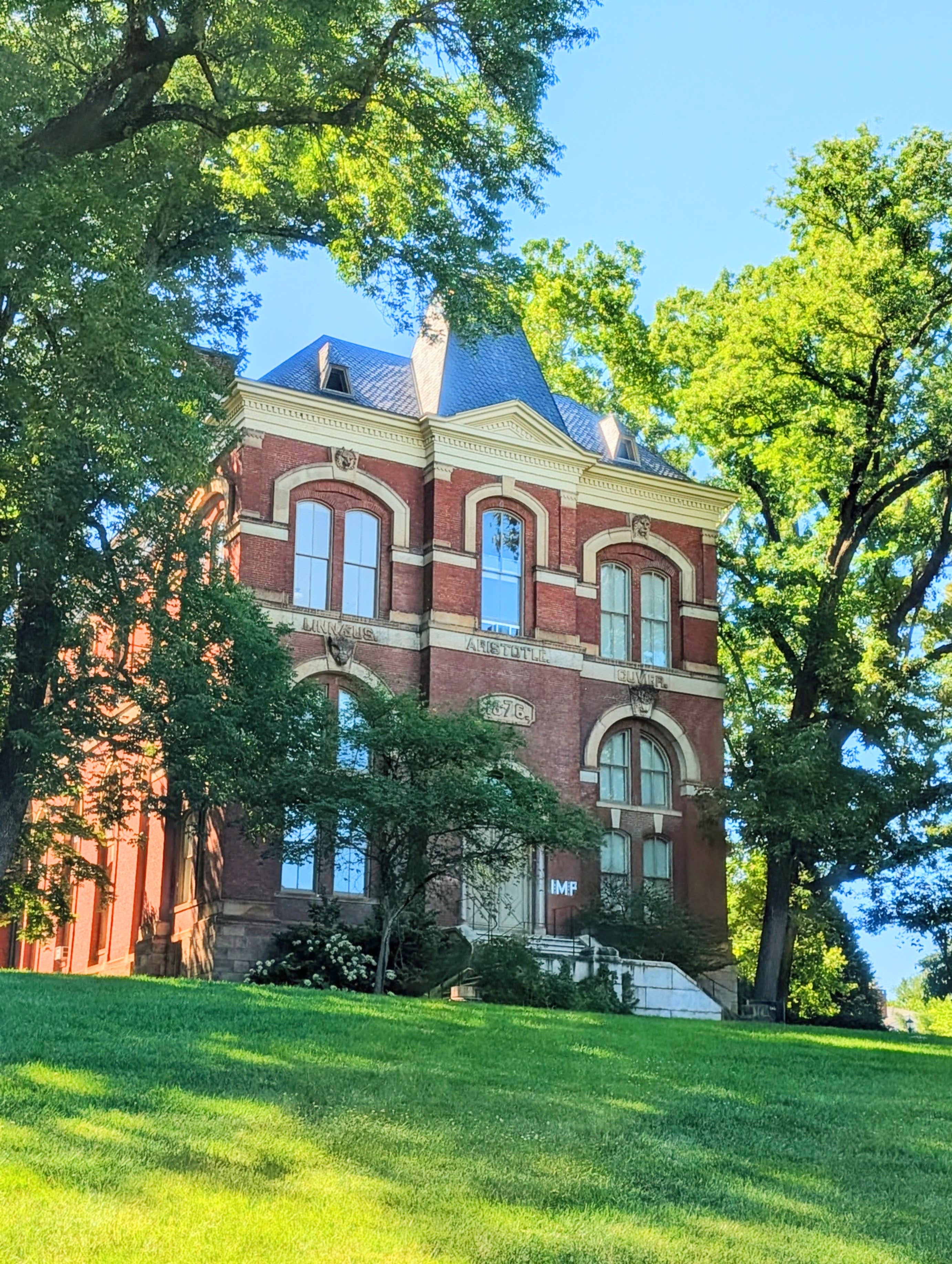
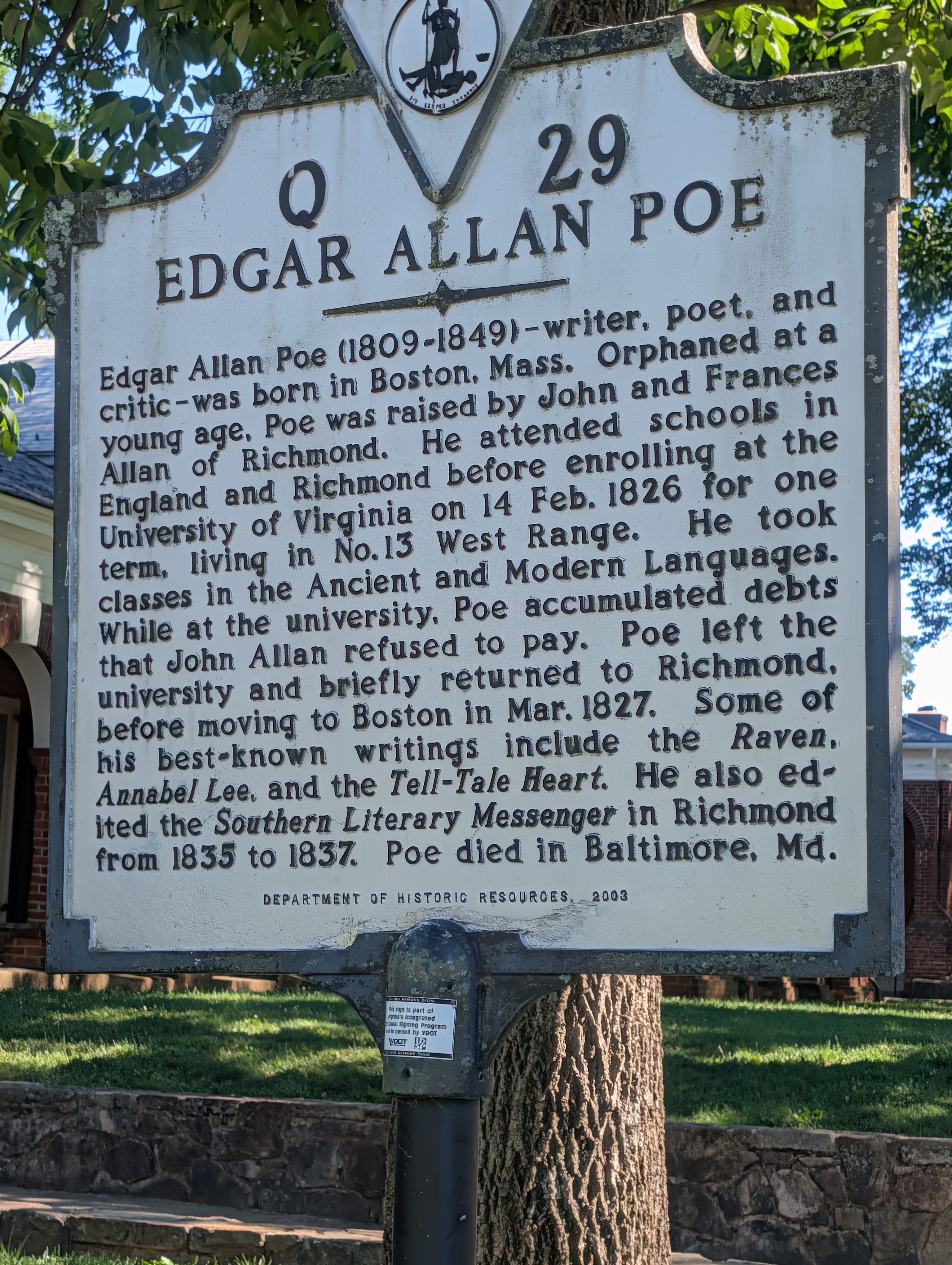
We peeked in Edgar Allan dorm room and saw a plaque on Woodrow Wilson’s room door, not thrilling. We heard about a spooky prank involving the science building pictured below and about how one of the many secret societies helps students in financial difficulty if they poke a note explaining their situation in Thomas Jefferson’s hand.
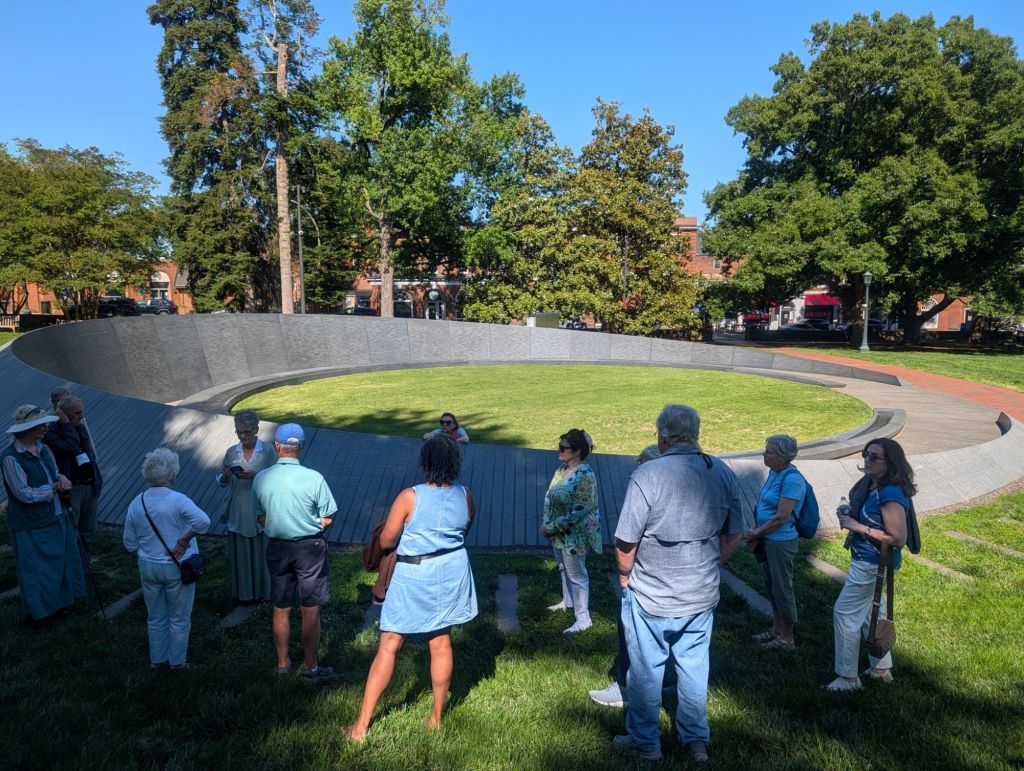
Millie explained in some detail how over 4,000 enslaved laborers were used to build and maintain the university.
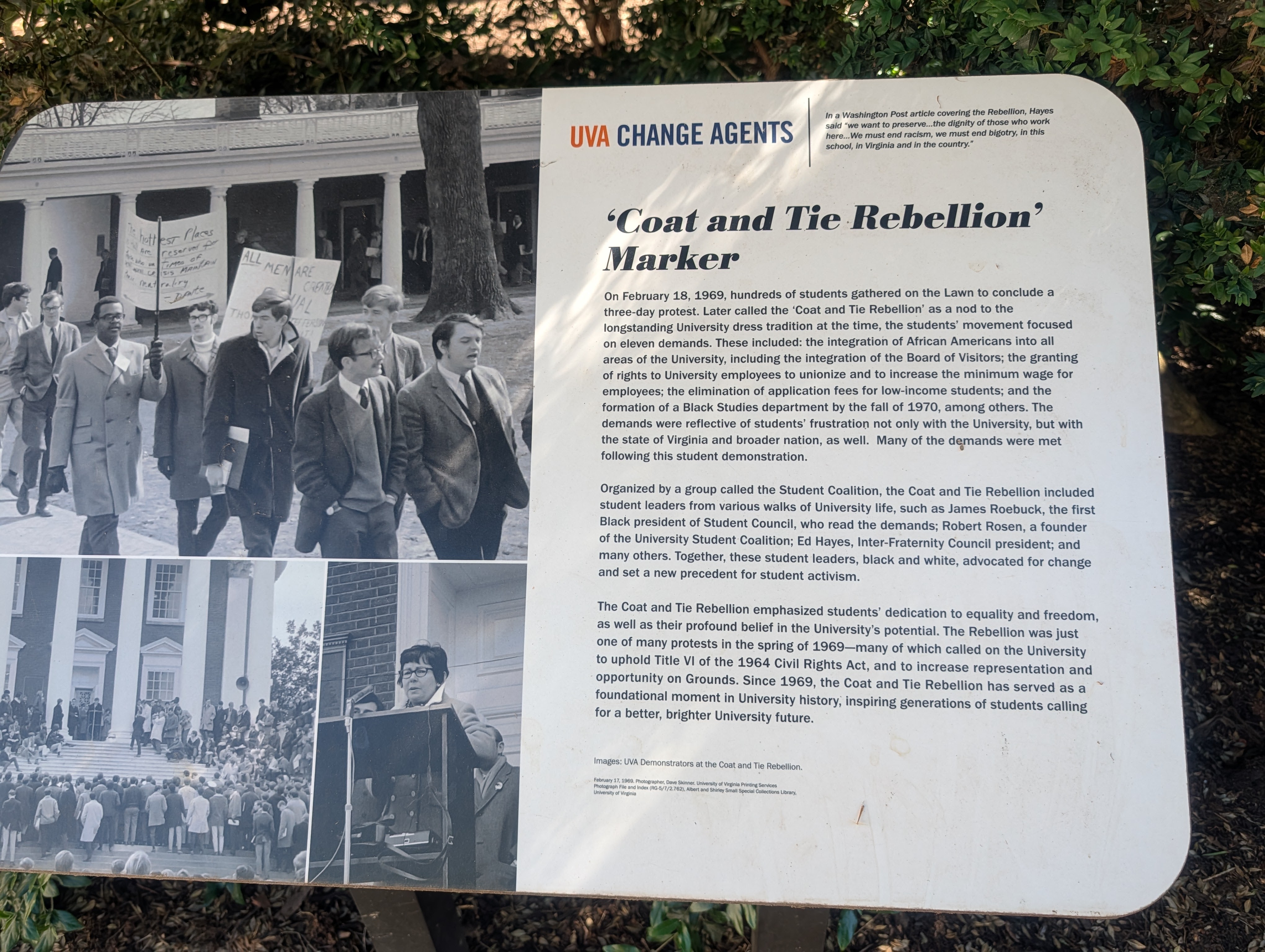
I think we were all moved as we slowly walked around the Memorial to Enslaved Laborers. Engraved in the wall were the name of hundreds of university slaves and their duties. A stream of water circulated over some oral histories provided by their decendants.
Sherwood Forest and Berkley Plantation
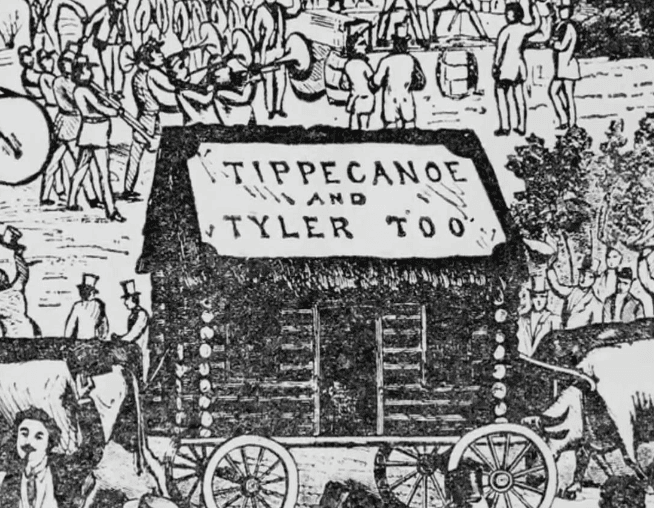
The last full day of tour we were off to the homes of Tippecanoe and Tyler Too. Otherwise known as William Henry Harrison and John Tyler. Our 9th and 10th presidents also both born in Virginia. The myth that Harrison was born in a log cabin, definitely not true.
No pictures were allowed in the Harrison home but after the tour we had time to explore the grounds. The house is close to the James River which was the main means of transportation until railroads arrived.
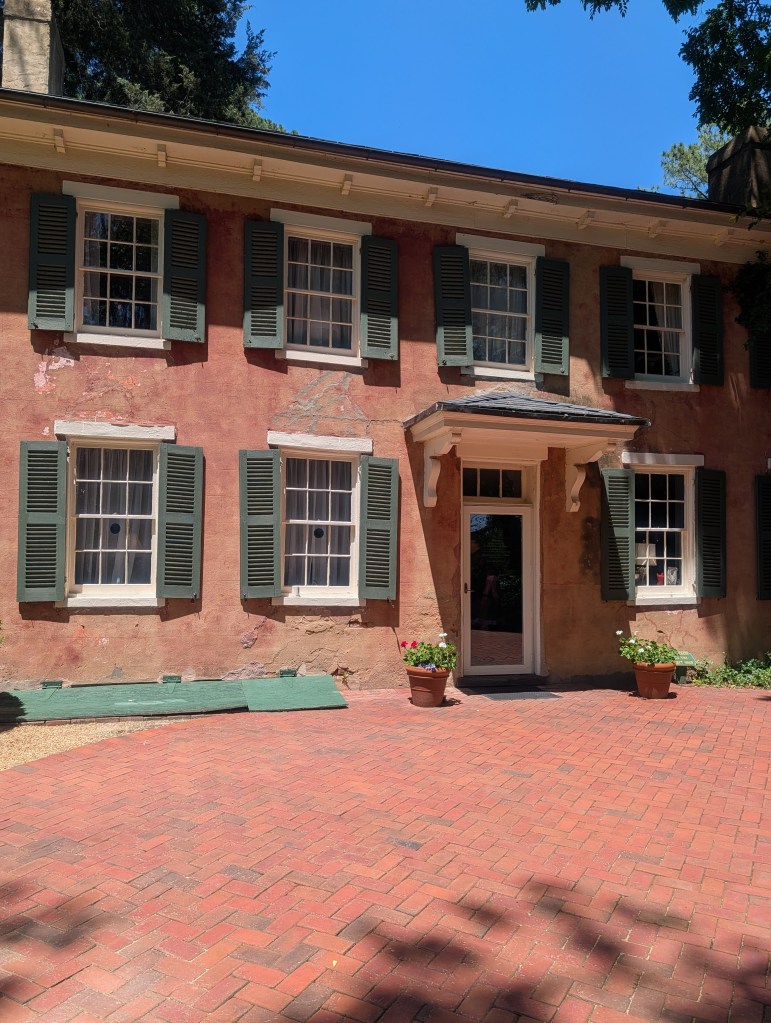
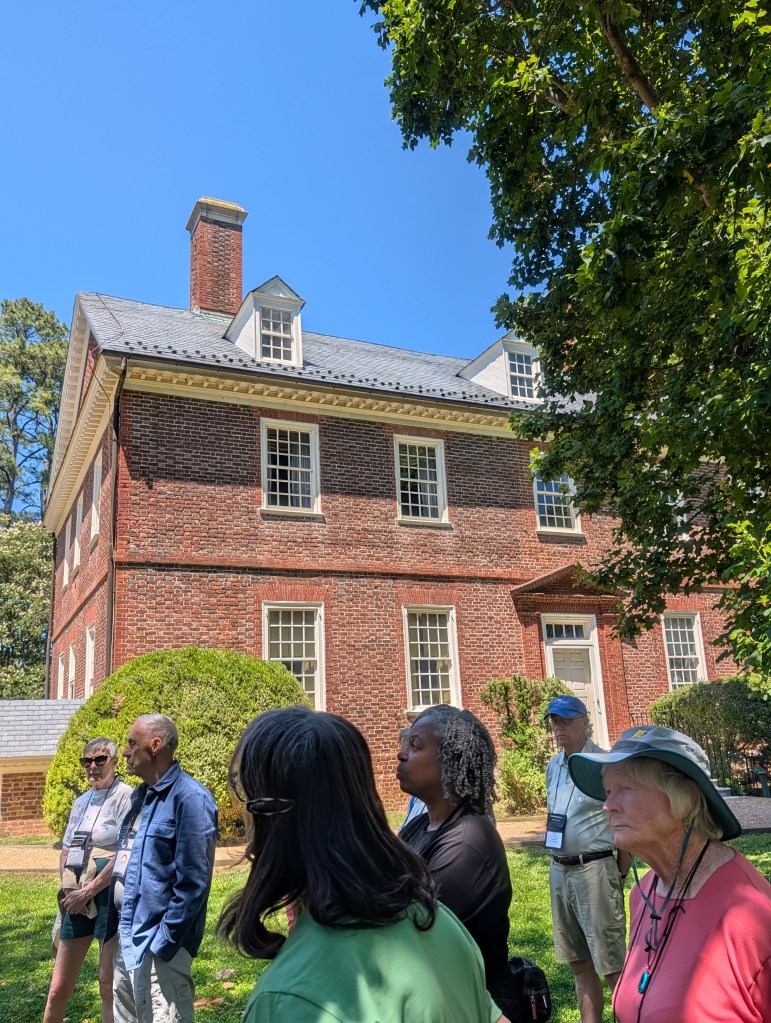
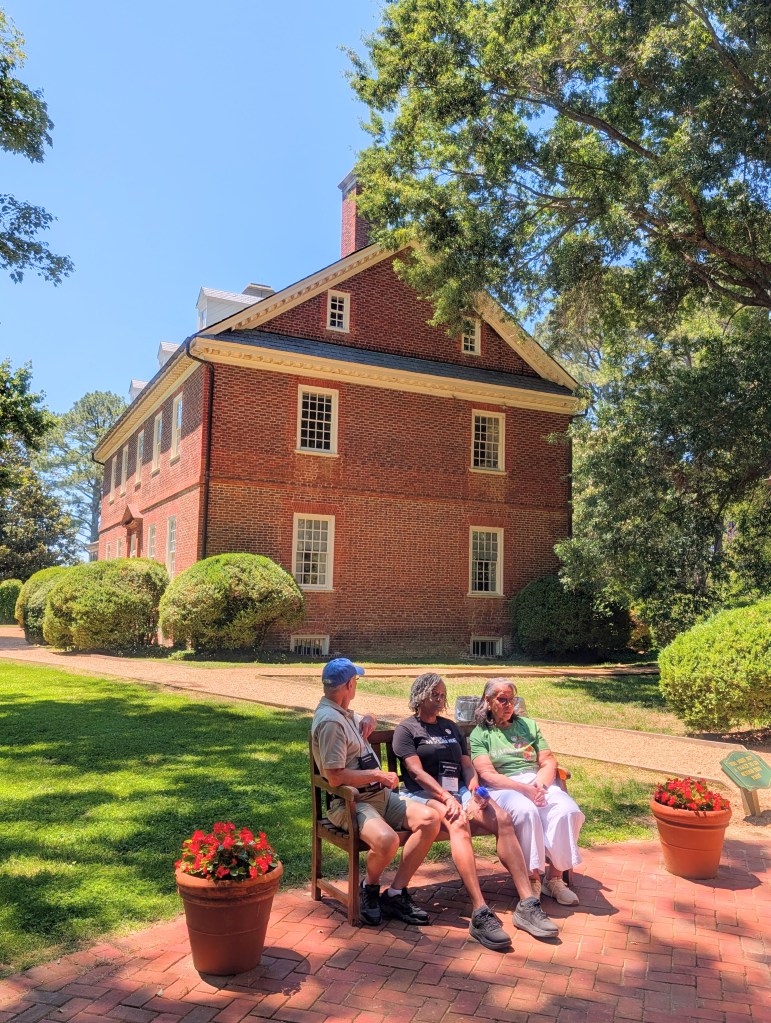
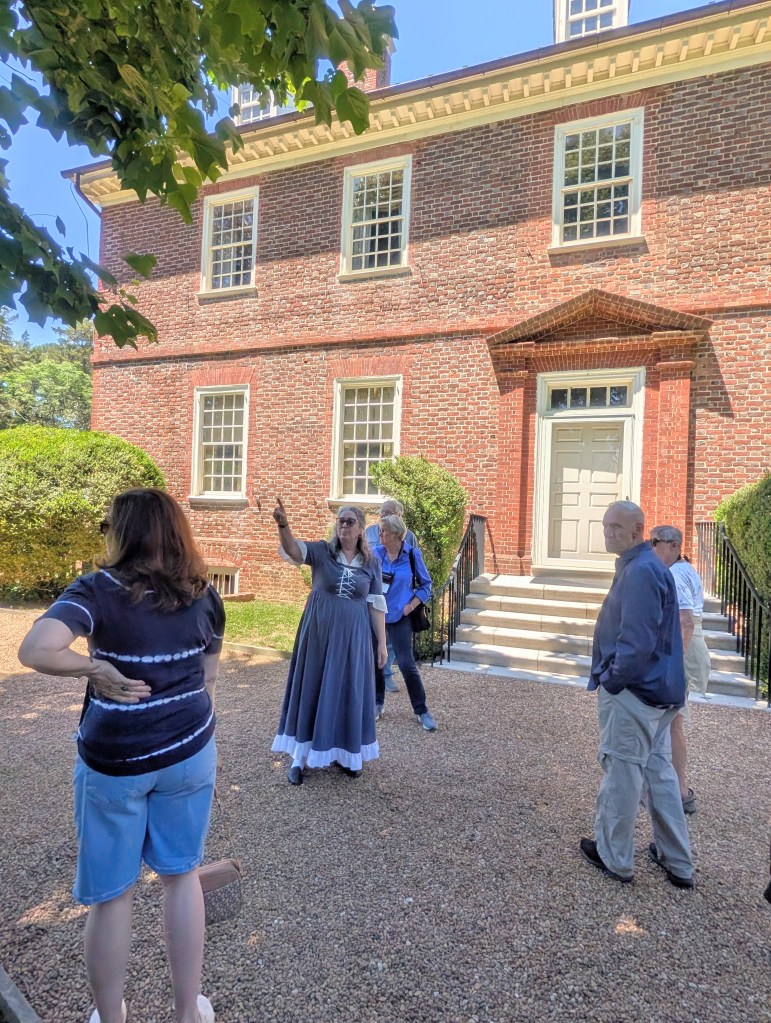
Don’t feel bad if you don’t know much about William. Henry Harrison, his presidency lasted 31 days. Called “Granny” by The opposition because he was the ripe old age of 68. Harrison showed them! First by refusing to wear an overcoat on inauguration day in freezing weather and then by giving the longest inauguration speech on record. Harrison contracted pneumonia or something almost immediately.
Harrison, was a promising medical student at the University of Pennsylvania when his father died. Harrison’s eldest brother cut off his funding and did not welcome William Henry back to the family home Berkely Plantation. William Henry joined the military and worked his way up. We Midwesterners remember Harrison because he was the first governor of the Northwest Territory.
I imagine his midwestern homes were more rustic than Berkeley but maybe not the pictured log cabin.
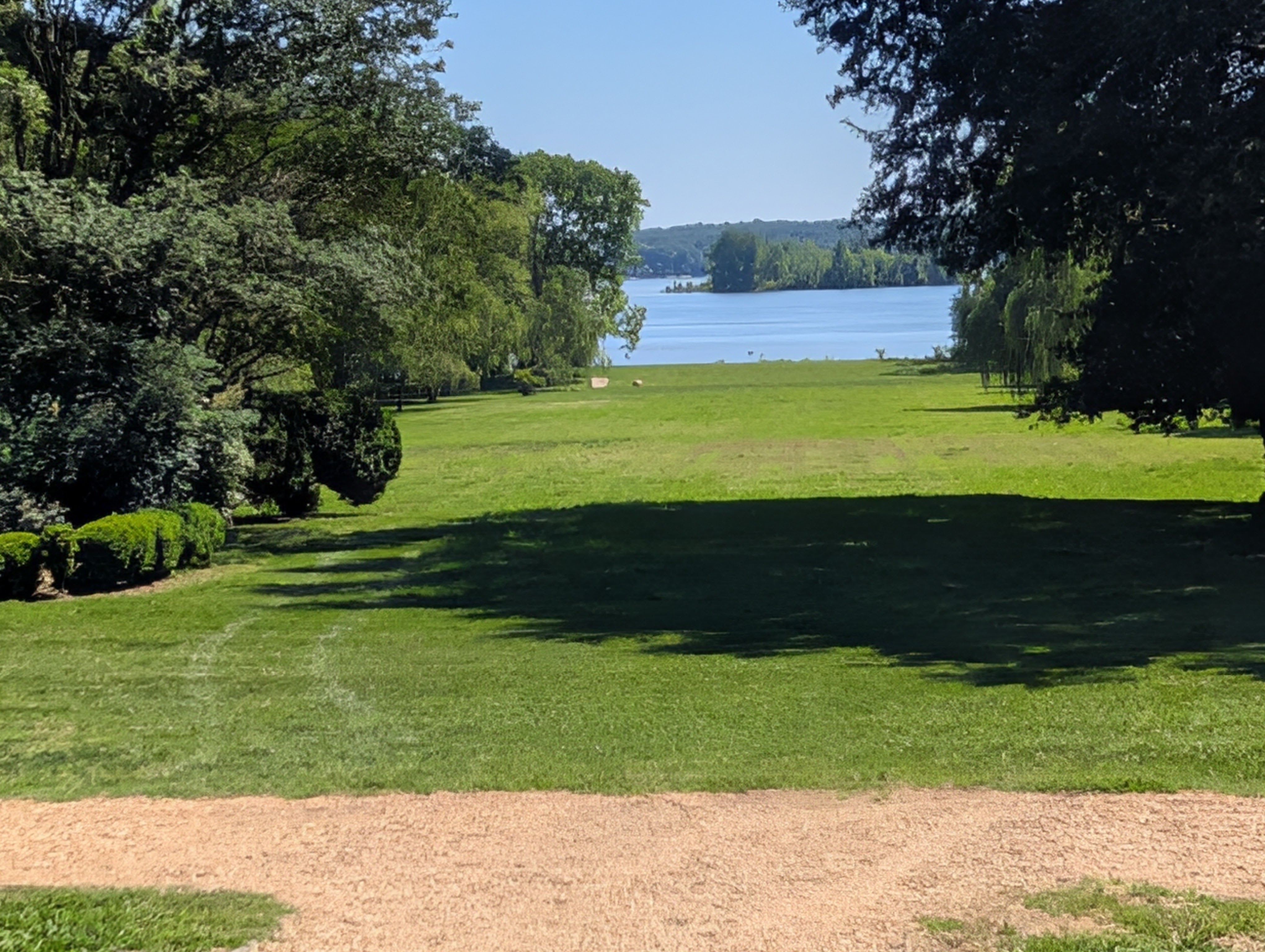
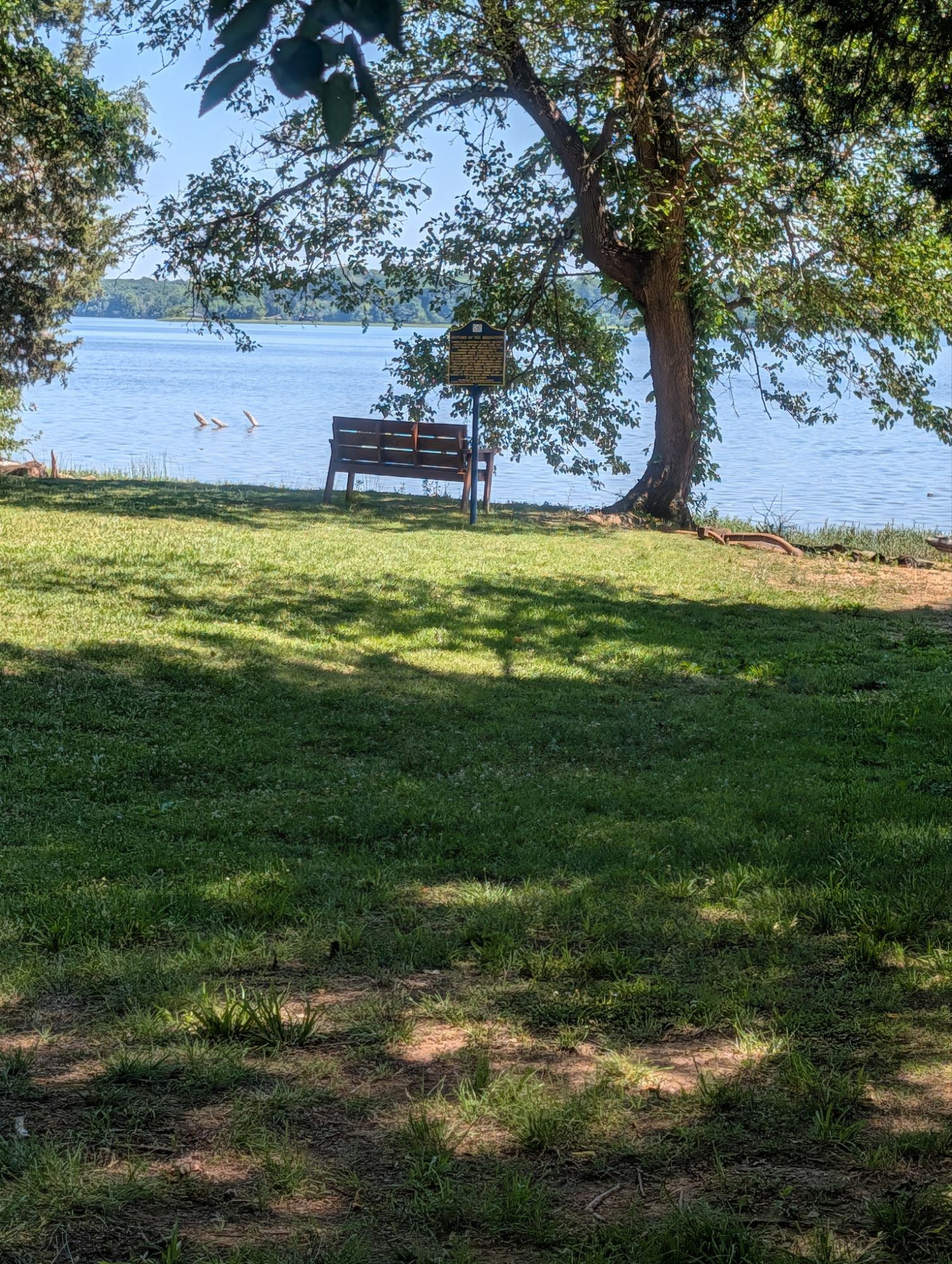
The James River as seen from the Harrison’s Garden.
We walked through the Berkeley Plantation garden and almost down to the James River it’s further than it looks
The early Virginia settlers were ordered by the King to hold what must have been the very FIRST Thanksgiving. The tradition continued for a couple more years. No Indians were invited. The local Native Americans eventually realized that English tobacco farmers weren’t what they wanted in their neighborhood. They killed or drove out many of those earliest settlers. Thanksgiving was discontinued.
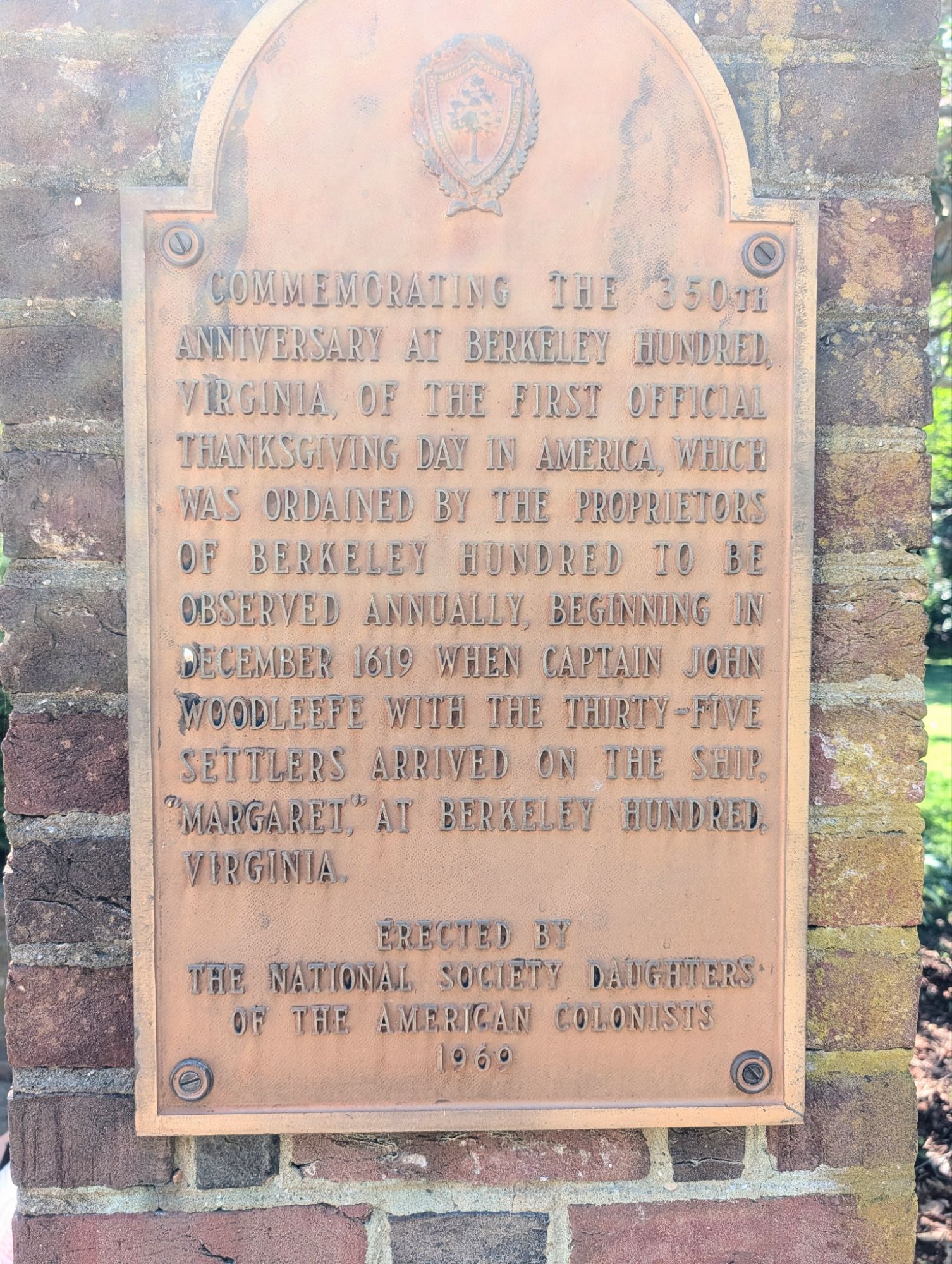
10th President John Tyler hung out in Sherwood Forest
John Tyler considered himself a bit of a independent rebel and he was. He also built his Sherwood Forest Plantation above the James River. The house was as long as a football field.
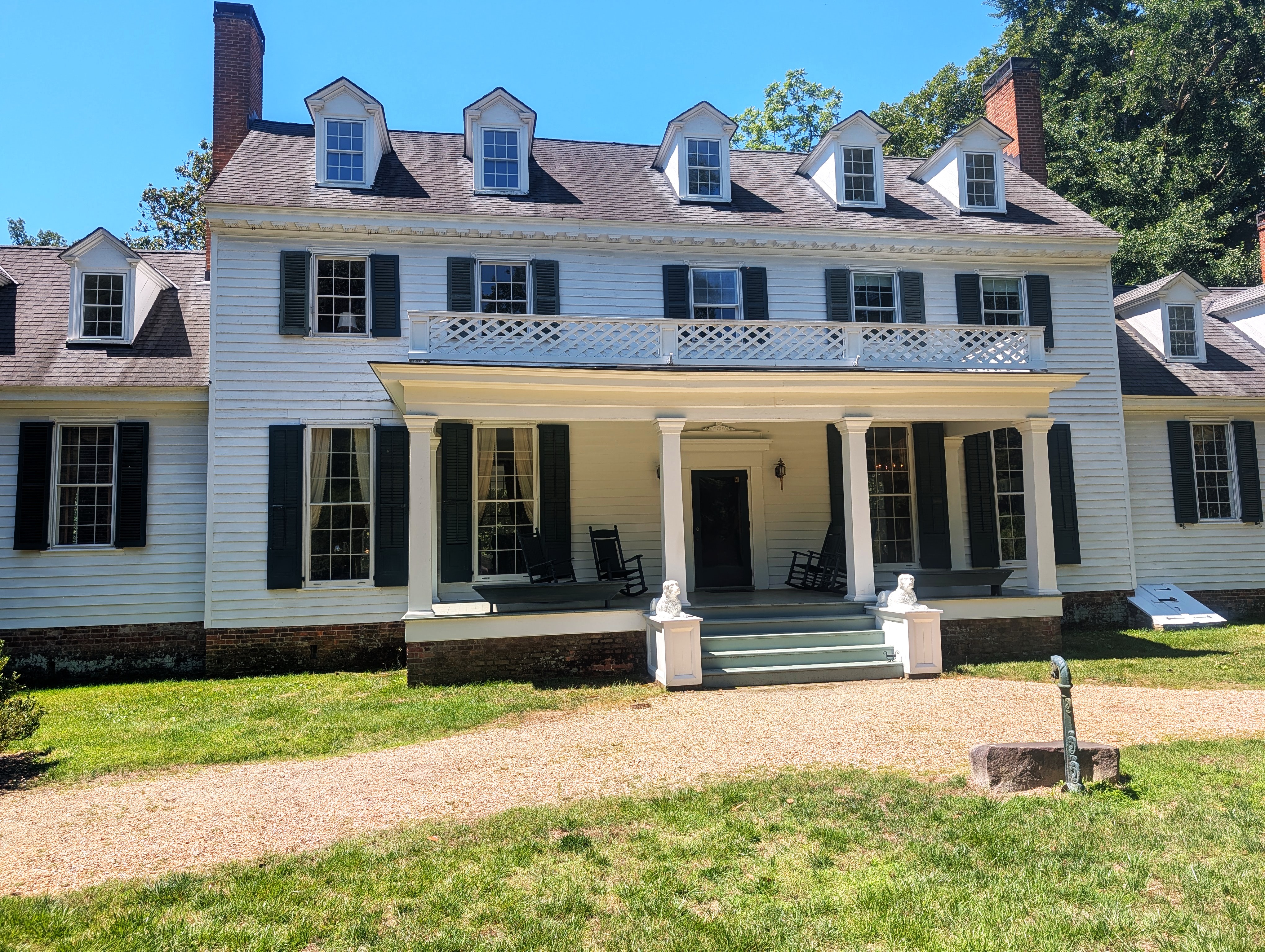
Some surprising things about John Tyler’s and his home. Tyler’s grandson who owned the home died in 2025 at the age of 96. It’s still privately owned by a bachelor family member. He lives in one wing of the house. The other wing is the ballroom or all purpose room. It made a great playroom and occasional roller skating rink for some of Tyler’s 15 children and later grandchildren. Tyler’s second wife imported almost all the textiles and furniture in the home from New York. Tyler’s home doesn’t have a country living feel. The interior is more upper-class NYC than backwoods, Virginia.
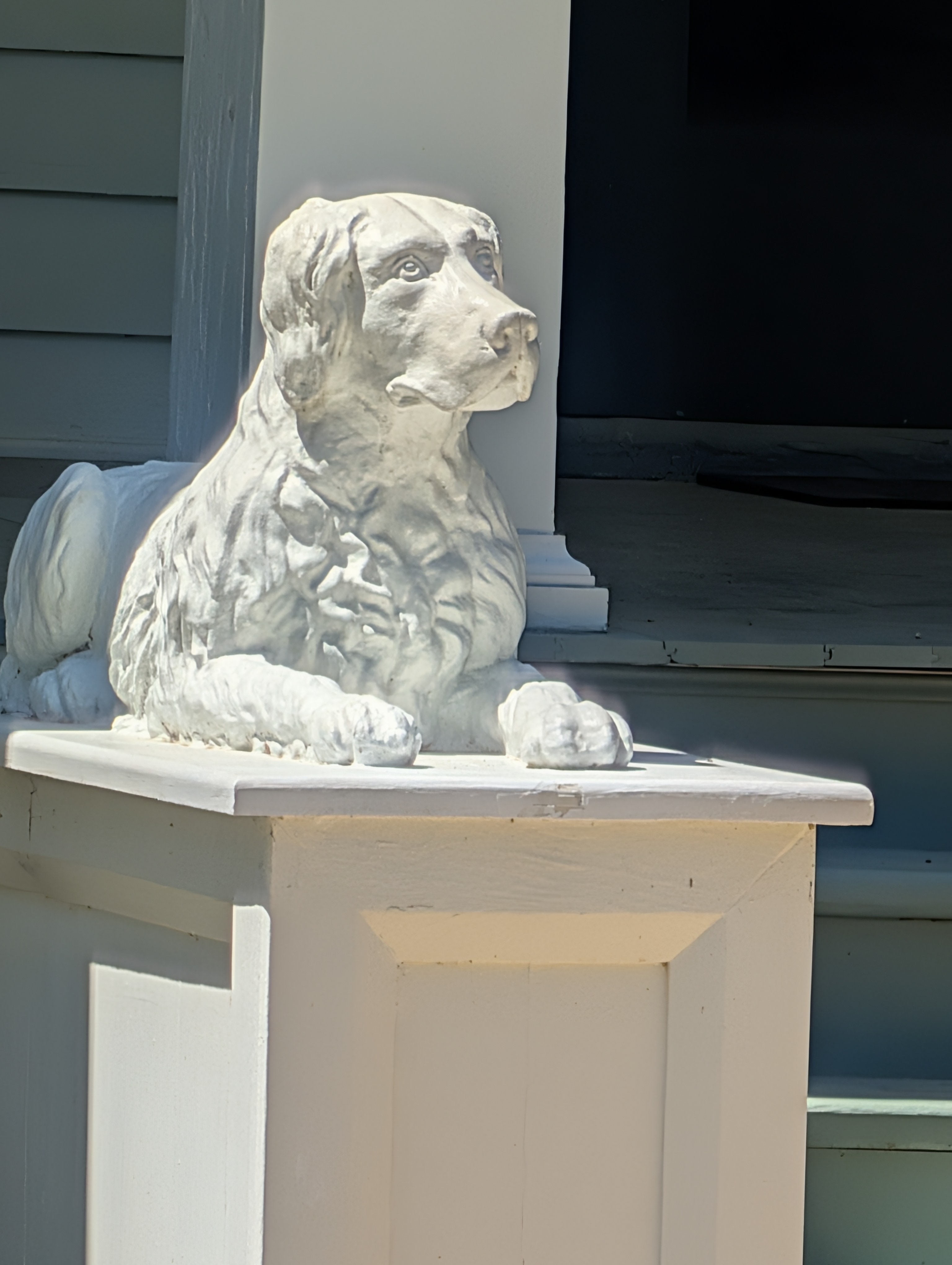
The Union soldiers tried to steal one of the dogs guarding the front porch. The looters didn’t get very far with them. I think the guide said they weigh about 300 lbs. Tyler must have loved animals. There is a large pet cemetery on the property with dogs and cats on the tombstones. Tyler’s favorite horse was buried there.
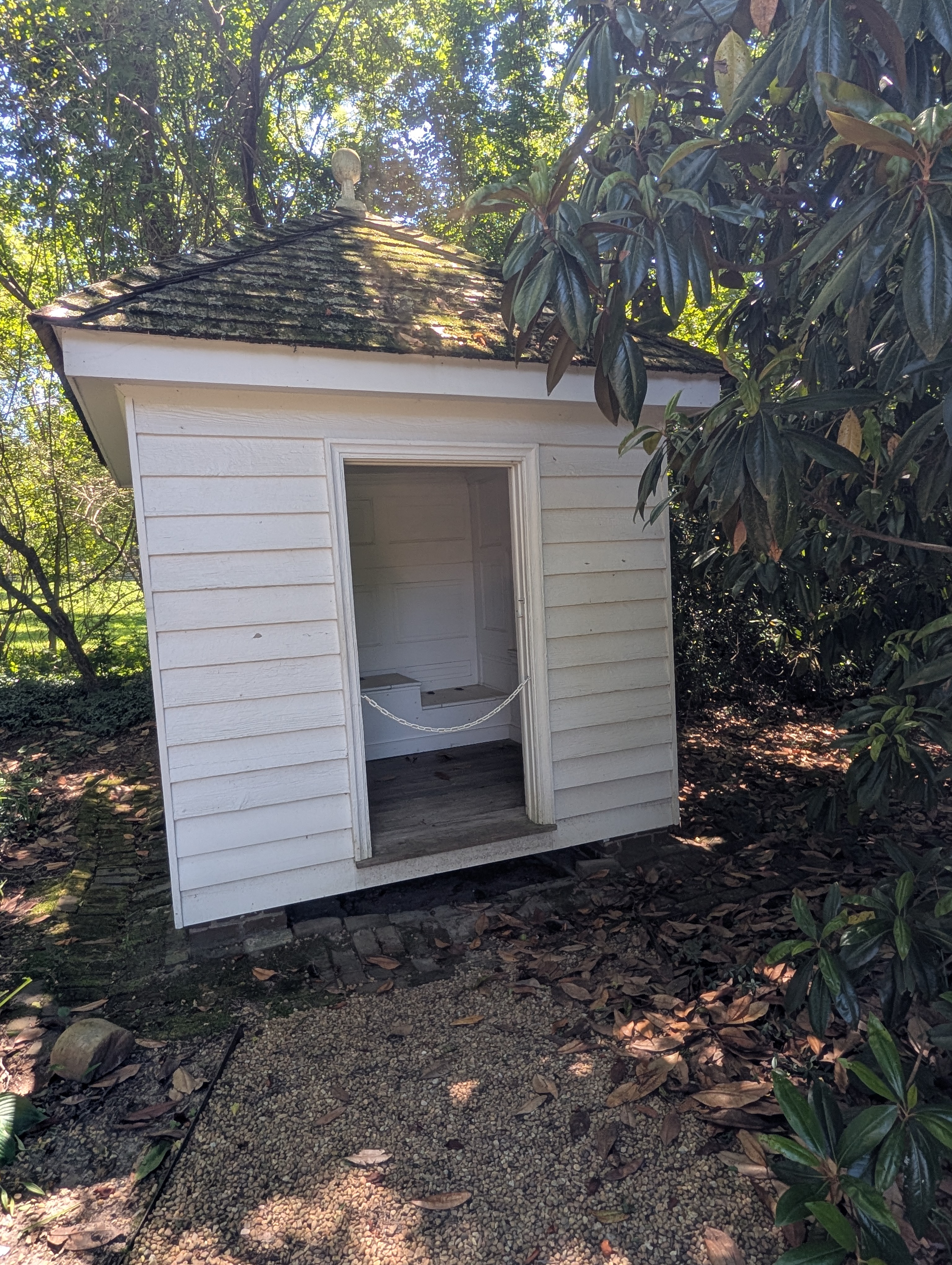
This backyard privy with a bit of sculpted plaster detail, was more elaborate than Washington’s. It’s a 3 seater with one seat for a child. I know it doesn’t show in the photo. Tyler’s wife wanted a nice place for her lady friends and children to use when she had garden parties in her beautiful backyard.
We had about a half hour tour of the grounds. The temperature was in the 80’s but as you see there was lots of shade. Many trees Tyler planted are still living. I took this tree picture because I didn’t know Ginko trees could get that large. I don’t know how I made the house look sideways in that photo. Maybe the trees grow at an angle?
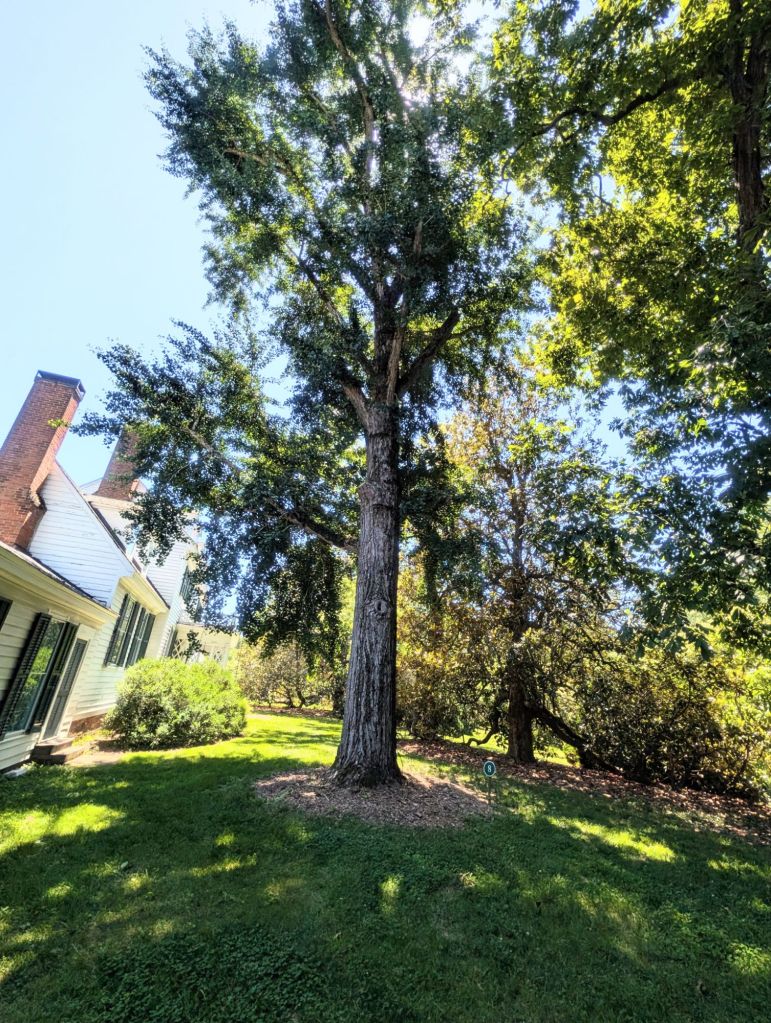
We also saw in one old tree a huge burned branch had saved the house by acting as a lightening rod without killing the tree. In some of the other presidential mansions we saw that Tulip Trees (fast growing) had been planted near the house to act as lightening rods.
Over the Blue Ridge Mountains to Wilson’s Manse We Go
The last morning of our trip we boarded a bus for Staunton, Virginia for our 7th and final Virginia president. Some how the little town of Staunton where Woodrow Wilson lived only his first 18 months of life, managed to land the Wilson Presidential Library & Museum.
I enjoyed my first ever trip over the Blue Ridge mountains however by our 7th Virginia president I was Presidential home and museum weary. Because Wilson was a 20th Century president and kept us out of WWI, until he didn’t, I knew more about Wilson than most of the other presidents whose homes we had visited. I knew nothing of his birthplace.
Staunton appeared to have perfect geography for aerobic exercise. Not exactly a city on a hill Staunton seem to be a city that is a hill. The Presbyterians had managed to build their church and manse (I learned that manse is another name for parsonage.) near the top of the hill.
I should be clear, we did not actually climb any hills in Staunton. Our skilled bus driver navigated the narrow streets and let us off right in front of Wilson’s home.
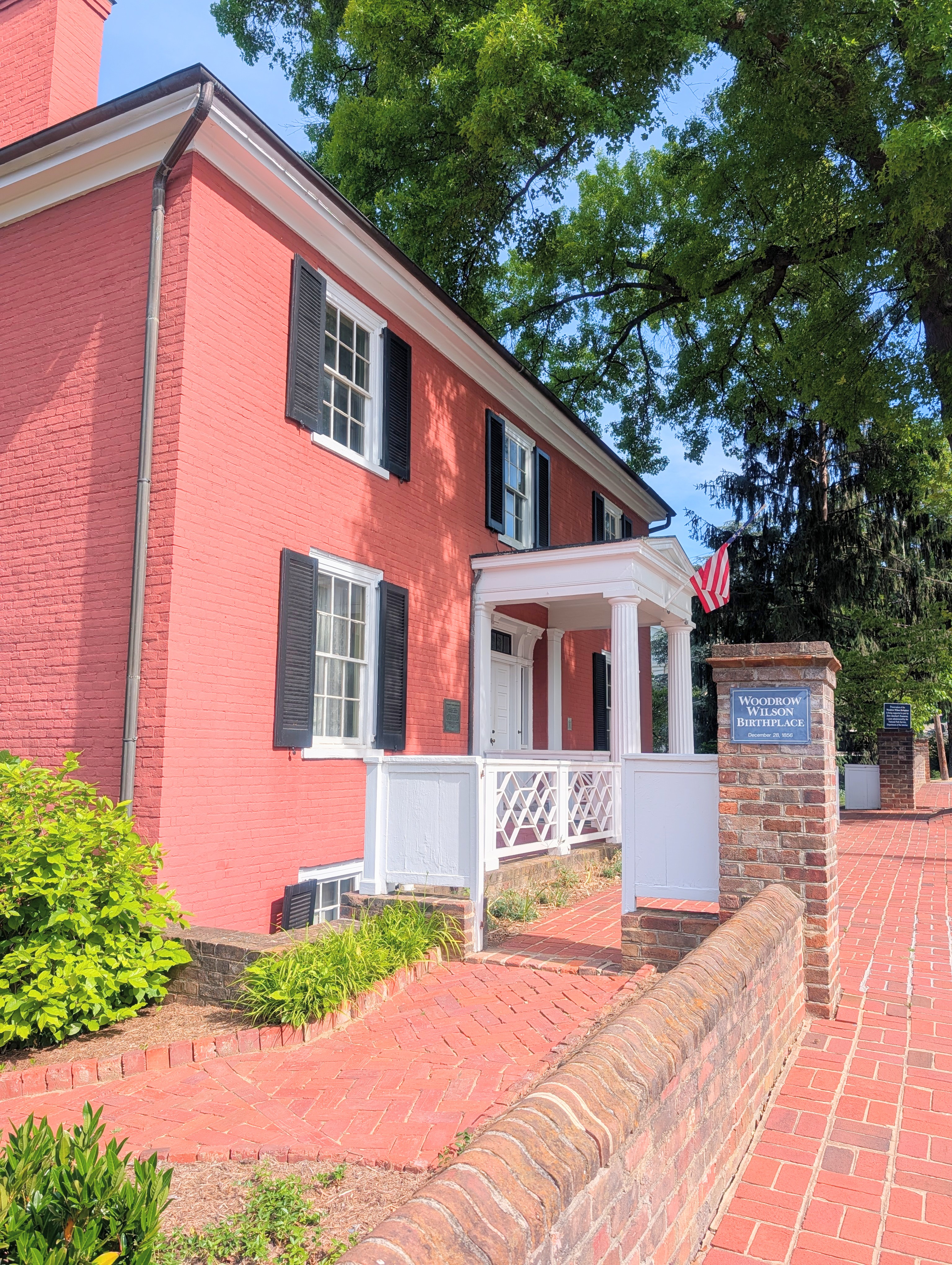
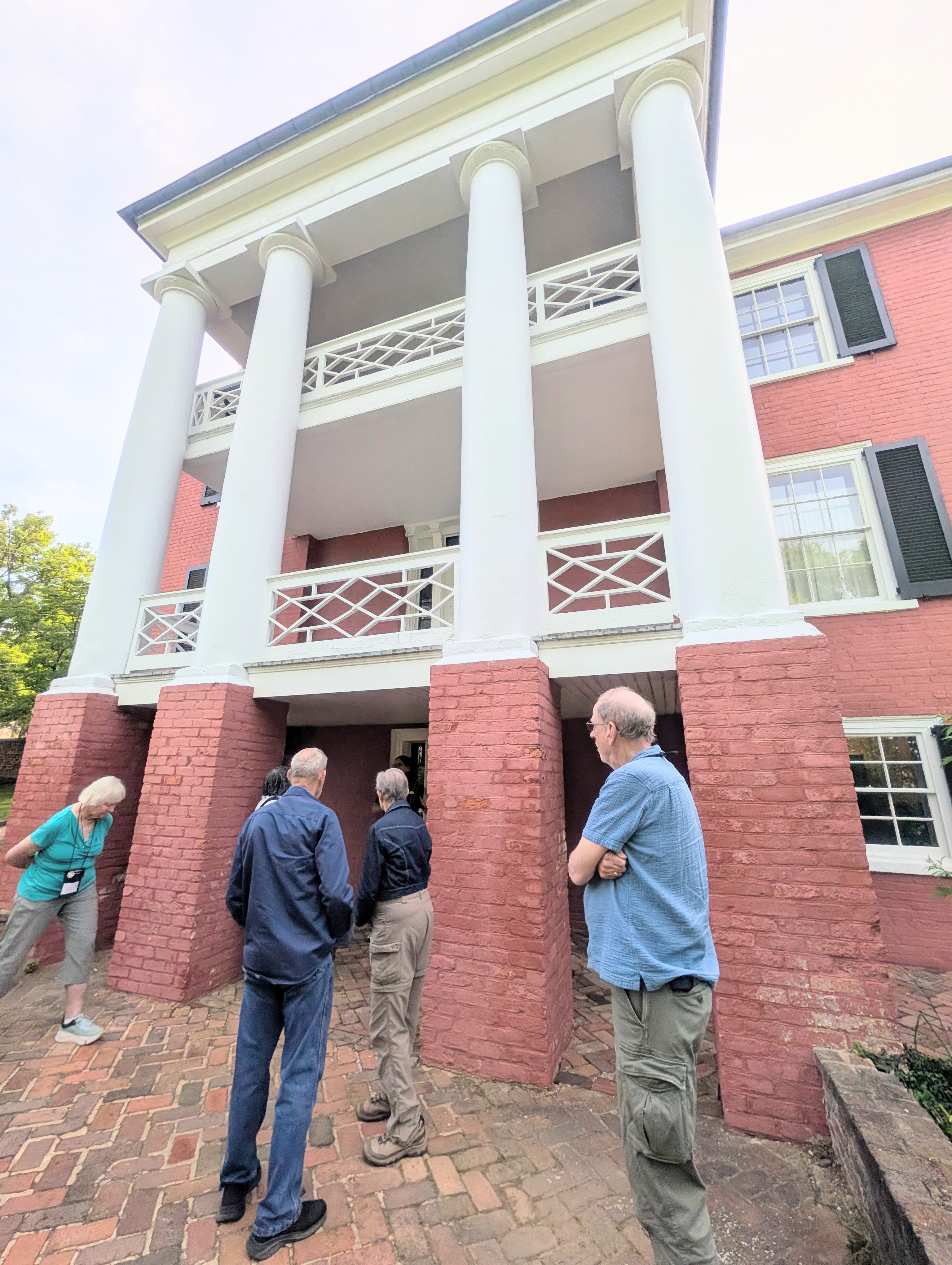
I was fascinated by the small kitchen especially the stove where the cook made the family meals. The Wilson family was provided with slaves by the Presbyterian Church.
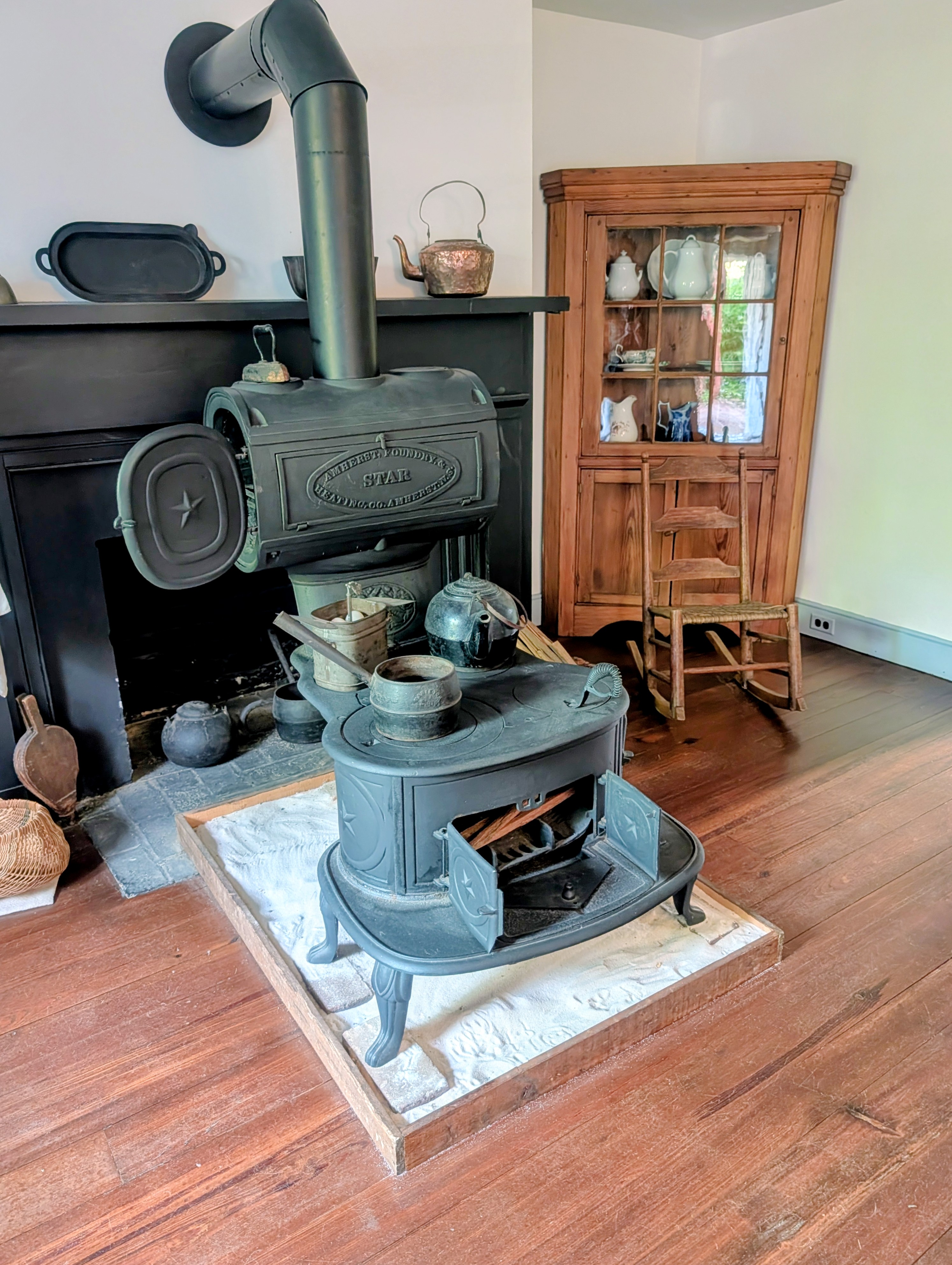
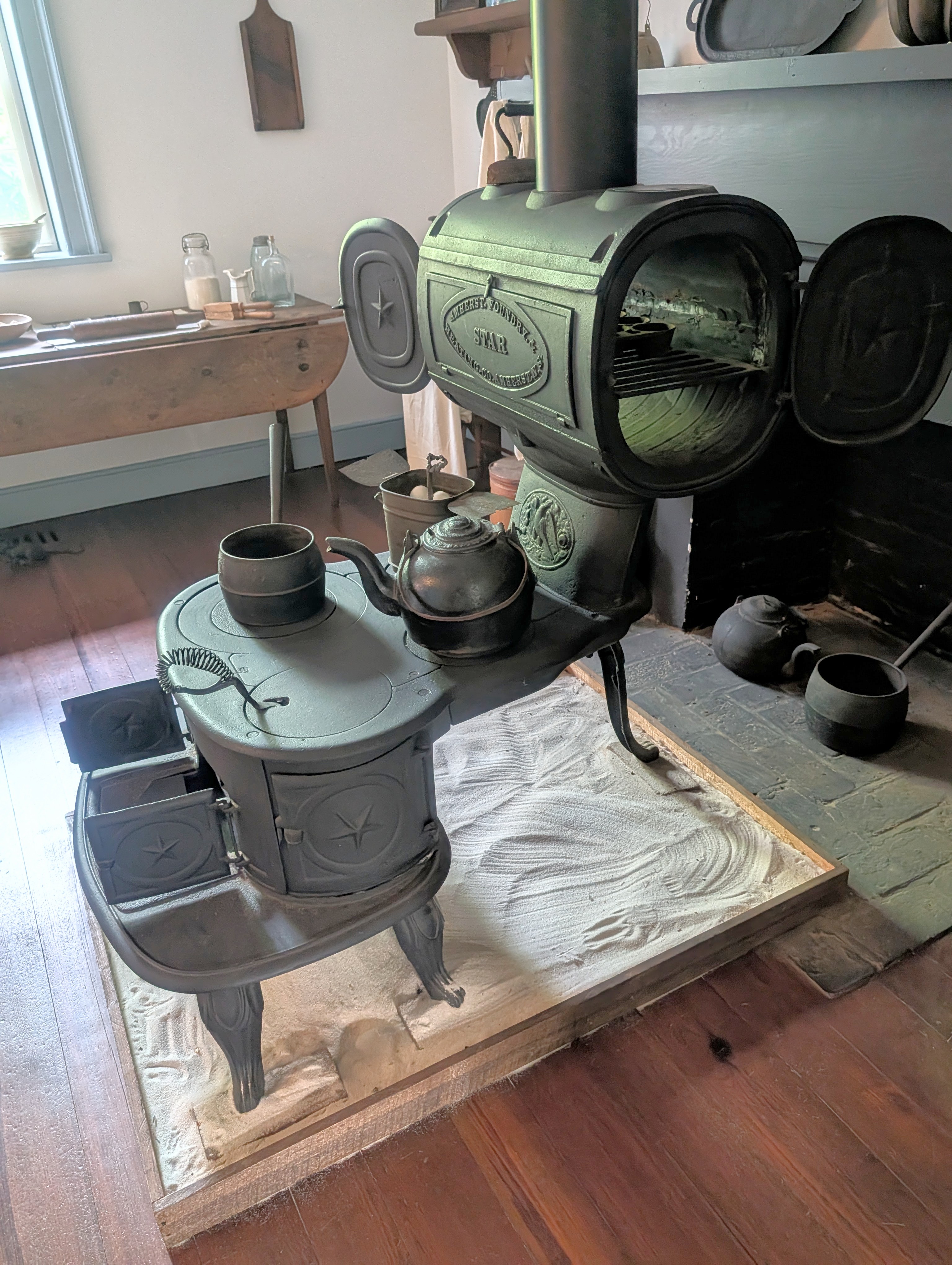
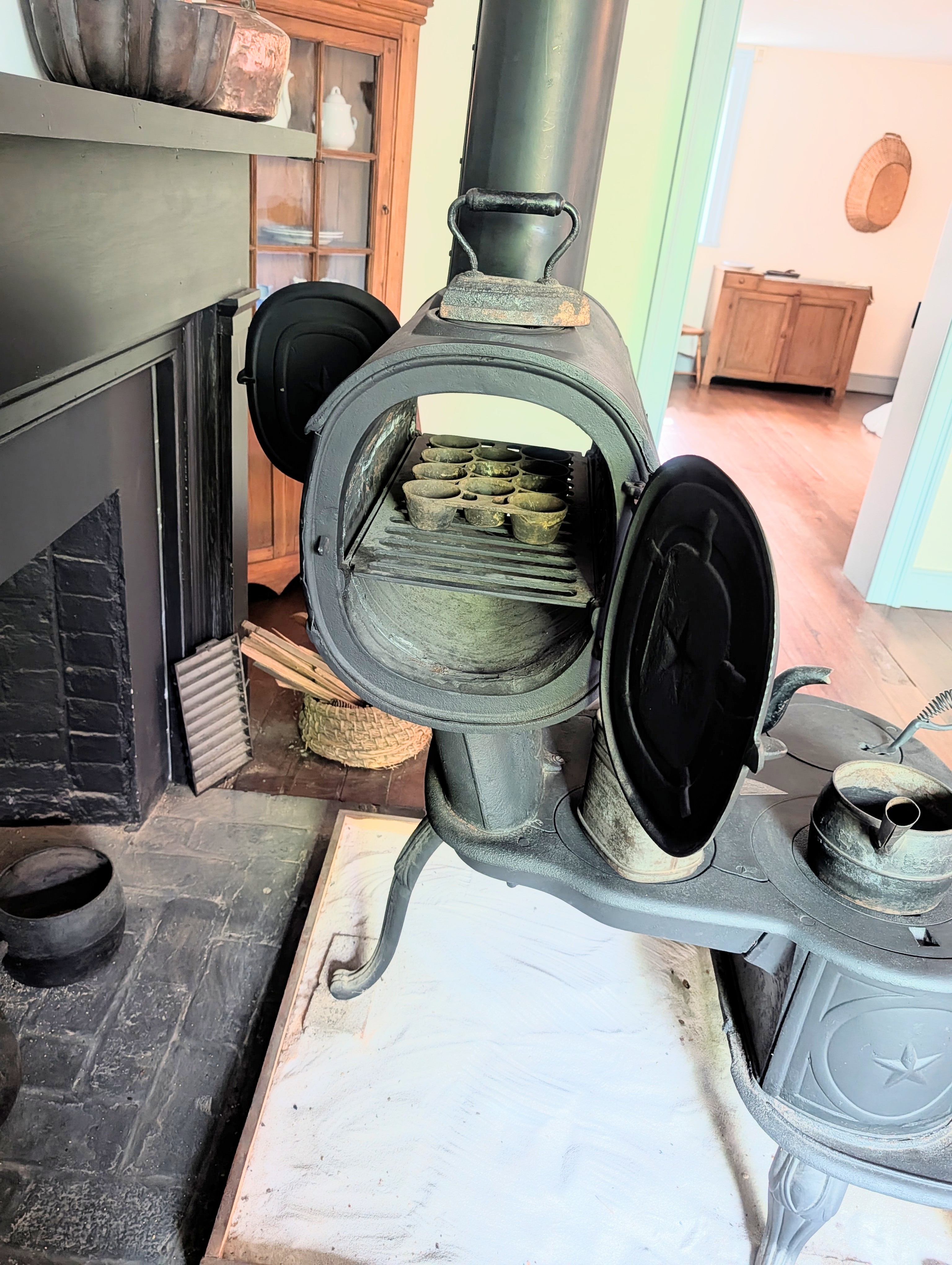
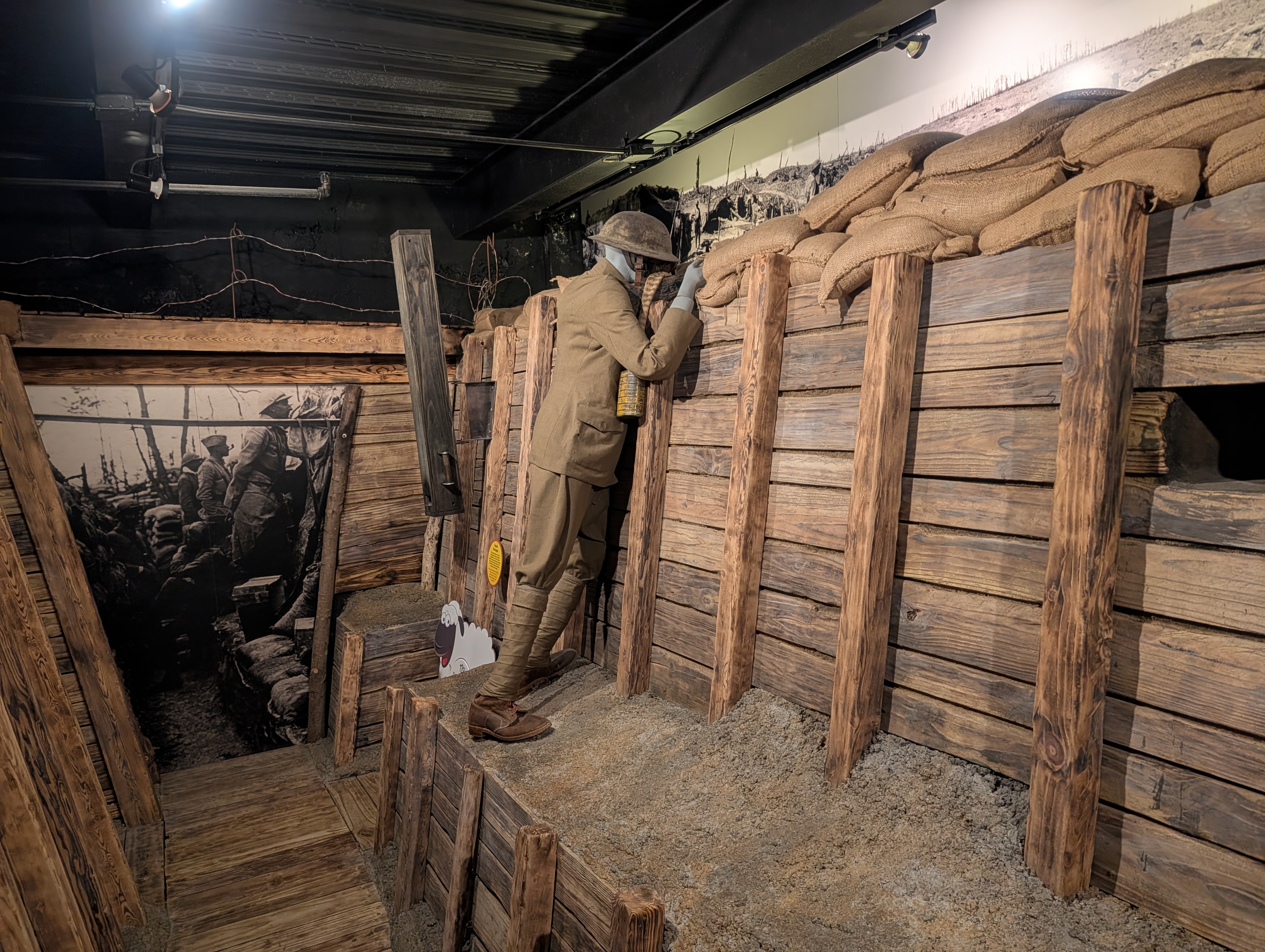
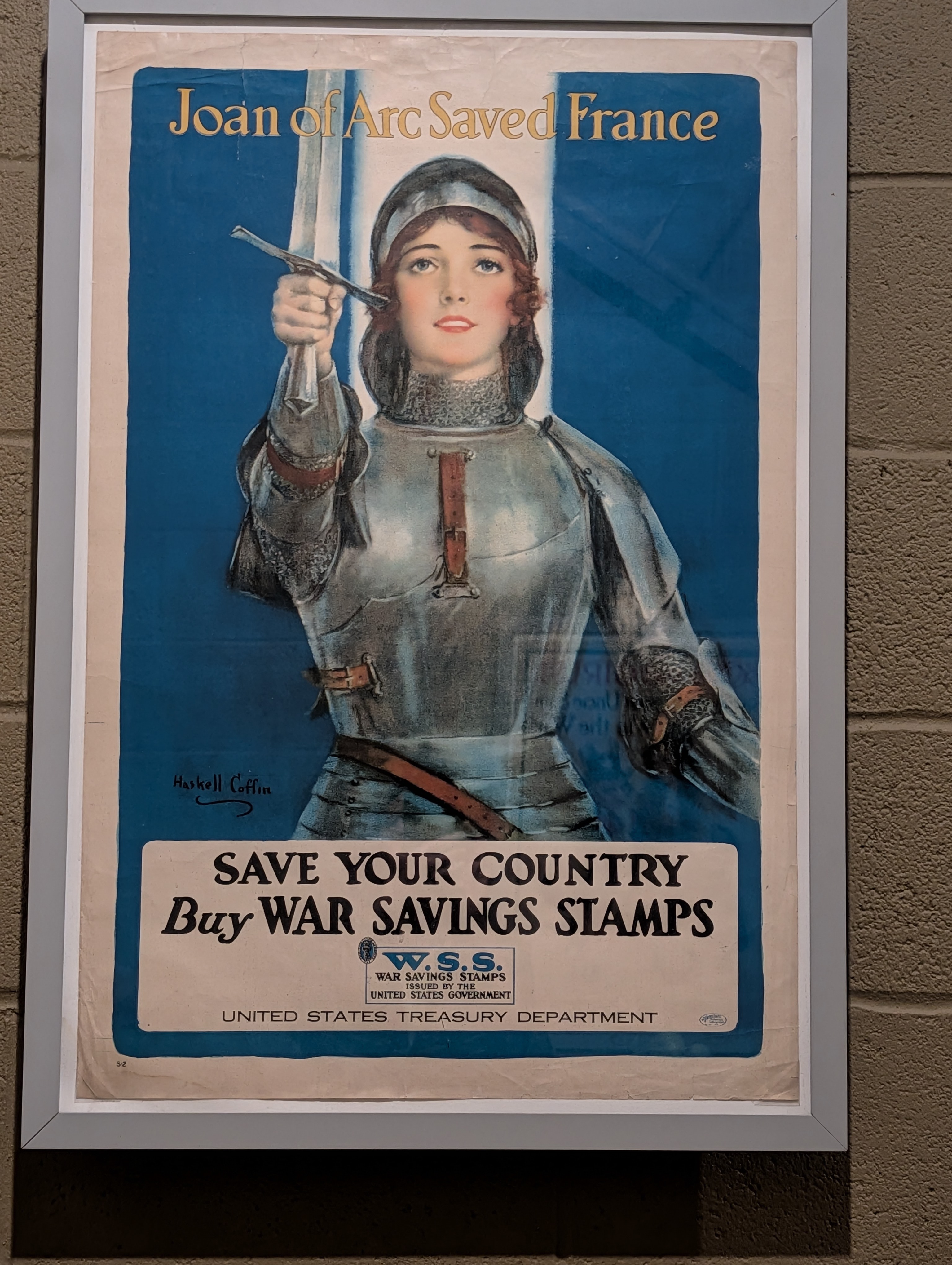
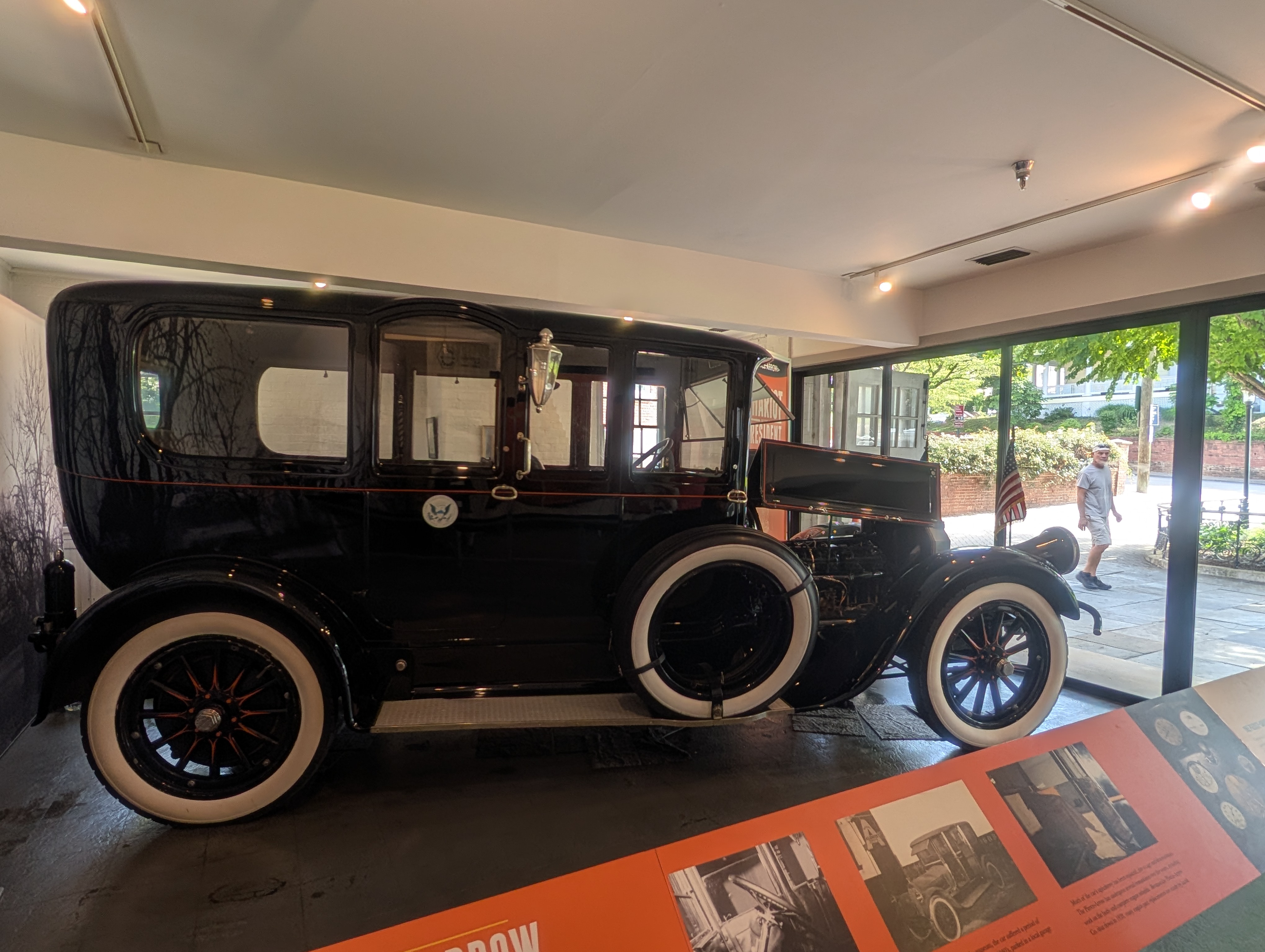
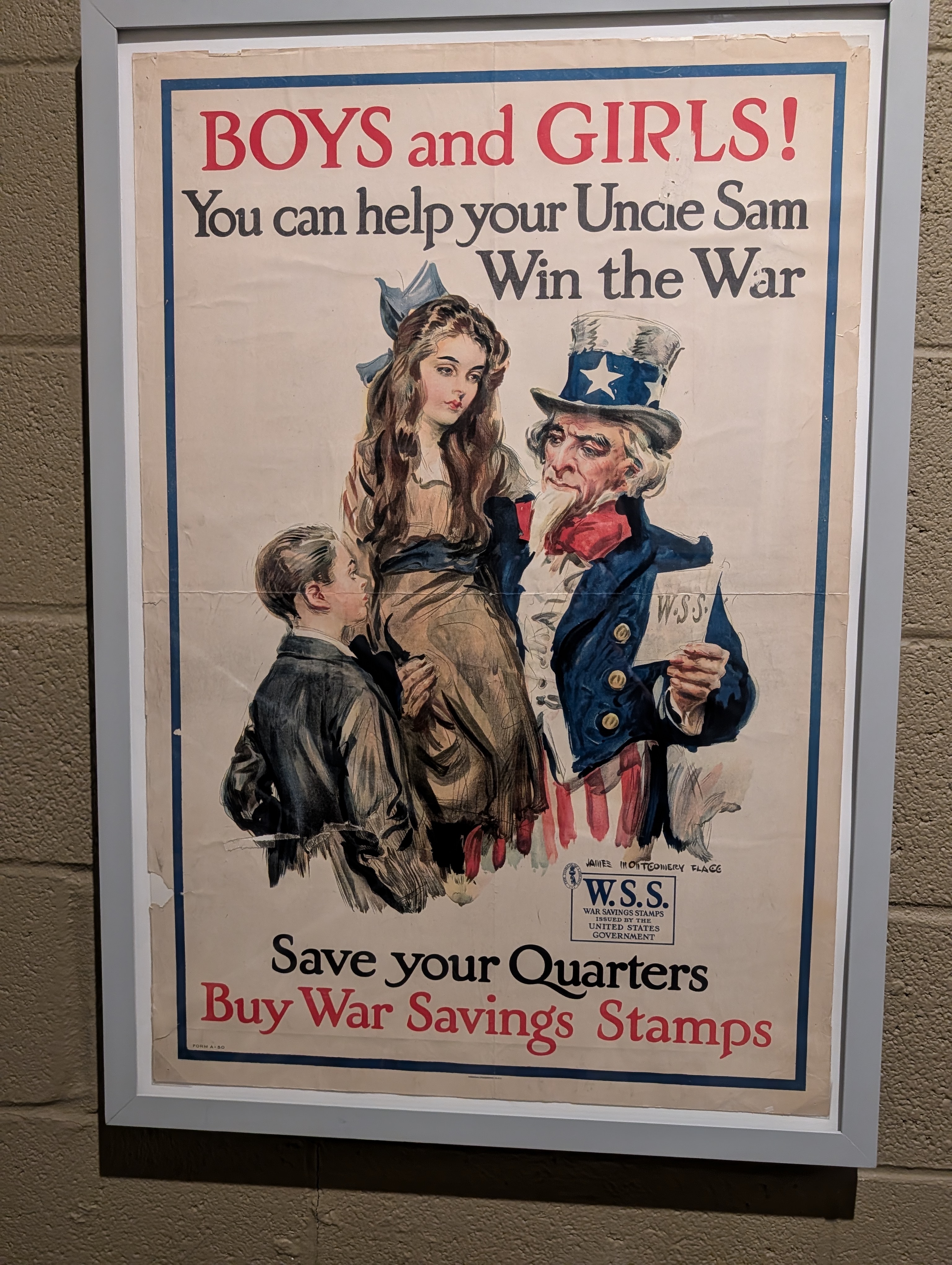
I was “museumed out” but I did find a couple of things in the Woodrow Wilson Museum that got my attention. Most interesting to me was the replica of a WWI trench in the dark basement of the museum. Trenches are something I read about and saw in movies but I found it fascinating to actually feel like I was standing in one. However, Dennis reminded me that if I was in a real WWI trench the lumber would likely not have been so uniformly aligned and clean.
The memorabilia in the museum was more photogenic than the displays of old photographs and texts of explanation.
Ending Our Tour
Wilson’s birthplace was the last site on our Road Scholar tour. Were back in Charlottesville in time for lunch. Although we were tired of boarding a bus at 8am, we enjoyed learning more about the Virginia presidents. Our tour included three lectures by experts and a visit from retired President James Monroe. The tour guides at all the sites we visited were very good. Our Road Scholar tour guide was extremely knowledgeable and patient.
I understand better the culture and living conditions of their eras. I can’t forget our Virginia founders hypocrisy, owning slaves while advocating equality and freedom for white males. They claimed to dislike the institution of slavery but found no way to live without it. We learned all our plantation owning presidents struggled to pay debts.
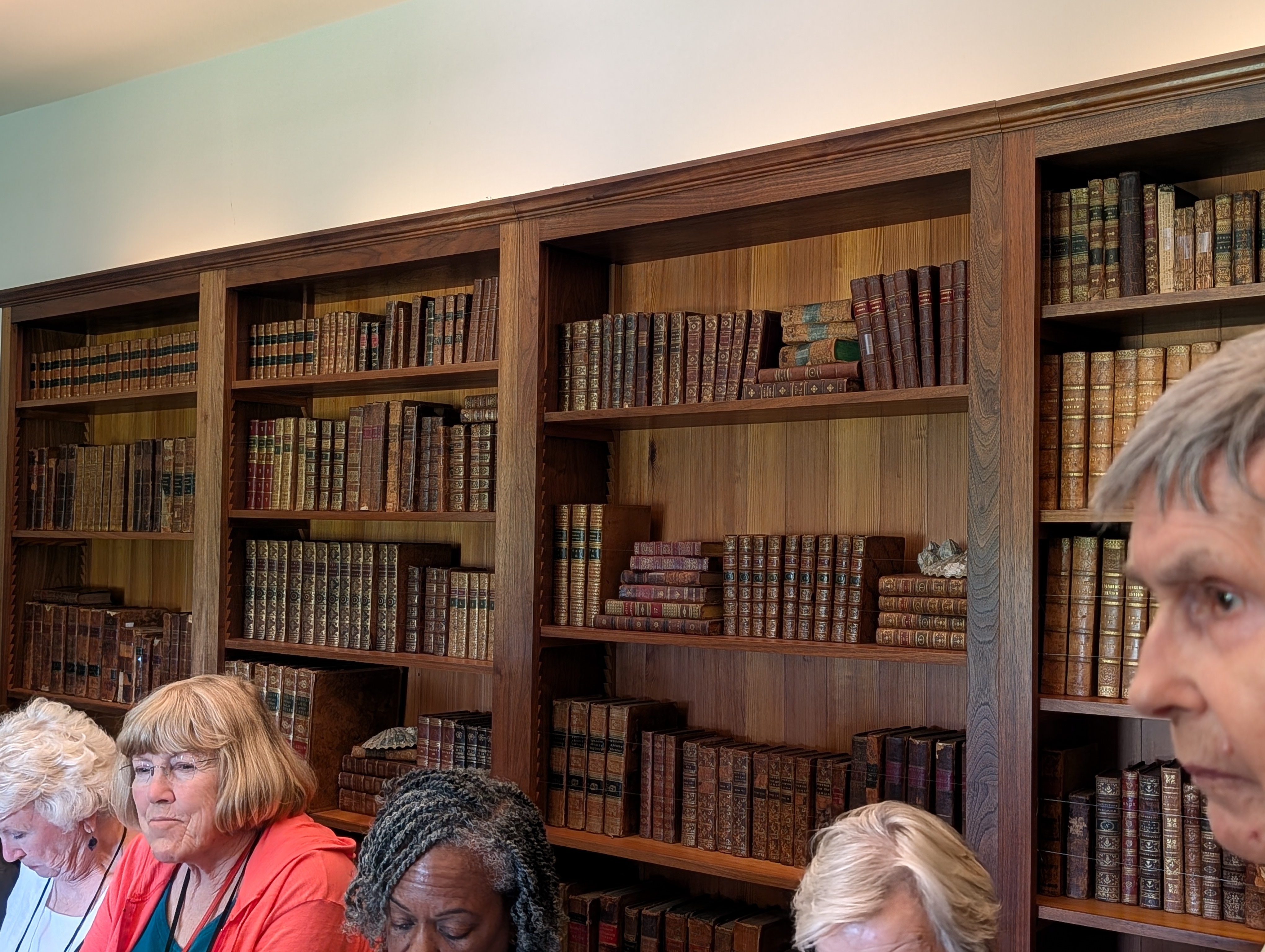
None of these presidents ever seriously considered giving women the vote. Yet, Washington, Jefferson, Madison and Monroe often relied on their wives or daughters, to manage their plantations and financial affairs during their long or frequent absences. The wives were often aided by Black and White overseers.
One notable a bit atypical example of a woman’s education was Martha Jefferson Randolph, Thomas Jefferson’s daughter and later wife of the governor of Virginia. We saw the cellar where Martha was in charge of overseeing the brewing of all the “small beer” consumed by everyone on the plantation. (Water wasn’t considered safe to drink.) Martha oversaw many essential household tasks that kept the plantation running. She also acted as hostess for her father and husband.
Short Editorial You May Ignore
Martha was educated with the children of the elite in France. She studied the classics, and philosophy. She read widely and could read 4 languages. However Martha’s formal education hardly prepared her for the duties she undertook as a typical Plantation owners wife, helping to manage Monticello and her husband’s plantations while raising her own 11 children and supervising their education. How is it that it took until 1920 for women to be granted the responsibility of voting?
I know we can’t change history we can only try to understand it. This was a great trip for understanding the history and culture of pre-civil war Virginia.